
Livraison le jour même ou le lendemain

Qualité garantie

Débloquez vos offres de bienvenue: Livraison GRATUITE | Jusqu'à -80 % | 30 jours d'essai gratuits à JoyPlus
Téléchargez l'application
Choosing the right wireless home alarm can often be a daunting task. Between the technical jargon and the siren song of marketing, it's easy to feel overwhelmed or make a purchase you'll later regret. The goal isn't to turn your home into a fortress, but to protect it with intelligence and peace of mind. As a product expert at Joybuy, my mission is to help you cut through the confusion.
Before you rush to buy a discounted kit, let's take a moment to break down the three most common pitfalls, which often end up costing consumers dearly:
To make the right choice, a few technical criteria are simply non-negotiable. They are the true measure of your future system's reliability.
There's no room for compromise when it comes to safety. Two standards are fundamental for your protection:
The type of system you need depends primarily on your requirements. A door and window alarm, based on a magnetic contact, provides an excellent first line of defence against intrusions. A motion detector (PIR) will cover a wider area indoors.
For comprehensive protection, a home alarm kit with interconnected components is the most effective solution. The principle is simple: if one detector is triggered, all other units in the network (including the alarm siren) will activate in a cascade effect. The most modern systems, like a Wi-Fi smoke detector, go even further by sending a real-time notification to your smartphone, allowing you to react even when you're away.
Power supply is critical for reliability. Models with a sealed lithium battery generally promise a 10-year lifespan for simple detectors. Systems with replaceable batteries are more flexible but require regular checks.
For a connected alarm system, the radio frequency used for communication between sensors is crucial. The 868?MHz frequency is known to be more stable and less prone to interference than the 433?MHz band, which is a mark of reliability for sensor communication.
Rather than an overwhelming list, here are three solutions that meet clear needs while avoiding the pitfalls mentioned earlier.
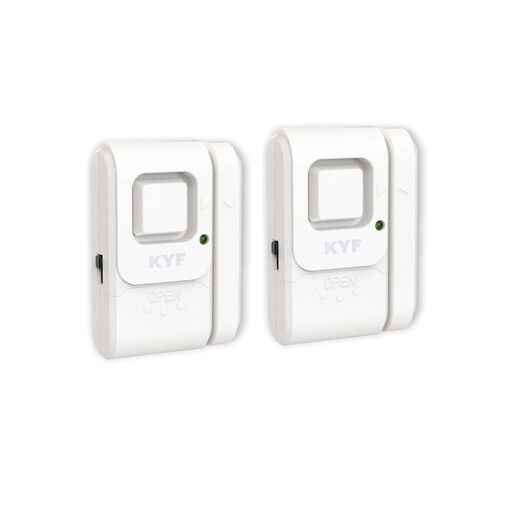
Why we love it: Perfect for securing specific entry points without major expense or complex work. The adhesive installation is ideal for renters who cannot drill into walls.
This product doesn't pretend to be a complete system. It does one job, and it does it well: triggering a piercing 105 dB siren at the slightest opening. An honest, targeted solution, the opposite of deceptively generous kits.
Ultra-fast, tool-free installation. Dual mode (alarm or chime). Unbeatable cost-effectiveness for a first line of deterrence.
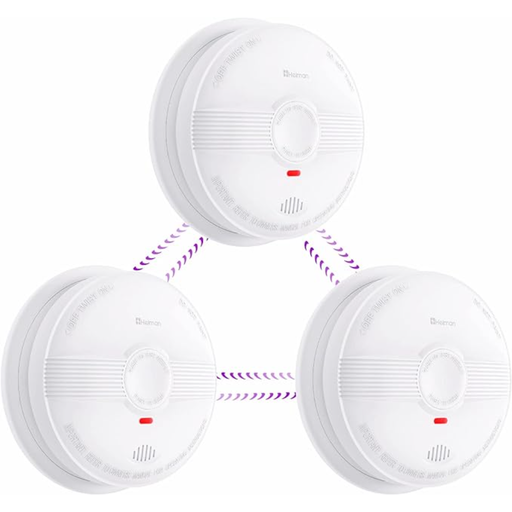
Why we love it: For families and homeowners who don't compromise on fire safety. Its interconnection feature is crucial: a fire starting in the garage will instantly trigger the alarm in the upstairs bedrooms.
Here, the focus is on compliance and performance. Certified EN 14604, it boasts a 10-year battery life for the entire unit, not just one of its components. True peace of mind.
Radio interconnection (up to 40 devices). Long-life sealed battery. Convenient pause button for false alarms (like the infamous cooking smoke!).
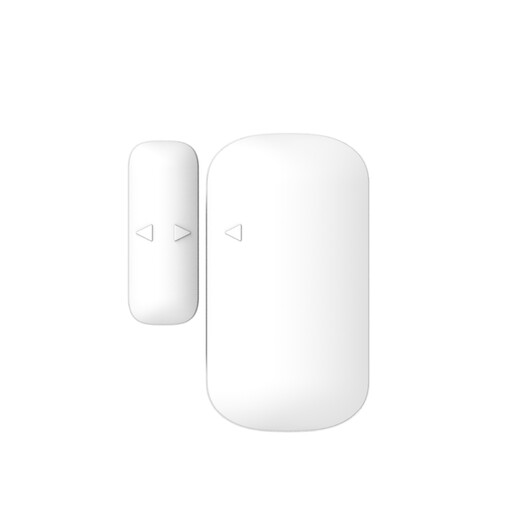
Why we love it: The perfect foundation for those who want to manage their security from their smartphone. This starter kit provides complete intrusion protection (motion, openings) and, most importantly, is designed to evolve with your home and your needs.
Unlike static kits, this one is explicitly "upgradable" (up to 30 accessories). You invest in a solid foundation and add only the sensors you truly need. No more waste.
Remote control via the TuyaSmart app. 868 MHz radio frequency for better reliability. Built-in backup battery in the hub to stay protected even during a power outage.
We have selected a full range of products that meet our rigorous selection criteria and French safety standards.
The lifespan varies by component. The hub itself can operate for many years. For detectors, longevity is often dictated by the battery. A smoke detector with a sealed battery is designed to last about 10 years, after which the entire device must be replaced. For systems with replaceable batteries (AA, CR123A, etc.), the battery life ranges from 1 to 3 years depending on the device's usage and connectivity.
Yes, French law requires the installation of at least one smoke detector (DAAF) per dwelling. For optimal protection, it is highly recommended to install one on each floor, ideally in hallways or landings leading to bedrooms. Avoid placing them in the kitchen or bathroom, where steam and cooking fumes could cause false alarms.
No, most modern systems are designed for DIY (Do-It-Yourself) installation. The process is generally simple: you mount the sensors (with adhesive or screws), plug in the hub, and follow the setup steps in the mobile app. Pairing the various accessories (detectors, remote controls) is done wirelessly in moments.