
Livraison le jour même ou le lendemain

Qualité garantie

Débloquez vos offres de bienvenue: Livraison GRATUITE | Jusqu'à -80 % | 30 jours d'essai gratuits à JoyPlus
Téléchargez l'application
Protecting your home shouldn't be stressful or break the bank. Faced with often complex and costly options, the wireless home alarm stands out as a solution that is both accessible and incredibly effective. These systems allow you to deploy complete burglar protection without running a single cable or hiring a professional installer.
This guide is here to help you make sense of it all. Our mission is to find the hidden gems that make your life easier. We've analysed the best solutions on the market to help you find the security system that perfectly fits your home and your budget.
Before taking the plunge, there are a few key points to consider. This will ensure you choose a solution that is truly tailored to your needs.
You wouldn't secure a third-floor apartment the same way you would a single-story house with a garden. Ask yourself the right questions:
For targeted protection on one or two entry points, a simple door and window alarm may be enough. For broader coverage, a home alarm kit with several types of sensors will be a wiser choice.
The number one advantage of a DIY alarm (Do-It-Yourself) is, of course, its simple installation. Most modern systems are designed to be up and running in minutes, thanks to strong adhesives that eliminate the need to drill into walls or window frames.
Another crucial point is expandability. A good system should be able to adapt to your future needs. Check if it's possible to easily add more detectors (for openings, motion, etc.) to your alarm hub over time.
The alert is the heart of the system. A powerful siren (measured in decibels, dB) has an immediate deterrent effect. Some alarms supplement the audible alert with a flashing light for an even more effective visual warning.
Beyond the traditional alarm, new solutions like the smart lock are becoming more common. It allows you to manage access via an app, fingerprint, or code, offering a modern, and often subscription-free, alternative to keys.
Here is a selection of products that meet different needs, from spot protection to smart access management.
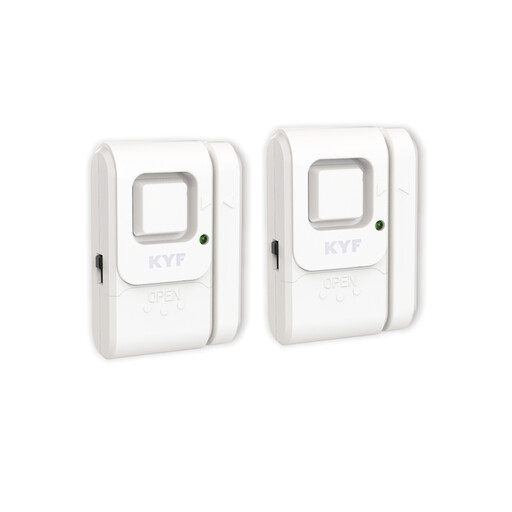
Why we chose it: This set of two standalone alarms embodies simplicity at its finest. Each unit consists of two magnetic parts. When the door or window is opened, the contact is broken, instantly triggering a powerful siren. It's a direct and very easy-to-install deterrent solution.
Benefits:
Who is it for? For those looking for a simple and budget-friendly deterrent to secure specific access points (front door, bedroom window, patio door) without committing to a complex system.
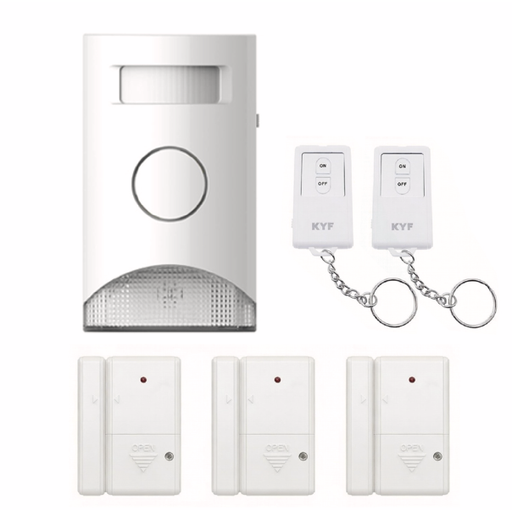
Why we chose it: This home alarm kit offers more comprehensive protection. It consists of a central hub with a siren and flashing light, three opening detectors for doors and windows, and two remote controls to arm and disarm the system from a distance. It's a solid foundation for an expandable security system.
Benefits:
Who is it for? For families or homeowners who want more complete protection for their house or large apartment. Its expandable nature allows it to cover multiple zones and adapt to the layout of the home.
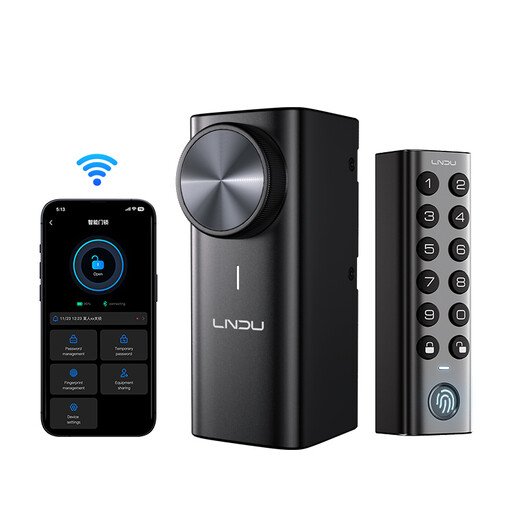
Why we chose it: The LNDU DL500 is a smart lock that modernises your front door security. Designed for a "retrofit" installation (over your existing lock), it replaces key-based management with modern access methods: fingerprint, password, or mobile app.
Benefits:
Who is it for? For tech-savvy individuals who want to modernise their main entrance, go key-free, and manage entries and exits flexibly, all without a subscription.
The products featured here cover a variety of needs, but every home has its own specific requirements. If you want to explore other types of solutions, such as reinforced doors or additional security accessories, feel free to browse our catalogue.
Discover our full selection of security door solutions
Yes, a wireless home alarm is a very effective deterrent and alert tool. Its main purpose is to startle the intruder with a powerful siren and alert occupants or the neighbourhood. For maximum effectiveness, it's advisable to position sensors at strategic entry points and ensure the siren volume is sufficient.
No, not necessarily. Many systems, including the models featured in this article, operate completely autonomously without any monthly fees. You buy the hardware once, and you own it. Subscriptions are generally tied to professional monitoring services, where a specialised company takes over in the event of an alert.
Absolutely. The vast majority of wireless home alarm systems are designed as DIY (Do It Yourself) solutions, meaning you can install them yourself. Installation is usually done with adhesive strips, and device setup (pairing) is guided step-by-step in the user manual. This allows you to save on installer fees while quickly securing your home.