
Livraison le jour même ou le lendemain

Qualité garantie

Débloquez vos offres de bienvenue: Livraison GRATUITE | Jusqu'à -80 % | 30 jours d'essai gratuits à JoyPlus
Téléchargez l'application
A pair of wireless headphones can accompany you on your underground journeys, remote meetings, gaming sessions or relaxing listening time at home. The problem is that technical specifications can sometimes blur the line between theoretical battery life, noise-cancelling claims and variable compatibility. To avoid disappointment, it is best to compare the features with the way you actually plan to use them.
Over-ear headphones surround your ears and mechanically reduce some of the sounds around you. This passive isolation depends on the shape of the ear cushions, the clamping force of the headband and how well they seal.
Noise-cancelling headphones add microphones and electronic processing to reduce certain continuous sounds, such as the rumble of a train or an aeroplane’s background noise. This does not mean that every voice, ringtone or sudden disturbance will disappear. Also check whether there is a Transparency or Ambient mode if you need to remain aware of your surroundings.
Battery life varies depending on listening volume, whether ANC is switched on, how often you make calls and the temperature. A quoted “up to” duration corresponds to a specific testing protocol, not a guarantee that applies in every situation.
For everyday use, also check the charging time, whether fast charging is supported and whether you can connect the headphones with a cable. A Bluetooth headset with a 3.5 mm jack can continue working once the battery is flat, depending on the conditions specified by the manufacturer.
Comfort is not simply about choosing a lightweight model. The width of the headband, clamping force, depth of the ear cushions and heat around your ears all become important during a long session. A model that is too tight can quickly become uncomfortable, even if it is packed with features.
Also think about the devices you actually use: smartphone, computer, console or television. Bluetooth does not always replace a USB connection, headphone jack or dedicated adapter.
Bluetooth headphones are a natural choice for compatible smartphones and computers. The Bluetooth version indicates the generation of the connection, but the actual range also depends on obstacles and the source device. Multipoint allows you to connect two devices, such as a work computer and a phone.
Wired headphones with a 3.5 mm jack do not need a battery and reduce latency issues. For video calls on a computer, a USB model can simplify set-up, but it may not be compatible with a console or phone without an adapter.
Active noise cancellation is particularly useful on public transport or in shared spaces. For working from home, focus above all on microphone quality and its ability to reduce surrounding noise. A headset with an integrated microphone is convenient, while a detachable boom mic may be easier to position when gaming.
If you need to hear an alarm, announcement or colleague, choose a mode that lets ambient sounds through. Noise cancellation is not intended for situations that require full awareness of your surroundings.
Where the information is available, compare battery life with and without active noise cancellation. Weight also deserves your attention: the models featured here range from approximately 192 g for the Sony WH-CH720N to 384.8 g for the AirPods Max USB-C.
Foldable headphones are easier to slip into a bag. Memory foam ear cushions or soft materials can improve comfort and fit, provided they are kept clean and dry. USB-C headphones make it easier to standardise charging with your other devices, but this does not necessarily mean that a charger is included in the box.
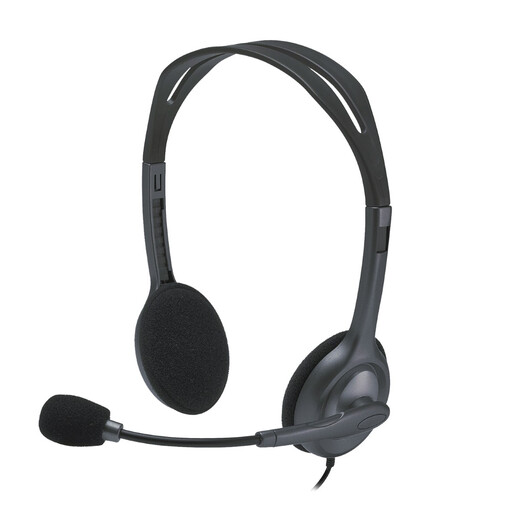
Why this choice suits this profile: its wired connection with two 3.5 mm plugs and quoted weight of 74 g make it a straightforward option for computers, calls, online lessons and music listening.
There is no battery or pairing to manage. Simply check that your computer has two separate ports.
180° rotating microphone, 2.35 m cable and stated compatibility with Windows and macOS.
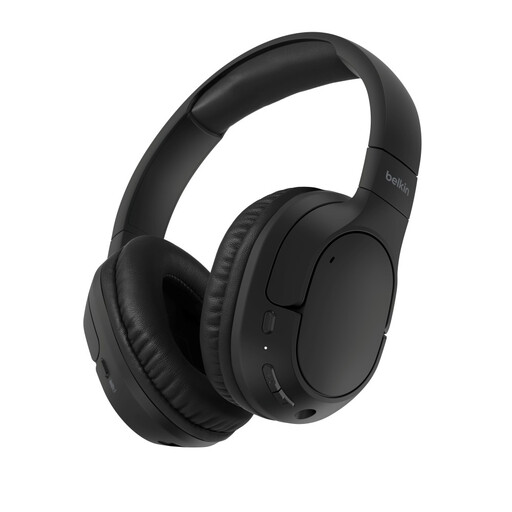
Why this choice suits this profile: multipoint makes it easy to switch between your computer and phone, while the quoted battery life reaches up to 60 hours of listening.
The 3.5 mm jack and USB-C audio cable provide a back-up solution when wireless connectivity is unavailable.
Bluetooth 5.4, connection to two devices and a quoted fast-charge time of 10 minutes for approximately 6 hours of listening.
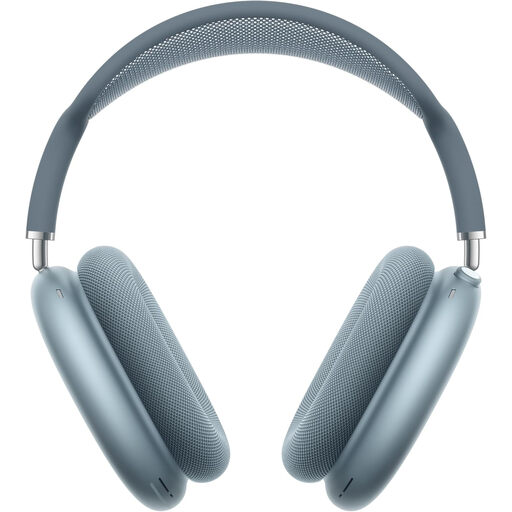
Why this choice suits this profile: it combines active noise cancellation, Transparency mode and personalised spatial audio, with particularly seamless integration into the Apple ecosystem.
Transparency mode lets you stay aware of sounds around you. Quoted battery life reaches 20 hours with ANC or Transparency mode enabled.
USB-C charging, controls via the Digital Crown and wear detection as stated in the product listing.
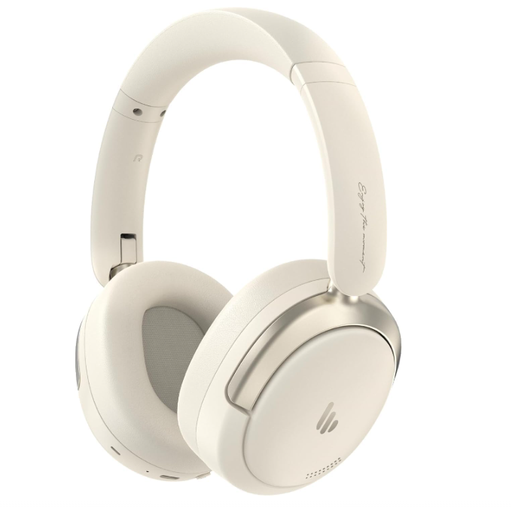
Why this choice suits this profile: its foldable design, Bluetooth 5.4 connection and multipoint function are well suited to frequent travel and days split between work and leisure.
The product listing claims hybrid noise cancellation of up to -44 dB. This remains manufacturer data and may vary depending on the conditions of use.
Quoted battery life of up to 45 hours, integrated microphone and high-resolution audio via wired USB-C.
We have selected a complete range, updated in real time, of products that meet these exacting selection criteria and European safety standards.
Switch on Bluetooth on your phone, turn on the headphones, then press and hold the pairing button until the indicator light flashes. Next, select the headphones’ name from the list that appears. If the device has already been paired, it will usually reconnect automatically. If you encounter a problem, delete the previous pairing and try again.
For calls, journeys and music listening, a quoted battery life of at least 20 to 30 hours means you will need to recharge less frequently. If you travel often, also compare fast charging and the option to use the headphones in wired mode. Quoted figures are indicative and may decrease when active noise cancellation is enabled or at a high listening volume.
Their lifespan depends on the battery, hinges, ear cushions and general care. Avoid moisture, high temperatures and twisting the cable. Clean the surfaces with a soft cloth, store the headphones in a dry place and follow the applicable recycling guidance for electrical and electronic equipment. To protect your hearing, keep the volume at a moderate level and take regular breaks.