
Livraison le jour même ou le lendemain

Qualité garantie

Débloquez vos offres de bienvenue: Livraison GRATUITE | Jusqu'à -80 % | 30 jours d'essai gratuits à JoyPlus
Téléchargez l'application
A wireless gaming mouse can significantly improve comfort during a gaming session. However, technical specifications do not always tell the whole story. An impressive DPI figure, RGB lighting or an 8,000 Hz polling rate will not make up for a shape that does not suit your hand or battery life that falls short.
Before ordering your next gaming mouse, take the time to identify the criteria that really matter for how you use it in the UK: connection type, weight, ergonomics, battery life, software compatibility and the number of programmable buttons.
A high-DPI gaming mouse may offer 26,000, 32,000 or 36,000 DPI. This figure primarily indicates the sensor’s maximum sensitivity. It does not mean that you will play at such a high setting, nor that tracking will automatically be better.
For FPS games, many players prefer moderate sensitivity, which is easier to control during movement. So also check the sensor type, its tracking speed in IPS and whether sensitivity levels can be adjusted precisely.
An 8,000 Hz mouse reports its position more frequently than a model limited to 1,000 Hz. The interval between reports can therefore be reduced, but the benefit depends on the game, the monitor’s refresh rate and the resources available on your computer.
Also check whether the 8,000 Hz polling rate is available wirelessly, in wired mode or only with a specific receiver. Some models require a separately sold dongle or the installation of a particular driver.
A lightweight gaming mouse makes fast movements easier, but an ultra-light model may omit certain buttons or have a shell that does not suit every grip style. Conversely, a heavier ergonomic mouse can be comfortable for work as well as strategy games, while requiring more effort in FPS titles.
Length, width, height and orientation — right-handed, left-handed or ambidextrous — therefore all deserve your full attention.
Bluetooth is well suited to laptops and versatile everyday use. It helps limit power consumption and avoids occupying a USB port with an additional receiver. For gaming, a 2.4 GHz connection with a dongle is generally preferable, as it is designed to provide fast communication with your PC.
Triple-mode models often combine Bluetooth, 2.4 GHz and wired USB-C. This is handy for switching between gaming and work across several devices, provided the customisation software is compatible with your system.
The polling rate, also known as the report rate, is measured in hertz. At 1,000 Hz, the mouse can transmit up to 1,000 reports per second. At 8,000 Hz, it can send up to 8,000 reports under compatible conditions.
To make proper use of a high polling rate, use a suitable USB port, install the recommended driver and check that the connection remains stable. In some setups, a higher rate may also increase the load on the processor.
A rechargeable wireless mouse should be assessed based on its battery life in the mode you will actually use. RGB lighting, Bluetooth, 2.4 GHz and the polling rate can all reduce the time between charges.
Choose a USB-C cable that is easy to replace, a battery indicator and, where possible, the ability to continue using the mouse while it charges. For models with an integrated lithium battery, do not attempt to replace it yourself: follow the manufacturer’s recommendations.
An ergonomic mouse should fit your hand and your grip style — palm, claw or fingertip. Side buttons are useful for shortcuts, but their position should prevent accidental presses.
For MMOs, role-playing games, office work or creative tasks, a programmable mouse can centralise commands, switch profiles and speed up repetitive tasks. Check whether settings are saved to the built-in memory or whether the software must remain active at all times.
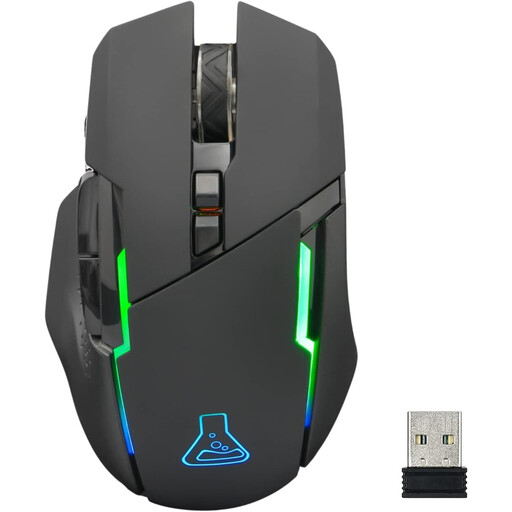
Why it suits this profile : This RGB gaming mouse offers a 2.4 GHz connection, six buttons and five DPI levels, ranging from 400 to 7,200. A straightforward setup for getting started without getting lost in the settings.
The advertised specifications are easy to understand: up to 10 hours of battery life with RGB and 32 hours without lighting, with a recharge time of around 2 hours.
A right-handed shape, a weight of 84 g, switchable lighting and a stated 2-year warranty.
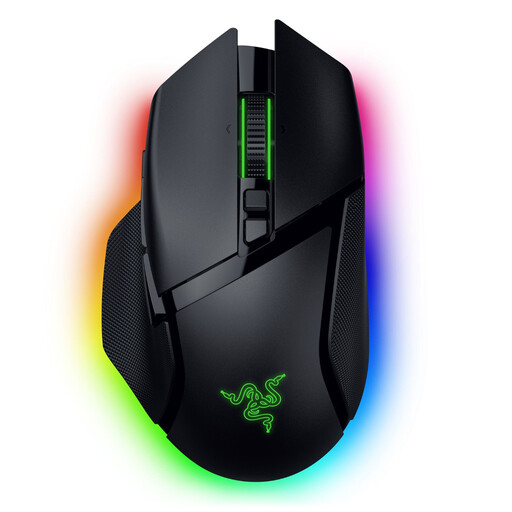
Why it suits this profile : With its sensor rated at 35,000 DPI, configurable controls and multi-mode scroll wheel, it is aimed at players who switch between FPS, role-playing games and productivity.
The listing clearly distinguishes between HyperSpeed 2.4 GHz, Bluetooth and USB-C connections. However, the 8,000 Hz polling rate requires a compatible accessory sold separately.
13 configurable controls, Chroma RGB lighting across 13 zones and up to 140 hours of stated battery life in HyperSpeed mode.
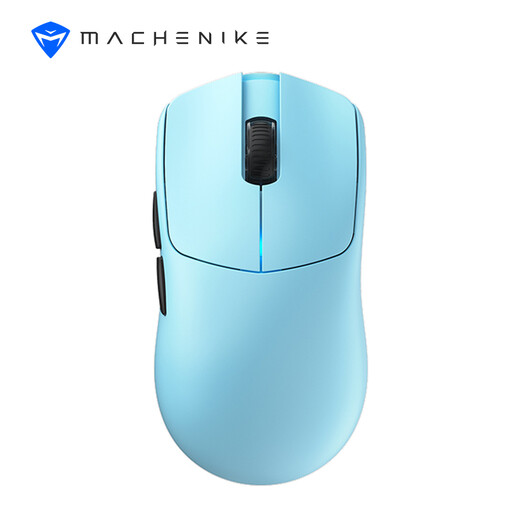
Why it suits this profile : Weighing just 49 g according to the specifications, with a symmetrical shape and 2.4 GHz or wired connectivity at 8,000 Hz, this mouse is aimed at FPS players seeking fast movements.
The listing specifies that 8,000 Hz works in both wired and 2.4 GHz modes, and provides dedicated web drivers for each mode.
A PAW3395 sensor rated at 26,000 DPI, a 700 mAh battery and more than 100 hours of stated battery life.
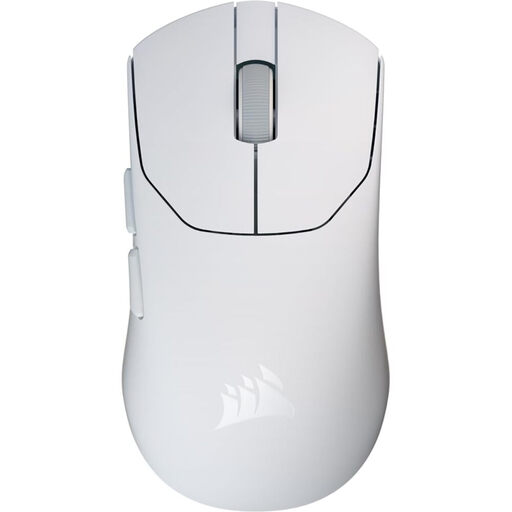
Why it suits this profile : Weighing 36 g according to the specifications and featuring a symmetrical shape, it is designed for players who prioritise fast movements and an ambidextrous grip.
The 8 kHz wireless receiver is included. The listing clearly distinguishes the 8,000 Hz polling rate in wired mode from the 2.4 GHz connection.
A sensor rated at 33,000 DPI, five programmable buttons, up to 70 hours of battery life and compatibility with Windows, macOS and Linux.
We have selected a complete, real-time updated list of products that meet these demanding criteria, while complying with European safety regulations.
Yes, provided you choose a 2.4 GHz connection with a dedicated receiver, position the dongle close to the mouse and check the available polling rate. Bluetooth can be perfectly suitable for work or games that are less sensitive to latency.
Battery life depends on the model, connection type, RGB lighting and polling rate. Always compare the stated battery life in the mode you will use most often. The ability to play in wired mode while charging also helps avoid interruptions.
Not for basic functions: many models work as soon as the receiver is plugged in. However, software may be essential for adjusting DPI, programming buttons, creating profiles, changing the RGB lighting or enabling 8,000 Hz. Check that it is compatible with your system before buying.