
Livraison le jour même ou le lendemain

Qualité garantie

Débloquez vos offres de bienvenue: Livraison GRATUITE | Jusqu'à -80 % | 30 jours d'essai gratuits à JoyPlus
Téléchargez l'application
For a competitive gamer, every millisecond and every gram counts. Choosing a mouse isn't a matter of taste; it's a strategic decision that can make or break a game. Faced with a market saturated with technical promises and marketing jargon, it's hard to know where to turn. We're breaking down the features that truly matter to help you find the mouse that matches your ambitions, with a focus on top-tier models like the GravaStar Mercury X Pro wireless gaming mouse.
Before we dive into the spec sheets, let's learn to see through the most common marketing claims.
To make the right choice, focus on these three non-negotiable technical criteria.
The ideal weight depends on your playstyle, but for fast-paced titles like FPS games, lightness is a crucial advantage. A 49g gaming mouse like the Mercury X Pro achieves this featherlight weight not by skimping on plastic thickness, but through a hollowed-out structure made of magnesium alloy. This material, with its exceptional strength-to-weight ratio, guarantees rock-solid rigidity, even during the most intense sessions. This is the difference between a pro e-sports mouse and a deceptively lightweight gadget.
The polling rate, measured in Hertz (Hz), is the number of times per second the mouse reports its position to the computer. A standard mouse maxes out at 1,000 Hz (a 1 ms response time). An 8 KHz gaming mouse sends this information 8,000 times per second, dropping the response time to just 0.125 ms. For a competitive player, this reduced latency translates to much smoother cursor tracking and near-instantaneous responsiveness. A decisive advantage on screen.
Rather than being mesmerized by the maximum DPI number, look at the sensor model. Cutting-edge optical sensors like the PAW 3950, which equips the GravaStar Mercury X Pro, are designed for surgical precision. They ensure a high tracking speed (IPS) and maximum acceleration, guaranteeing that even the swiftest and most abrupt movements are translated perfectly, without any prediction or smoothing that could interfere with your aim.
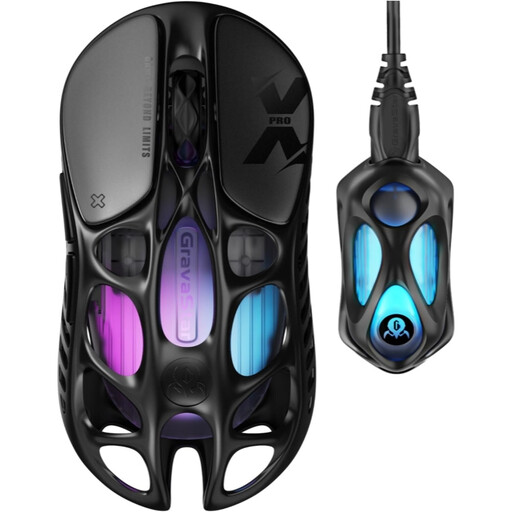
Why it stands out: Designed for gamers who accept no compromises. Its 49g weight and 8,000 Hz polling rate (via the included 8K dongle) make it a precision weapon for FPS and battle royale games where every millisecond counts.
Its magnesium alloy shell solves the weight vs. durability equation. The PAW 3950 sensor and 8,000 Hz polling rate prove its performance isn't just about a marketing-driven DPI number.
Featherlight weight of 49 g for minimal fatigue and ultra-fast flicks. Tri-mode connectivity (Wired, Bluetooth, 2.4 GHz) for rock-solid versatility.
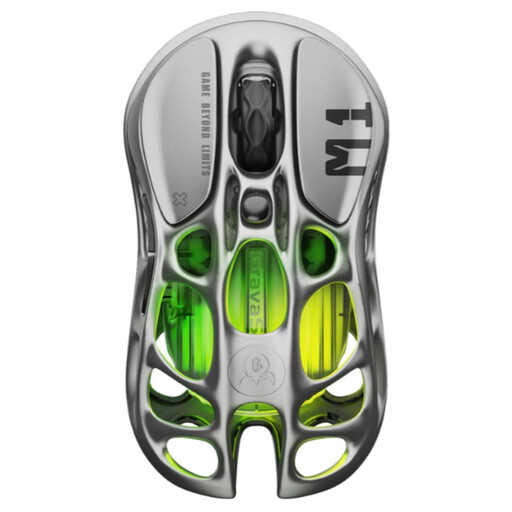
Why it stands out: For the gamer who wants cutting-edge tech without necessarily aiming for the top tier of competition. The M1 Pro offers a premium experience with its PAW3395 sensor, 4,000 Hz polling rate (with the 4K receiver sold separately), and magnesium alloy shell, at a more substantial weight of 88g.
It also relies on a magnesium alloy for its structure, thus avoiding the cheap plastic trap. Its PAW3395 sensor is a proven and reliable choice, prioritizing tracking quality over a flashy DPI number.
An excellent performance-to-price ratio, with 26,000 DPI and an optional 4,000 Hz. Its 5 GLOWSYNC RGB lighting modes allow for deep aesthetic customization for a stunning setup.
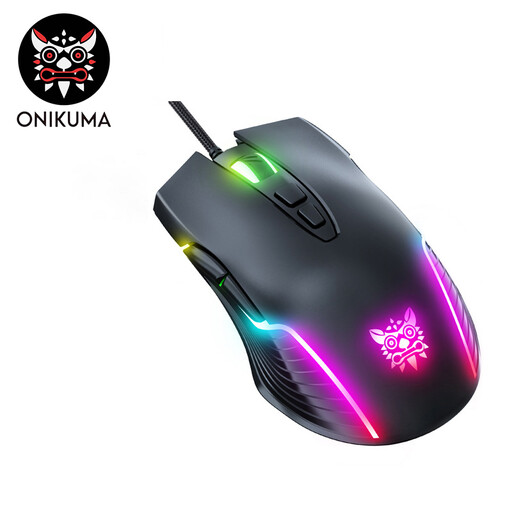
Why it stands out: A simple and effective wired option to cut your teeth on. It gets straight to the point with basic features (adjustable DPI, programmable buttons, RGB lighting) in an ergonomic and accessible package. Ideal for getting familiar with gaming hardware.
As a wired mouse, it completely sidesteps any issues of latency or battery life. Its "plug-and-play" approach lets you focus on the game, without paying for complex technologies a beginner doesn't need.
Simplicity and the rock-solid reliability of a wired connection. Its symmetrical and ergonomic design ensures a comfortable grip, even during long gaming sessions.
Our editorial team has compiled a complete selection of products that meet our strict selection criteria and current safety standards.
1. Does an 8,000 Hz mouse really make a difference in-game? For a casual player, the difference will be subtle. However, for a competitive player with a high-refresh-rate monitor (144 Hz and above), the smoothness and reduced latency of an 8 KHz mouse offer a very real advantage. The cursor feels literally glued to your hand, which greatly improves tracking accuracy on fast-moving targets.
2. How do you maintain a mouse with a hollowed-out design like the GravaStar Mercury X Pro? This type of design requires regular maintenance to prevent dust from building up. Our advice: use a can of compressed air to dislodge particles from the nooks and crannies. For the surface, a simple, slightly damp microfiber cloth (with water, and definitely no harsh chemicals) will do the trick. Be sure to unplug the mouse before any cleaning.
3. Isn't magnesium alloy too fragile for a 49g mouse? Quite the opposite. Magnesium alloy is prized in sectors like aerospace and automotive for its incredible strength-to-weight ratio. When applied to a mouse, it allows for an ultra-rigid skeletal structure that won't deform, even under heavy pressure, all while maintaining a featherlight weight. It's a much more robust material than the ABS plastic found on most competing ultra-light mice.