
Livraison le jour même ou le lendemain

Qualité garantie

Débloquez vos offres de bienvenue: Livraison GRATUITE | Jusqu'à -80 % | 30 jours d'essai gratuits à JoyPlus
Téléchargez l'application
In competitive gaming, every millisecond and every gram counts. Finding the right wireless gaming mouse that combines responsiveness, precision, and a lightweight design is crucial to optimising your performance. With a vast and increasingly technical market, it's easy to get lost. This guide is designed to give you clear benchmarks and objective recommendations to help you find the mouse that matches your ambitions, without drowning in marketing jargon.
Before diving into our top picks, let's review the features that define a high-performance wireless mouse. These key points will help you understand what to look for.
In fast-paced games like FPS or Battle Royales, the ability to execute quick, precise movements is paramount. A lightweight gaming mouse, ideally under the 60-gram mark, reduces wrist and forearm fatigue during long gaming sessions. It allows for faster adjustments and greater control, which can make all the difference in a tight duel.
The sensor is the engine of the mouse. Its sensitivity, measured in DPI (dots per inch), affects cursor speed. But sensitivity isn't everything?: it's the tracking accuracy and lack of hardware acceleration that ensure a perfect 1:1 translation of your movements on-screen.
The polling rate, expressed in Hertz (Hz), is the number of times per second the mouse reports its position to the computer. While 1000?Hz has become the standard, 8K?Hz mouse models are now hitting the market. Their promise?: enhanced smoothness and responsiveness, a decisive advantage for an esports mouse.
2.4?GHz wireless technology has established itself as the gold standard for gaming, offering near-zero latency that effortlessly rivals wired models. Battery life is, of course, a crucial factor to ensure you never run out of power mid-game. Recent models provide dozens, or even hundreds, of hours of gameplay on a single charge.
We've scoured the market to bring you three models that excel with their impressive spec sheets and performance-driven DNA.
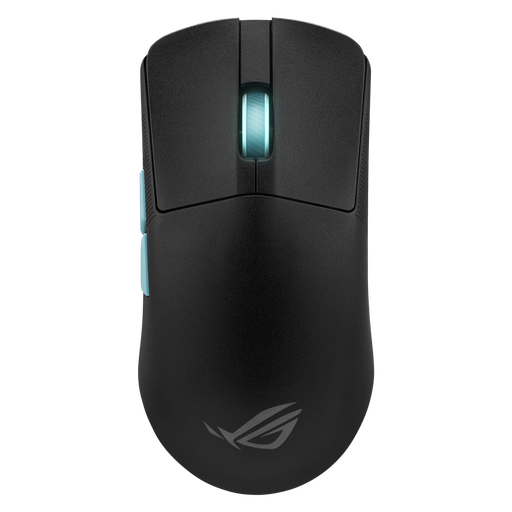
Why it stands out Its collaboration with Aim Lab, the famous aim training software, is what makes it unique. The mouse analyses your grip and movements to suggest tailor-made settings (DPI, sensitivity, etc.). Weighing in at just 54 grams and equipped with a ROG AimPoint sensor, it's a true weapon of precision.
Advantages
Who is it for? For the meticulous FPS player who loves to analyse their performance and fine-tune their settings with a powerful software ecosystem.
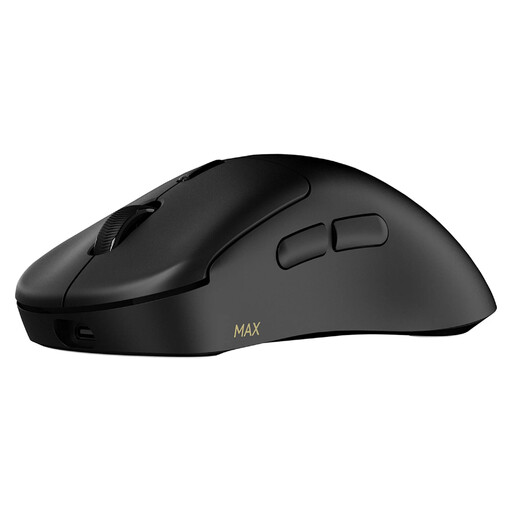
Why it stands out The RAPOO VT3 MAX makes a strong impression on two fronts?: a monstrous advertised battery life of 750 hours (at 1000?Hz) and a native wireless 8K?Hz polling rate. All this is packed into a chassis weighing only 53 grams, combining endurance with cutting-edge technology.
Advantages
Who is it for? For the gamer who refuses to compromise on either technology or battery life. The ideal choice for marathon gamers and those curious about native 8K?Hz technology without an extra dongle.
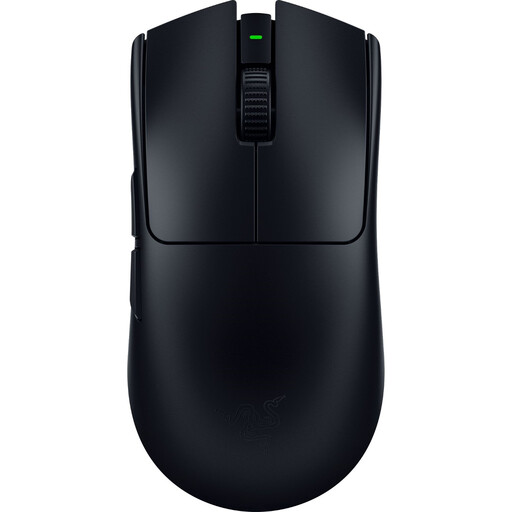
Why it stands out Designed hand-in-hand with professional players, the Viper V3 Pro is a true benchmark on the esports scene. Its symmetrical design and 54-gram weight are built for pure performance. It features Razer's HyperPolling technology to achieve an 8000?Hz polling rate.
Advantages
Who is it for? For the pro gamer or competitive player looking for gear that's been proven at the highest level, offering first-class responsiveness and precision.
Our selection focuses on models built for extreme performance. Of course, choosing a mouse is a highly personal decision?: it depends on your hand size, grip style, and budget. If these three champions don't check all your boxes, feel free to explore our complete collection.
? Discover our range of black mice to find your perfect model
Absolutely. Modern wireless technologies, especially 2.4?GHz connections, have reached such a high level of performance that latency has become imperceptible. The proof?: the vast majority of professional players have gone wireless, a clear sign of their reliability and responsiveness.
It means the mouse reports its position to the computer 8,000 times per second, compared to 1,000 times for a standard model. In theory, this results in smoother cursor movement and even lower latency. It's a cutting-edge technology that will primarily interest players looking to gain every possible competitive edge, especially if they own a very high-refresh-rate monitor.
For games that demand fast, wide-ranging movements (especially FPS), weight is a fundamental criterion. A lightweight gaming mouse allows you to aim faster, change direction with less inertia, and reduce fatigue over time. For other game genres (like MMOs or strategy games), this factor is often less of a priority.