
Livraison le jour même ou le lendemain

Qualité garantie

Débloquez vos offres de bienvenue: Livraison GRATUITE | Jusqu'à -80 % | 30 jours d'essai gratuits à JoyPlus
Téléchargez l'application
Choosing a wireless gaming mouse can be a real headache. Between latency, weight, battery life, and the jungle of available sensors, it's easy to get lost. Don't worry: this guide is here to help you cut through the noise and find the perfect model for your playstyle and budget, without the unnecessary marketing jargon.
Whether you're a fierce competitor on a quest for ultimate performance or a setup aficionado looking for a versatile RGB wireless mouse, we've scoured the market to unearth the best picks of the moment.
Before diving into our selection, let's review the key points to check to ensure you make the right choice.
Weight is a crucial factor, especially for fast-paced games like FPS. A lightweight gaming mouse (usually under 80g) allows for swifter movements and reduces wrist fatigue during long gaming sessions. Ergonomics are just as important: the shape of the mouse must fit your grip style (palm, claw, or fingertip) to guarantee optimal comfort and absolute control.
A mouse's performance is evaluated on three major technical criteria:
Battery life was long the Achilles' heel of wireless peripherals. Those days are over: a good rechargeable mouse now offers dozens, or even hundreds, of hours of gameplay. Also, remember to check compatibility: many models are now compatible with consoles (PS4/Xbox) in addition to PC. Finally, a programmable mouse with dedicated software will allow you to assign macros or shortcuts, a decisive advantage in many games.
We have selected three models that stand out from the crowd, each catering to a specific type of gamer.
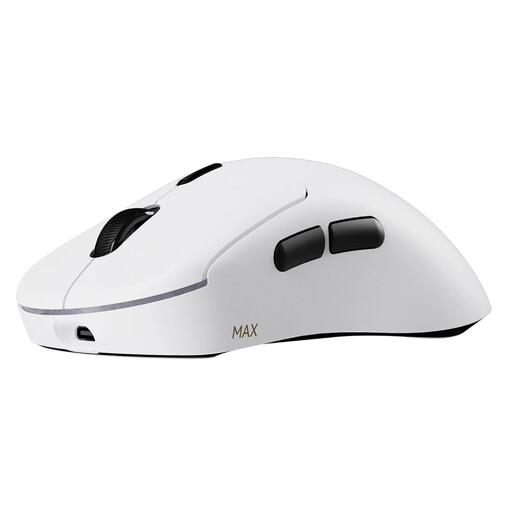
Why it stands out: The RAPOO VT3 MAX focuses on two criteria essential for demanding gamers: a feather-light weight and record-breaking battery life. At only 53 grams, it's unnoticeable in your hand, while its XXL battery will make you forget the fear of running out of power.
Key Features:
Who is it for? Competitive players and marathon gamers who want a lightweight gaming mouse with no compromises on battery life and responsiveness. Its weight and 8 kHz technology make it a weapon of choice for FPS and MOBA games.
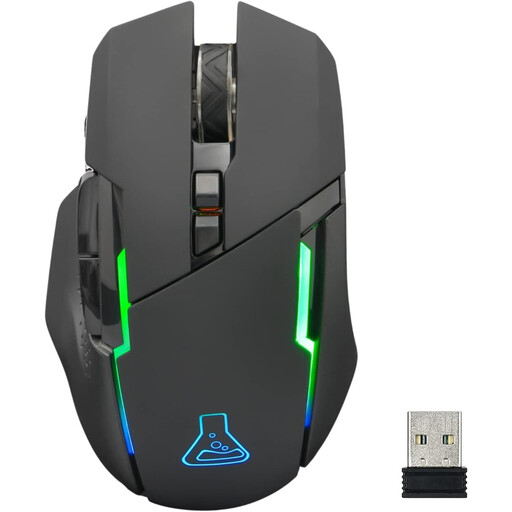
Why it stands out: The Kult Caesium from THE G-LAB is the quintessential versatile and affordable option, ideal for getting a reliable wireless experience without breaking the bank. It checks all the boxes: ergonomic design, customisable RGB lighting, and multi-platform compatibility.
Key Features:
Who is it for? Casual gamers or beginners looking for their first functional and stylish wireless gaming mouse. Its broad compatibility makes it an excellent choice for those who switch between multiple systems.
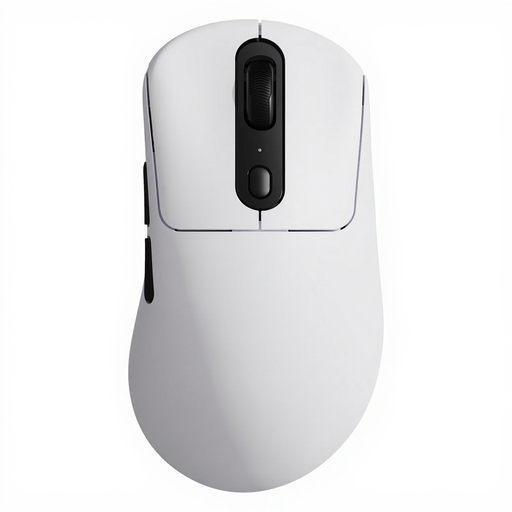
Why it stands out: This model is a competitive powerhouse, built for pure performance. Equipped with the PAW 3950 Ultimate optical sensor, the VT3PRO MAX offers surgical precision. Its 59g weight and 8 kHz polling rate make it a serious contender for esports.
Key Features:
Who is it for? Demanding gamers and esports professionals who accept no compromises on precision, speed, and customisation. A precision instrument for those where every millisecond counts.
Our selection is just an overview, and the market is filled with models for every need. For example, are you looking for a silent wireless gaming mouse for your late-night sessions? Feel free to explore our full catalogue to find that hidden gem.
DPI is the mouse's sensitivity. But be careful, a high number isn't always synonymous with better performance. FPS players who prioritise precision often opt for lower DPI settings (400-1600) to better control micro-adjustments. Conversely, those who play on large screens or need to quickly scan the map (RTS, MOBA) may prefer higher DPIs. The key is to choose a mouse that lets you adjust this setting on the fly.
Yes, absolutely. Today's wireless technologies (like low-latency 2.4 GHz) are so effective that the difference compared to a wired model is imperceptible, even to pros. Models with a 1000 Hz polling rate, and especially 8 kHz mice, guarantee a connection so stable and responsive that the latency debate is over.
It all depends on your playstyle and personal preference!