
Livraison le jour même ou le lendemain

Qualité garantie

Débloquez vos offres de bienvenue: Livraison GRATUITE | Jusqu'à -80 % | 30 jours d'essai gratuits à JoyPlus
Téléchargez l'application
Wireless Bluetooth earbuds may look similar on the shelf, but they can be designed for very different uses. A model intended for office calls may not be comfortable during a run, while open-ear earbuds will never provide the same immersive experience as in-ear earbuds with active noise cancellation.
Before you buy, three common pitfalls are worth watching out for: battery life quoted with the case rather than the earbuds alone, water-resistance ratings that are misinterpreted, and noise cancellation presented as effective in every situation. A few technical criteria can help you make sense of the specifications and compare models without relying solely on marketing claims.
A product listing may show an impressive listening time by adding the recharges provided by the case. It is important to distinguish between:
For daily commutes, a few hours per charge may be enough. For frequent journeys, lengthy calls or travel, however, a USB-C rechargeable case is considerably more convenient.
Ratings such as IPX5, IPX7 or IP57 indicate a level of protection measured under specific conditions. They do not automatically mean that the earbuds can be worn in the shower or in a swimming pool.
This resistance can also decrease with wear, impacts or the build-up of dust. The case is sometimes less well protected than the earbuds. Check both ratings separately and follow the manufacturer’s recommendations, particularly before connecting a cable to contacts that are still damp.
Wireless earbuds with active noise cancellation, or ANC, mainly reduce continuous, consistent sounds, such as the hum of a train or aeroplane. They do not eliminate every noise, and their effectiveness depends in particular on the fit of the ear tips, listening volume and surroundings.
Microphones with noise reduction for calls, often referred to as ENC, serve a different purpose: they mainly aim to improve the voice transmitted to the person you are speaking to. They should not therefore be confused with ANC, which affects the sounds you hear.
True Wireless earbuds sit inside the ear canal. They generally offer good passive isolation and are well suited to immersive music listening. Having several sizes of ear tips makes it easier to find a good fit, although comfort remains highly personal.
Open-ear earbuds sit near the ear without completely blocking the ear canal. They allow you to stay aware of conversations, announcements and traffic. The trade-off is that music feels less enveloping in very noisy environments.
Bone-conduction earbuds transmit vibrations through areas near the cheekbones. They appeal to some runners and cyclists who want to keep their ears clear. Bass reproduction and the overall musical presentation may, however, differ from those of an in-ear model.
A Bluetooth model should be assessed according to the devices you use: iPhone, Android smartphone, tablet or Windows computer. Multipoint allows two devices to remain connected at the same time, such as a computer and a smartphone, making it easier to switch between music and calls.
The Bluetooth version alone is not enough to predict sound quality or connection stability. Also check app compatibility, supported codecs, update frequency and the features available for your operating system.
For calls, check the number of microphones, whether ambient-noise reduction is included and how simple the controls are to use. Well-configured gestures save you from reaching for your phone, but touch controls that are too sensitive can trigger unwanted actions.
Weight, shape and stability matter just as much as audio specifications. For sport, choose a design that stays securely in place during movement and offers clearly stated protection against perspiration. Waterproof earbuds should only be considered suitable for swimming if this use is explicitly intended and documented by the manufacturer.
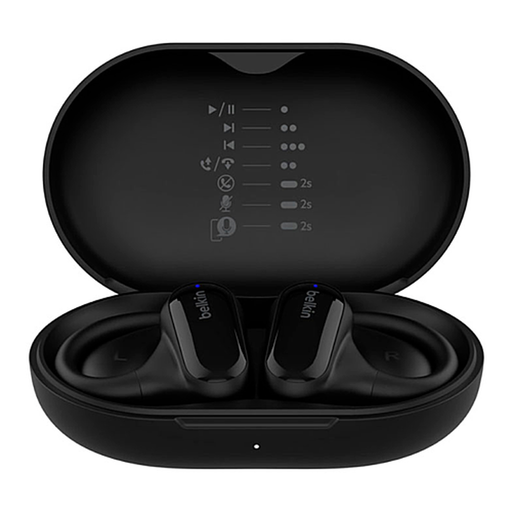
Why this choice suits this profile : The open design is ideal for a first experience without in-ear tips, whether you are working from home or commuting every day.
Battery life is clearly broken down: 8 hours for the earbuds and 26 hours with the case. The IPX5 rating covers splashes and perspiration, not immersion.
Bluetooth 5.3, multipoint connectivity, ENC microphones for calls and fast USB-C charging: 10 minutes of charging is said to provide around 60 minutes of listening.
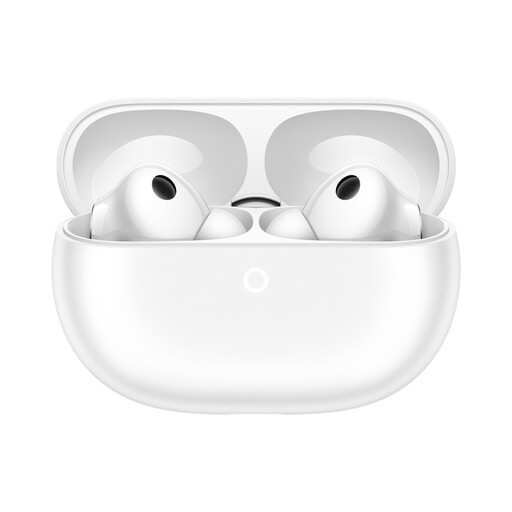
Why this choice suits this profile : This in-ear model is designed for people who regularly switch between music and calls, and between a computer and smartphone, with more advanced audio settings.
Battery-life figures clearly distinguish between ANC on and off. The IP57 protection applies to the earbuds, while the case has an IP54 rating.
ANC, transparency mode, four ear-tip sizes, connection to two devices and claimed battery life of up to 9 hours without ANC, in AAC mode.

Why this choice suits this profile : Its bone-conduction open-ear design is aimed at runners, cyclists, sports enthusiasts and, more broadly, anyone taking part in activities where staying aware of their surroundings is important.
The 32 GB of internal memory lets you play MP3 files without a phone. The listing states IPX8, but the charging port must remain completely dry and Bluetooth connectivity remains limited underwater.
Built-in storage, microphone with advertised noise reduction, open design and battery life of approximately 8 to 10 hours according to the product listing.
We have selected a complete, real-time updated range of products that meet these demanding criteria as well as European safety requirements.
Open the case or press and hold the pairing button, enable Bluetooth in your phone’s settings, then select the model name. If the earbuds have already been paired with another device, temporarily disable its connection or reset the earbuds by following the instructions in the manual.
It depends on the battery, how often they are recharged, exposure to heat and how well they are maintained. Earbuds can remain perfectly usable for several years, but their capacity gradually decreases. Whether the charging case can be replaced and whether there is a clearly detailed warranty are points worth checking before you buy.
Yes. On many models, ANC uses more energy than standard mode. Always compare the stated battery life with noise cancellation switched on and off. To last all day, transparency mode or listening without ANC can reduce the number of recharges required.