
Livraison le jour même ou le lendemain

Qualité garantie

Débloquez vos offres de bienvenue: Livraison GRATUITE | Jusqu'à -80 % | 30 jours d'essai gratuits à JoyPlus
Téléchargez l'application
The wireless earbuds market is flooded with models, each with more enticing promises than the last. Between battery life figures, sound quality, and water resistance, it's easy to get lost and end up regretting your purchase. As a product expert at Joybuy, my mission is to help you decode the spec sheets and identify the features that truly matter. This guide will reveal the pitfalls to avoid and the essential criteria for choosing the pair of earbuds that's genuinely right for you.
Navigating the audio jungle can be a real headache. Too many buyers find themselves disappointed with a product that doesn't meet their expectations. Here are the three most common mistakes and, more importantly, how to avoid them.
To make an informed choice, it's crucial to understand a few technical specifications. These directly determine the quality of your listening experience.
The codec is the algorithm that compresses and decompresses your audio files during wireless transmission. Its role is critical for sound fidelity.
The Ingress Protection (IP) rating is a two-digit standard: the first for dust resistance (X if not tested), the second for water resistance.
There are two types of noise reduction:
Instead of a random list, we've selected models tailored for specific uses to help you find the right fit.
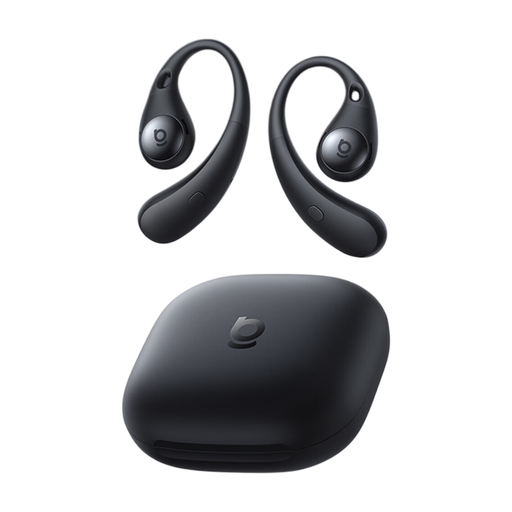
Why it's the right choice : For running or cycling in urban environments, safety is non-negotiable. Thanks to their "Open-Ear" design, these earbuds don't block your ear canal. The result : you can enjoy your music while remaining fully aware of traffic and pedestrians.
There's no promise of total isolation here. On the contrary, environmental awareness is presented as a key safety asset. It's an intentional feature, not just a marketing gimmick.
Perfect comfort and fit for activities in motion; environmental awareness for maximum safety.
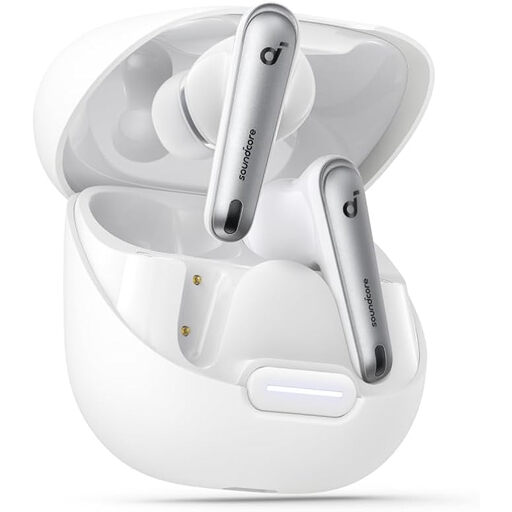
Why it's the right choice : Perfect for those who want a high-fidelity sound bubble on their commute or at the office. Compatibility with the **LDAC** codec ensures Hi-Res audio, while the adaptive noise cancellation impressively eliminates ambient distractions.
It doesn't fall into the trap of oversold ANC. Its adaptive technology (ANC 2.0) is backed by clear figures. The battery life is also specified with and without ANC (8h/10h), which prevents any unpleasant surprises during use.
High-performance adaptive noise cancellation; high-resolution sound (LDAC); solid battery life, even with ANC activated.
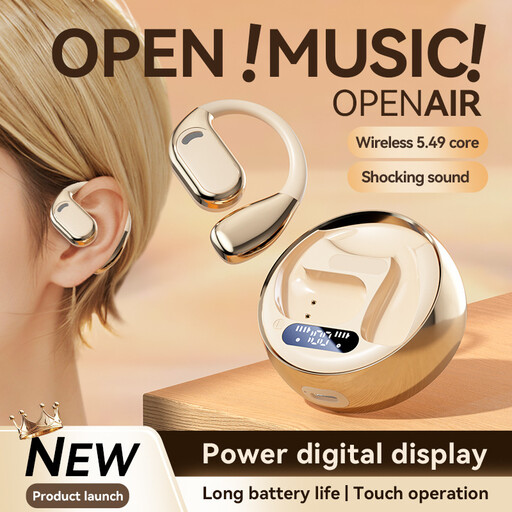
Why it's the right choice : For business travellers and holidaymakers alike, the language barrier can quickly become a headache. These **translator earbuds** have a clear mission : to provide near-instant translation in almost 150 languages, all through a dedicated app.
This model gets straight to the point. It doesn't get sidetracked with vague promises. Its one and only function, translation, meets a highly specific need. This avoids the trap of "gimmick" features that are often poorly executed.
Real-time translation, ideal for travel or business meetings; a powerful tool for breaking down the language barrier.
We've put together a complete selection of products that meet our demanding selection criteria and current safety standards.
The lifespan of a pair of true wireless earbuds primarily depends on their lithium-ion battery, which has a finite number of charge cycles. Generally, you can expect a noticeable decrease in battery life after 2 to 3 years of daily use. The durability of the case's hinge and the resistance of the materials are also points not to be overlooked for the overall longevity of the product.
Absolutely, thanks to the Bluetooth multipoint feature. It allows for a simultaneous connection to two sources, such as your computer and your smartphone. This lets you listen to music on your PC and instantly switch to your phone to take a call. If this feature is essential for you, be sure to check for it on the spec sheet.
Rest assured, active noise cancellation (ANC) technology is harmless to your hearing. Quite the opposite! By neutralizing distracting noises, it often encourages you to listen to your music or podcasts at a more moderate volume, thereby protecting your hearing. The real danger, with or without ANC, remains prolonged listening at an excessive volume.