
Livraison le jour même ou le lendemain

Qualité garantie

Débloquez vos offres de bienvenue: Livraison GRATUITE | Jusqu'à -80 % | 30 jours d'essai gratuits à JoyPlus
Téléchargez l'application
The wireless earbuds market is a crowded and confusing space. Between outlandish battery life claims, noise-cancellation technologies with confusing acronyms, and a myriad of form factors, it's easy to get lost and make a purchase you'll regret. Our mission? To help you decode spec sheets and avoid marketing traps, ensuring your next Bluetooth headset is the right one for you—not a source of frustration.
Before diving into our top picks, let's review the three common mistakes that lead straight to disappointment:
To avoid falling for the hype, rely on objective specifications. They are the only way to get a clear idea of what you're buying, far beyond the marketing slogans.
You'll always see two numbers presented: single-charge battery life and total battery life with the case. Ignore the second one. The figure that impacts your daily use is the first. Look for this number, and more importantly, the one with Active Noise Cancellation (ANC) turned on, which can slash endurance by 20-40%. Aim for at least 5 hours per charge for peace of mind.
The choice of form factor primarily depends on your comfort and intended use.
The magic of wireless hinges on a Bluetooth headset connection that doesn't falter. Aim for the Bluetooth 5.2 standard (or higher) to ensure a stable link and optimised power consumption. Do you make a lot of calls? Check that the model is a headset with a quality microphone, capable of filtering out ambient noise so the person on the other end can hear you clearly. While audiophiles and gamers will hunt down any hint of latency, for the average user, connection stability remains the number one criterion.
Instead of an endless catalogue, here are targeted picks that meet specific needs, based on the criteria we've just discussed.

Why we chose it: To experience wireless audio without breaking the bank, this model focuses on the essentials: a stable connection for music and calls, a compact design, and broad compatibility. It's a pragmatic entry point into the world of "true wireless".
No empty promises: this model doesn't claim to offer premium features at a low price. It focuses on the fundamentals: a reliable Bluetooth 6.0 connection and a modest but honest battery life (around 4 hours per charge). This helps you avoid the disappointment of gimmicky features that don't work.
An unbeatable performance-to-price ratio for simple daily use (music, podcasts, calls). As a bonus, its IPX5 certification ensures resistance to sweat and splashes.
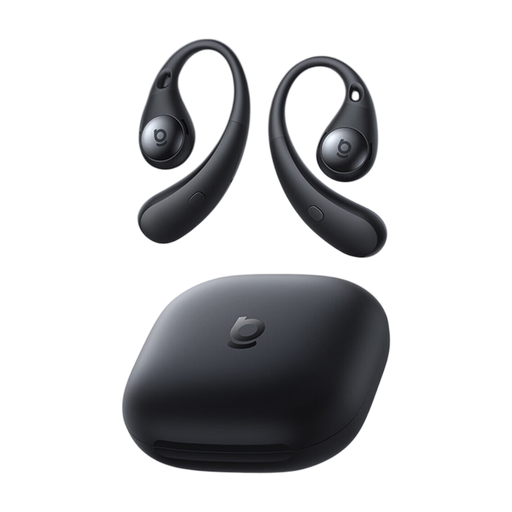
Why we chose it: Engineered for sports, these open-ear earbuds are perfect for keeping an ear on traffic during a city run. Their design ensures a rock-solid fit during exercise, without the "plugged-up" effect of in-ear models.
Instead of a software-based "transparency" mode, which is often disappointing, this model is open by design. It doesn't isolate you only to then artificially recreate your surroundings; it simply lets sounds in. This is safer, more natural, and ideal for outdoor sports.
Safety and comfort in the middle of the action. The open-ear design is the key advantage for runners, cyclists, and anyone who needs to stay connected to the world around them.
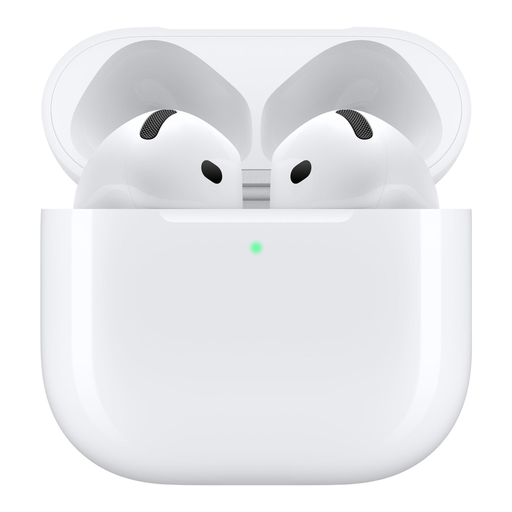
Why we chose it: For anyone equipped with an iPhone, iPad, or Mac, the AirPods 4 deliver an unparalleled experience of simplicity and fluidity. The magical pairing, automatic device switching, and personalised Spatial Audio are the features that justify their price tag.
It unapologetically picks a side: the Apple ecosystem. Rather than promising perfect universal compatibility, it excels where it's expected to. The buyer knows they will get the most out of it with Apple products, which prevents any disappointment on Android, where the experience will be inherently limited.
The seamless integration and exclusive features like Spatial Audio with dynamic head tracking. The H2 chip orchestrates the entire experience, ensuring top-tier audio quality and noise cancellation.
For purists who swear by rock-solid reliability, zero latency, and freedom from battery constraints, wired earbuds remain a safe bet. We've put together a selection of models that meet demanding quality standards.
Their Achilles' heel is the lithium-ion battery, whose capacity degrades with each charge cycle. Expect a lifespan of 2 to 4 years with daily use before the drop in battery life becomes truly detrimental. The durability of the case hinge and the earbuds themselves are also points to watch out for.
Yes, but its effectiveness varies dramatically between models. High-end references (certain Sony headphones, the HONOR Earbuds A Pro...) excel at erasing deep, constant rumbles like engines or rolling sounds (low frequencies). However, they are less effective against unpredictable sounds like conversations. For commuting, investing in a model with reputable noise cancellation makes a real difference.
Technically, yes. The AirPods 4 will connect to an Android smartphone via Bluetooth just like any other Bluetooth headset. You'll be able to listen to music and make calls. But you'll miss out on all the Apple magic: instant pairing, battery status display, automatic device switching, personalised Spatial Audio, control customisation... In short, the experience will be functional, but severely limited.