
Livraison le jour même ou le lendemain

Qualité garantie

Débloquez vos offres de bienvenue: Livraison GRATUITE | Jusqu'à -80 % | 30 jours d'essai gratuits à JoyPlus
Téléchargez l'application
The promise of a desk or nightstand free from cable clutter is certainly appealing. You just set down your phone, and it starts charging. Simple. Yet, without a few precautions, the wireless charger experience often ends in disappointment. Caught between marketing hype and technical reality, you can easily end up with a gadget that charges at a snail's pace, overheats, or simply refuses to work with your smartphone.
I'm the Head of Buyer's Guides at Joybuy, and my mission is to help you cut through the noise. Let's break down the pitfalls to avoid so you can make the right choice with confidence.
To make the right choice, you need to pay close attention to a few technical details. This is what separates a useless gadget from a reliable everyday accessory.
Wireless charging relies on several standards. Identifying the one that matches your devices is the first step.
Power, measured in watts (W), is the name of the game. For proper wireless charging, aim for 15W. But be warned, as we've seen, the charging pad alone isn't enough.
Always check if a USB-C power adapter is included. If not, you will need to purchase it separately. To get the full 15W from a wireless charger, an adapter of at least 20W is essential. For a 3-in-1 charging station (phone, watch, earbuds), a 30W or 40W power brick will often be required for each device to charge at its maximum speed.
The ideal form factor will depend primarily on your needs and habits.
Rather than an exhaustive list, we've matched top products with specific user profiles.
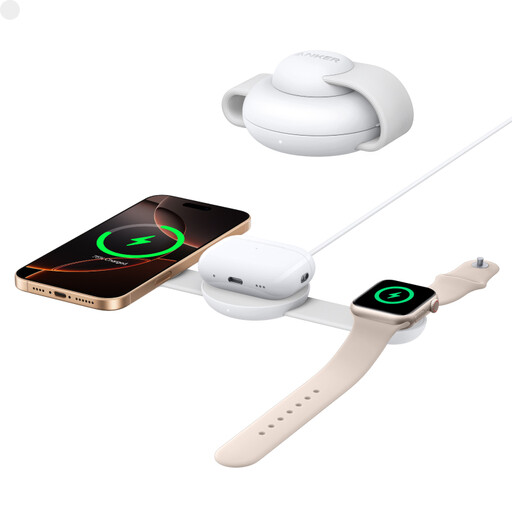
Why it's a perfect match: For the user who is all-in on the Apple ecosystem (iPhone, Apple Watch, AirPods) and is frequently travelling. Its ultra-compact, foldable design slips into any bag and transforms a hotel desk corner into a perfectly organised charging hub.
It avoids the "slow charging" trap: being Qi2 certified, it guarantees 15W charging for iPhone and, crucially, includes a 40W USB-C power adapter. No unpleasant surprises—the performance is there, right out of the box.
The perfect combination of powerful 3-in-1 charging and an ultra-compact, foldable design that's tailor-made for travel.
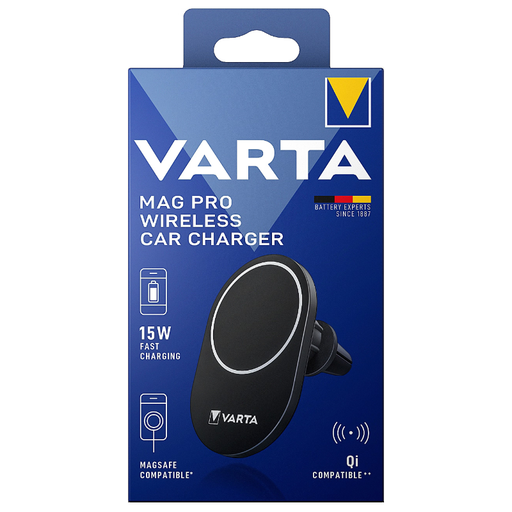
Why it's a perfect match: For anyone who relies on their smartphone for GPS. This car charger is a formidable 2-in-1: a solid magnetic mount and a fast wireless charger. No more fumbling with cables at the wheel; the phone stays perfectly visible and its battery stays full.
It solves the alignment problem. As a MagSafe compatible device, its powerful magnets guarantee a rock-solid attachment, even on bumpy roads. The connection is constant, ensuring an efficient and stable 15W charge.
A 2-in-1 solution (mount + charger) with an ultra-reliable magnetic mount and optimised thermal management for heavy use in the car.
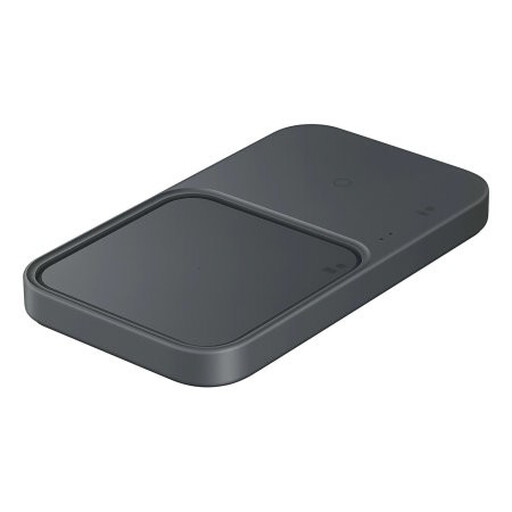
Why it's a perfect match: Designed for loyal users of the Samsung ecosystem. It simultaneously charges a Galaxy smartphone and a Galaxy Watch (or Galaxy Buds), with the guarantee of perfect compatibility and optimised performance.
It eliminates the risk of incompatibility, a common pitfall with smartwatches. Many third-party chargers are unable to fast-charge a Galaxy Watch. As an official product, it ensures safe and high-performance charging for all your Samsung devices.
Charges two devices simultaneously and includes a built-in cooling fan system to prevent overheating and maintain stable performance.
We have curated a full range of products that meet our strict selection criteria and current safety standards.
Yes, and this is a critical point. To enjoy 15W wireless charging, you will almost always need a USB-C power adapter of at least 20W. If you plug your charger into an old 5W power brick, it will work, but at a snail's pace. Always check whether the adapter is included or must be purchased separately.
A quality charger from a reputable, certified brand (Qi, CE) is designed to last for several years. In contrast, uncertified, entry-level models can not only fail prematurely but, more importantly, their poor thermal management can damage your smartphone's battery. Investing in a quality model is a much more cost-effective choice in the long run.
Yes, like most devices on standby, a plugged-in wireless charger draws a tiny amount of power, even with no phone on it. This standby power consumption is minimal, and its impact on your electricity bill is negligible. However, for peace of mind and to optimise your energy use, you can always unplug it during long absences.