
Livraison le jour même ou le lendemain

Qualité garantie

Débloquez vos offres de bienvenue: Livraison GRATUITE | Jusqu'à -80 % | 30 jours d'essai gratuits à JoyPlus
Téléchargez l'application
A cat that drinks very little, a pump that hums at night or an electrical cable positioned close to water: these situations show why choosing a wireless cat water fountain requires care. Connected models with filters offer more and more features, but they do not all meet the same needs.
Before buying a cat water dispenser, pay particular attention to pump safety, filter maintenance and the tank’s actual capacity. Here are the criteria to check to avoid ending up with a noisy fountain that is difficult to clean or expensive to run.
A wireless water fountain pump generally means that the submerged pump is not connected by a cable inside the tank. This makes cleaning easier and prevents a wire from coming directly into contact with the water. However, a charging base or power cable is often still essential.
Before choosing, check:
A fountain with no visible cable in the bowl may therefore not necessarily operate for several days without being recharged.
The noise level of a cat fountain depends on several factors: pump power, water level, circulation mode and filter condition. A pump advertised at under 20 dB may become noticeably louder when the tank is almost empty or when hair starts to clog the filter.
In a flat, a slow and steady flow is often more pleasant, particularly for animals that are sensitive to continuous sounds. Adjustable circulation modes also make it possible to adapt the flow to your cat’s behaviour.
Tank capacity alone is not enough to estimate running costs. Also check the price of compatible cartridges and how often they need to be replaced. Some filtered cat fountains combine activated carbon, ion-exchange resin and an ultrafiltration membrane.
The stated lifespan depends on water quality, the number of animals and the amount of hair that builds up in the system. Even when a filter is described as suitable for use over several months, it should be inspected and replaced in line with the instructions.
For one cat, a 1.8 to 2.6-litre tank means you will not need to refill the fountain too often, although it should still be checked daily. With several cats or a small dog, a larger capacity may be more practical.
A water fountain for cats and small dogs should also remain stable. A non-slip base and a sufficiently wide tank help reduce the risk of spills, especially if your pet drinks quickly or plays around the appliance.
Filtration does not turn tap water into sterile water. However, depending on the technology used, it can retain certain impurities. In particular, it is important to distinguish between:
Materials advertised as BPA-free or suitable for food contact are preferable. However, they do not remove the need to follow the cleaning instructions. The pump and electrical components must never be submerged if the instructions prohibit it.
An automatic cat water fountain should be possible to take apart without complicated tools. Removable parts should be rinsed regularly to limit the build-up of dirt and biofilm.
Connected models sometimes offer cat hydration monitoring: visit frequency, estimated volume or drinking duration. This data can help identify changes in your pet’s habits, but it is not a medical diagnosis under any circumstances. If you notice an unusual change, ask a vet for advice.
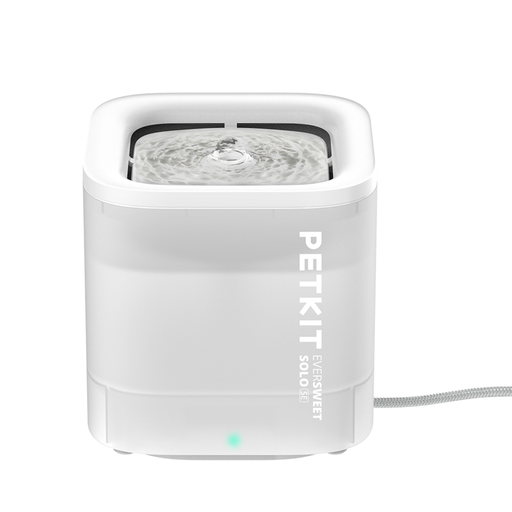
Why this choice suits this profile: With its 1.85 litre tank, indicator light and wireless pump, this model is ideal as a first set-up for a cat or small dog. It is also easy to use every day.
The level indicator helps ensure you do not forget to refill the tank. The instructions recommend replacing the filter every 2 to 4 weeks, depending on usage and water quality.
1.85 litre capacity, USB power, continuous circulation, indicator light and a pump advertised as quiet.
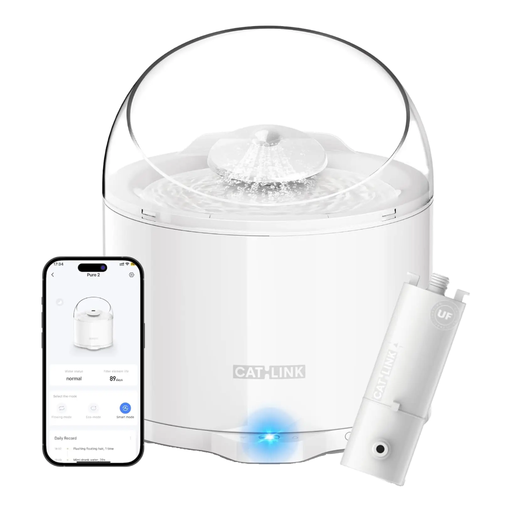
Why this choice suits this profile: This model is aimed at people who want to view their pet’s habits in an app and adjust the flow accordingly.
The app displays visit frequency, estimated volume and drinking duration. However, this information should be treated simply as a guide, not medical advice.
2.6 litre tank, ultrafiltration membrane advertised at 0.01 micron, four flow modes, wireless pump and low-noise operation.
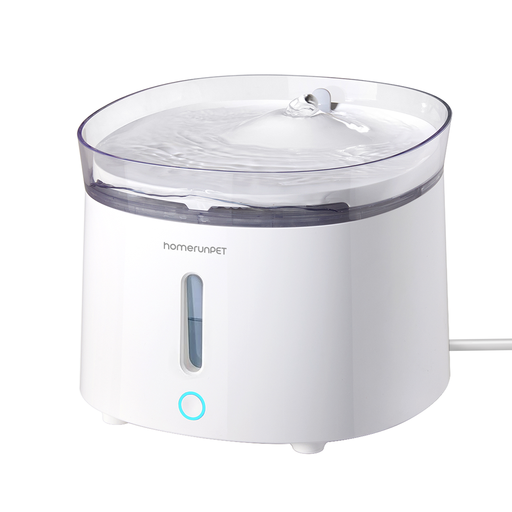
Why this choice suits this profile: Its design is suitable for households with a cat and a small or medium-sized dog, as well as for anyone looking for easy maintenance and a clear view of the water level.
The tank features a level indicator, while the removable parts can be washed separately. The manufacturer recommends cleaning it at least once a week.
Wireless pump, materials advertised as BPA-free, activated carbon and ion-exchange resin filter, and removable parts compatible with the top rack of a dishwasher.
We have selected a complete, regularly updated range of products that meet these demanding selection criteria and European safety standards.
To use a cat water fountain safely and effectively, follow these steps:
Never add medicine, flavouring or cleaning products to the water intended for your pet. Also check the adapter, charging cable and pump before every use.
The pump generally operates using a rechargeable battery, but this must be recharged with a base or cable. Battery life varies according to the model, selected flow rate and how often the water circulates. Check the technical specifications before buying.
Its lifespan depends on the type of filter, water quality and the number of animals. Some manufacturers refer to a few weeks, while the CATLINK Pure 2 states that its ultrafiltration cartridge can last for around three months. This remains an indication only: its actual condition and the recommendations in the instructions should also be taken into account.
It can record certain drinking habits and flag changes, depending on the functions available. This data helps you monitor use of the fountain, but it does not replace advice from a vet. If your pet’s behaviour changes suddenly, make an appointment without delay.