
Livraison le jour même ou le lendemain

Qualité garantie

Débloquez vos offres de bienvenue: Livraison GRATUITE | Jusqu'à -80 % | 30 jours d'essai gratuits à JoyPlus
Téléchargez l'application
Wireless Bluetooth earbuds have largely replaced wired models for commuting, calls, working from home and exercise. But a product page full of promises does not guarantee that the device will suit your everyday routine. Poor fit, battery life quoted under ideal conditions or misunderstood water resistance: certain details can turn an appealing purchase into a disappointing expense.
Here are the criteria to consider before choosing between open-ear earbuds, in-ear earbuds, Bluetooth headphones and bone-conduction headphones.
A battery life of “up to 30 hours” often includes the recharges provided by the charging case. The earbuds themselves usually last between 4 and 8 hours, depending on listening volume, active noise cancellation and microphone use during calls. To cover a full working day, compare the battery life per charge with the capacity of the case.
The IP54, IP57, IP67 or IPX8 ratings do not guarantee the same level of protection. An IP54 device is resistant to dust and limited splashes, while an IP67 model can withstand temporary immersion under specific conditions. That does not necessarily mean it is suitable for swimming.
For example, the Mojawa Aerra product page specifies that its IP67 certification does not make it suitable for swimming lengths: Bluetooth does not travel properly through water, and pressure may exceed the conditions for which it was designed. By contrast, some earbuds designed for swimming include internal memory so that they can play audio files without a connection to your phone.
Active noise cancellation can be very useful on trains, planes or in a shared workspace. However, it does not replace a good physical fit from the ear tips or ear cushions. On the street, open-ear earbuds and bone-conduction models allow you to stay more aware of your surroundings, although their sound may differ from that of a closed model.
For calls, check the number of microphones, whether voice-noise reduction is included and where the microphones are positioned. A model described as “with microphone” will not necessarily offer the same clarity on a busy street as it does in a quiet home.
AirPods integrate naturally with the Apple ecosystem, offering fast pairing and switching between certain compatible devices. Galaxy Buds are particularly well suited to Samsung and Android smartphone users, thanks to the Galaxy Wearable app and features designed for this environment.
Bluetooth devices generally remain compatible with different phones, but certain features — spatial audio, equaliser, conversation detection or case finding — may depend on the operating system. Before buying, check the Bluetooth version, supported codecs and app compatibility.
An IP rating corresponds to defined testing conditions: it does not cover every situation you may encounter in everyday use. After exercising, dry the earbuds and charging contacts before putting them away. For a model used in the rain, also check the case’s protection rating, which is often lower than that of the earbuds.
Finally, an integrated battery gradually loses capacity. Avoid excessive heat, prolonged discharge and charging in a damp environment. Keep the listening volume moderate and take regular breaks.
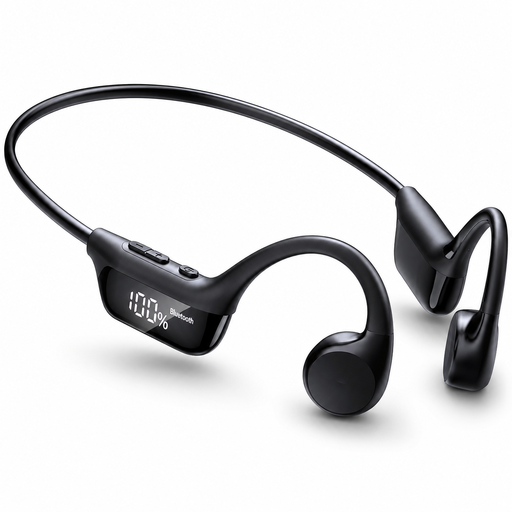
Why this choice suits this profile : This open-ear model is aimed at users looking for their first pair designed for exercise, with a microphone and a secure wraparound fit for running, cycling or gym sessions.
The quoted battery life reaches 12 hours and the product page states IPX7 protection. However, you should dry the contacts before recharging and avoid treating this certification as suitable for prolonged use underwater.
Advertised Bluetooth 6.0, battery-level display, built-in microphone and an open design so you can continue to hear sounds around you.
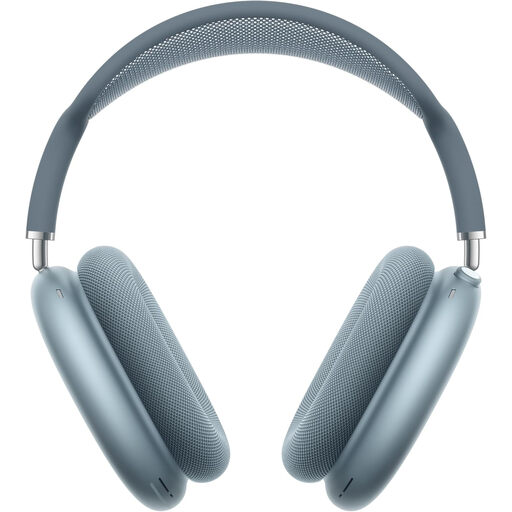
Why this choice suits this profile : These over-ear Bluetooth headphones are designed for people who prioritise enveloping ear cushions, spatial audio and integration with iPhone, iPad and Mac.
The product page states up to 20 hours of battery life with active noise cancellation or Transparency mode. It also lists a weight of 384,8 g and no waterproofing: two points to consider for long journeys and exercise.
Active noise cancellation, Transparency mode, Digital Crown, nine advertised microphones and memory foam cushions.

Why this choice suits this profile : Its advertised 32 GB of internal memory is aimed at swimmers and athletes who want to listen to MP3 files without keeping their phone nearby.
The built-in storage reduces reliance on Bluetooth while swimming. The product page mentions IPX8 protection, but recommends keeping the charging port completely dry before connecting it.
Open-ear design, built-in microphone, standalone MP3 playback and advertised use for swimming, jogging and training.
We have put together a complete, real-time updated selection of products that meet these demanding selection criteria and European safety regulations.
Turn on Bluetooth in your phone’s settings, open the case or press and hold the pairing button, then select the model’s name from the list of available devices. On iPhone, some AirPods offer guided setup. For Galaxy Buds, the Galaxy Wearable app generally lets you manage pairing and compatible settings.
Usage time depends on the battery, case, listening volume and care. A full charge can provide several hours of listening, while capacity gradually decreases over the course of charging cycles. Keeping the case away from heat and avoiding charging a wet device helps preserve its lifespan.
Not always. For outdoor running, an open-ear or bone-conduction model may help you hear traffic and announcements more clearly. Active noise cancellation is better suited to transport or consistently noisy environments, provided you remain alert whenever you need full awareness of your surroundings.