
Livraison le jour même ou le lendemain

Qualité garantie

Débloquez vos offres de bienvenue: Livraison GRATUITE | Jusqu'à -80 % | 30 jours d'essai gratuits à JoyPlus
Téléchargez l'application
Looking for wireless Bluetooth earbuds for work, music, calls or exercise? Choosing a pair may seem straightforward, but some marketing claims can lead to unwelcome surprises after a few weeks. Advertised battery life may include several recharges from the case, water resistance doesn’t mean the earbuds are designed for swimming, and active noise cancellation isn’t right for every situation.
Here are the key things to check before you buy, plus a selection of models to suit different types of users in the UK.
A manufacturer may advertise 25 or 30 hours of listening by including the recharges provided by the case. In practice, the earbuds’ battery life on their own is often much shorter. Check each of the following separately:
A few hours of battery life per charge may be enough for your daily commute. For business trips or holidays, though, a good combined battery life with the case means you won’t have to keep searching for a socket.
IP ratings describe resistance to dust and water under specific conditions. An IPX5 model will generally withstand splashes and limited water jets, while an IP57 model offers a different level of protection. That doesn’t necessarily mean it’s safe to use underwater.
Sweat, rain and splashes aren’t the same as swimming. After exercising, dry your earbuds and always check the manufacturer’s guidance.
Active noise cancellation (ANC), spatial audio, app-assisted translation and advanced equalisers can all be useful. However, these features often affect both the price and battery life. If you mainly make a few calls and listen to podcasts, a good microphone and a stable connection may matter more than a sophisticated audio system.
TWS earbuds are completely wireless and usually come in a charging case. Wireless in-ear earbuds block out more external noise thanks to their ear tips, although how securely they fit depends on the shape of your ears.
Open-ear models, such as some clip-on or bone-conduction earbuds, let in more ambient sound. They can be a good choice for cycling, walking or working in an environment where it’s useful to stay alert. The trade-off is that their bass response and level of isolation generally differ from those of in-ear models.
Bluetooth 5.3, 5.4, 6.0 and 6.1 are different generations of Bluetooth connection, but range also depends on the phone you use, obstacles and interference. Before you buy, check that the earbuds are compatible with your devices:
Bluetooth earbuds with a microphone should also be assessed based on the number of microphones and how they handle background noise. A spec sheet alone can’t guarantee the same call quality on the street, on public transport and in a noisy office.
Weight, ear-tip shape and the pressure on your ears all have a big impact on comfort during extended use. For exercise, look for a secure fit and suitable protection. For work or study, check that the touch controls are easy to use and that call quality is up to scratch.
Fans of Hi-Fi sound may want to look at the drivers, codec support and equaliser customisation options. However, these features can’t replace personal preference: a sound profile with very prominent bass won’t necessarily suit every genre of music.
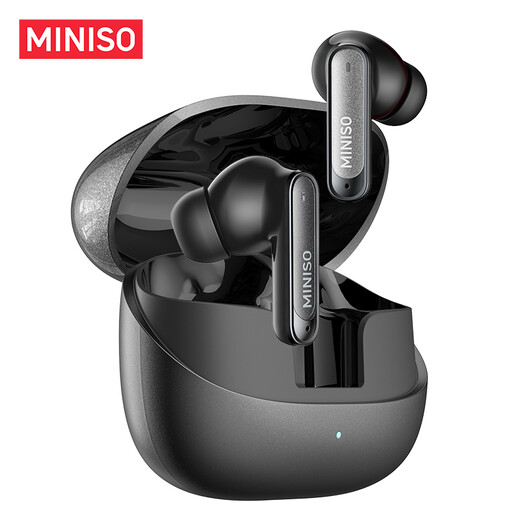
Why this is a good match: These TWS earbuds support iOS and Android devices. They’re suited to calls, studying, office work and everyday travel.
The product details state around 4 hours of battery life per charge and an IPX5 rating. Keep both in mind before you buy, and don’t confuse total battery life with battery life per earbud.
Advertised Bluetooth 6.0, built-in microphone and a case that can provide up to 7 charging cycles, according to the stated specifications.

Why this is a good match: If you’re looking for detailed sound, ANC noise cancellation and advanced settings, this model offers a well-documented set of features.
The figures distinguish between battery life with ANC on and off: up to 6 or 7 hours per charge, and up to 26 or 30 hours with the case, depending on the mode used.
Dual-driver system, advertised 24-bit/96 kHz audio, six microphones, ANC, IP57 rating and USB-C or wireless charging.
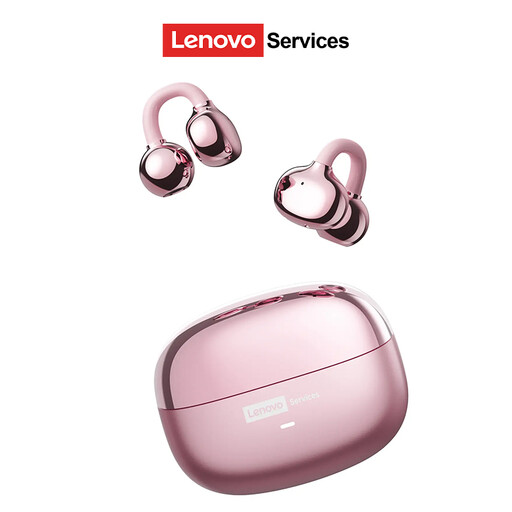
Why this is a good match: Its open-ear design may suit anyone who wants to listen to content while still hearing the sounds around them, whether at work or outdoors.
This design isn’t intended to provide the same isolation as in-ear earbuds. Instead, it’s aimed at people who want to stay aware of their surroundings.
Compatible with Android, iOS and Windows, advertised wireless 6.0 connection, lightweight clip-on design and battery life of up to 25 hours according to the product details.
We’ve put together a comprehensive selection, updated in real time, of products that meet these strict criteria and comply with European safety regulations.
Turn on Bluetooth in your phone’s settings, place the earbuds in their case, then open it. Select the model name from the list of available devices. When pairing for the first time, you may need to press and hold the button on the case or the touch-sensitive area for a few seconds.
It depends on the battery, how often you use them, exposure to heat and the number of charging cycles. To help your earbuds last longer, avoid leaving them in direct sunlight, exposing them to excessive moisture or listening at high volumes for long periods. Clean the grilles regularly and put them back in their case when you’re not using them.
Yes. Turning on active noise cancellation can reduce the advertised battery life. Always compare the figures with ANC switched on and off. This feature can be very useful on a train or plane; in the street or on a bike, a mode that lets in ambient sound is often more suitable.