
Livraison le jour même ou le lendemain

Qualité garantie

Débloquez vos offres de bienvenue: Livraison GRATUITE | Jusqu'à -80 % | 30 jours d'essai gratuits à JoyPlus
Téléchargez l'application
Run, cycle or take a call in the street without shutting out your surroundings: that’s the promise of open-ear Bluetooth earphones. Their design leaves your ear canal open, unlike conventional in-ear earphones. But the experience and intended uses can vary considerably from one model to another.
Product descriptions aren’t always clear. Water resistance doesn’t mean you can use earphones in the pool, while noise reduction may apply only to calls. Here are the features to check before you buy, followed by a selection to suit different needs.
With open-ear earphones, ambient sounds remain audible: that’s the whole point. Terms such as AI noise cancellation, ENC and noise reduction often refer to processing applied to the microphones to make your voice clearer during calls. They don’t guarantee that outside noise will disappear while you’re listening to music.
This open design can be a real advantage when walking or cycling. However, keep the volume at a reasonable level and stay alert to traffic. No audio device is a substitute for staying aware of your surroundings in a potentially dangerous environment.
IP and IPX ratings correspond to specific levels of protection:
So a model rated IP67, such as the Mojawa Aerra, isn’t necessarily designed for swimming lengths in the pool. Bluetooth doesn’t work well underwater, and pressure or prolonged immersion may exceed the limits it’s designed to withstand. If you’re looking for earphones for swimming, choose a model with internal memory, a standalone playback mode and clear instructions for use in water.
The stated battery life may refer to the earphones alone, the earphones and case combined, use at a moderate volume or specific test conditions. Instead, check:
For a working day or a long journey, getting eight or nine hours rather than six on a single charge can make all the difference. For swimming or a trip without your smartphone, however, built-in memory will have a much bigger impact than a generous-sounding battery-life claim.
Open-ear earphones mainly come in three styles:
For running or cycling, check how securely the hook fits, how flexible the material is and how much the earphones weigh. At your desk, if you’ll be wearing them for several hours at a time, opt for comfortable earphones that don’t put too much pressure on your outer ear.
Bluetooth 5.3, 5.4 or 6.0 can help provide a more stable connection, but the actual range still depends on your smartphone, obstacles and interference. Multipoint connectivity is particularly handy for switching between a computer and phone without pairing again.
With 32 GB of memory, the Verbex X7S lets you transfer audio files and listen to music without staying connected to your smartphone. However, this feature has nothing to do with streaming or a translation app.
AI translation earphones usually need a smartphone, a compatible app and sometimes an internet connection. The number of languages listed on a product page indicates claimed compatibility, not a guarantee of perfect translation in every situation. For an important conversation, always have a back-up option.
For calls, look at the number of microphones and the technologies listed — ENC, wind-noise reduction or beamforming — while bearing in mind that performance depends heavily on the surrounding noise.
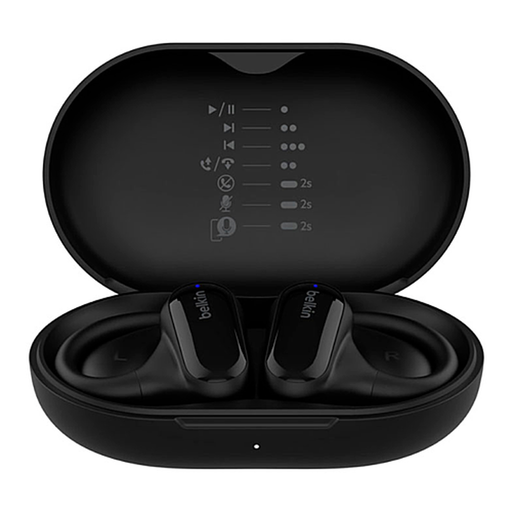
Why this model suits you : This pair combines an open design with a claimed battery life of 8 hours for the earphones and 26 hours with the case. It’s a good fit for daily commutes, working from home and your first few workouts.
The product description clearly distinguishes noise reduction on the microphones from open-ear listening, and specifies an IPX5 rating, which doesn’t allow for immersion.
Bluetooth 5.3, multipoint connectivity, USB-C charging, 26 hours with the case and ENC microphones for calls.
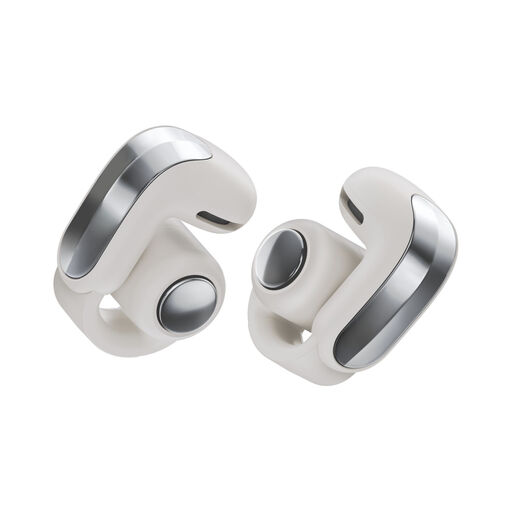
Why this model suits you : The clip-on design is ideal if you want open-ear listening, with built-in controls, call management and app-based settings.
The product description clearly states an IPX4 rating: the earphones can handle splashes, but aren’t designed for swimming.
Bluetooth 5.4, claimed battery life of up to 9 hours, on-earphone controls and USB-C or wireless charging.

Why this model suits you : It’s aimed at swimmers and sports enthusiasts who want bone-conduction earphones with MP3 playback, even without a smartphone nearby.
Its 32 GB of internal memory means you don’t have to rely on Bluetooth in the water. The manufacturer also claims IPX8 protection and recommends drying the port before charging.
32 GB MP3 memory, Bluetooth, claimed battery life of around 8 to 10 hours and an open-ear design.
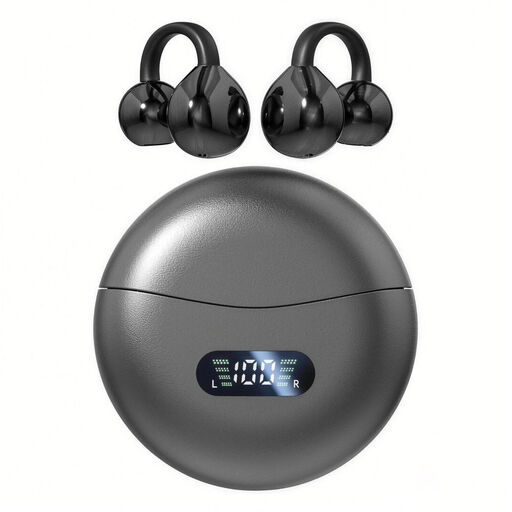
Why this model suits you : Its ear-hook design and open construction make it suitable for getting around, work calls and anyone keen to try app-assisted translation.
The product description explains that translation depends on a compatible ecosystem. Its IPX5 rating also means it’s limited to protection against sweat and water jets.
Bluetooth 5.4, a claimed weight of 5,3 g, battery life of up to 6 hours and 24 hours with the case, according to the product description.
We’ve put together a comprehensive selection, updated in real time, of products that meet these strict criteria and European safety requirements.
They can be a good choice for activities where it’s important to stay aware of your surroundings. Choose a lightweight, secure model designed to withstand sweat. When cycling, follow local rules and avoid anything that could distract you from the traffic.
Not just any model will do. An IPX4 or IPX5 rating isn’t enough for swimming. Look for a model specifically designed for immersion, with internal memory or a standalone playback mode. The Verbex X7S claims IPX8 protection and 32 GB of storage, but always follow the manufacturer’s instructions.
The main ongoing costs are charging and maintenance, and possibly a subscription to a translation app or related services. Clean the surfaces with a dry cloth, rinse them only if the manufacturer recommends it, and never charge a device or connector while it’s still wet.