
Livraison le jour même ou le lendemain

Qualité garantie

Débloquez vos offres de bienvenue: Livraison GRATUITE | Jusqu'à -80 % | 30 jours d'essai gratuits à JoyPlus
Téléchargez l'application
A wired headphone set remains a practical solution for listening to music, following a podcast, working on a computer or joining a meeting without having to keep an eye on the battery level. But an appealing product listing can also hide a few pitfalls: an incompatible connector, a missing microphone, or comfort that leaves a lot to be desired after a few hours.
Before you place your order, take the time to check the features that really match your daily use. Here are the main points to look out for, followed by a selection of models suited to different profiles.
A 3.5 mm headphone set won't necessarily plug directly into modern smartphones. Many devices now come with a USB-C port, while some computers have two separate sockets for sound and microphone.
An adapter can solve the problem, provided it is compatible with audio transmission. On a desktop computer, a headset with a microphone and a dual adapter can actually be simpler to set up than a model with a single plug.
Headphones designed for listening to music don't always include a microphone. The Sony MDR-ZX310, for example, is listed as a model that doesn't have one. So it's fine for listening, but not necessarily for calls or online meetings.
If you're looking for a headset for your PC or for remote work, check for a built-in microphone, its position and the controls available on the cable.
A range of 10–24,000 Hz or 12–22,000 Hz isn't enough to predict listening quality. Comfort, fit, closed or open-back design, sensitivity and the quality of the audio source all play an important role too.
A foldable, lightweight headphone slips easily into a bag, but its supra-aural pads can exert varying pressure depending on your head shape. Wired in-ear earphones, on the other hand, don't all isolate surrounding noise in the same way: you also need to choose ear tips that suit the size of your ears.
Also remember to check the cable length. The models shown here generally have a cable of around 1.2 m, a length that's suitable for a smartphone or a computer placed nearby.
A supra-aural headphone rests directly on your ears. It's often compact and easy to fold, but the pressure you feel depends on the size of the pads and the headband adjustment.
An over-ear model encloses the ear more fully, while in-ear earphones sit inside the ear canal. For on-the-go use, weight and size may be priorities. The Sony MDR-ZX310 weighs 125 g and the MDR-ZX110 around 120 g, according to the information provided.
For calls, look for a microphone built into the cable or mounted on an adjustable boom. An inline control can be used to adjust the volume, start or pause playback, or even answer a call. Its compatibility, however, depends on the connected device.
For remote work, a USB-A headset or a 3.5 mm model with a dual adapter can prove more functional than a music headphone without a microphone.
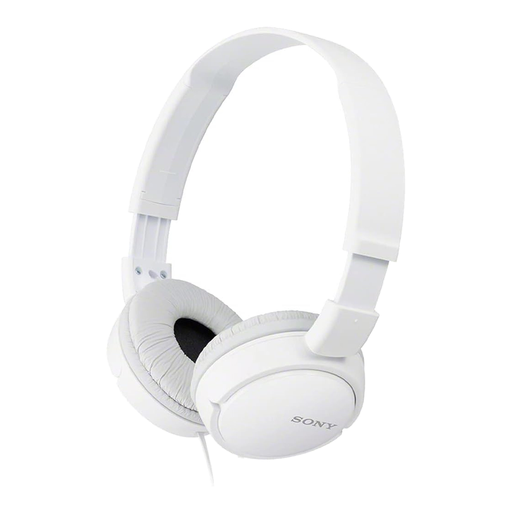
Why this choice suits this profile: Its 3.5 mm connection, stated weight of 120 g and foldable design make it an interesting first pair for music, studies and commuting.
The listing clearly states the absence of a microphone: you can't accidentally choose it for professional calls.
30 mm dynamic driver, 1.2 m cable and foldable earpieces for easy storage.
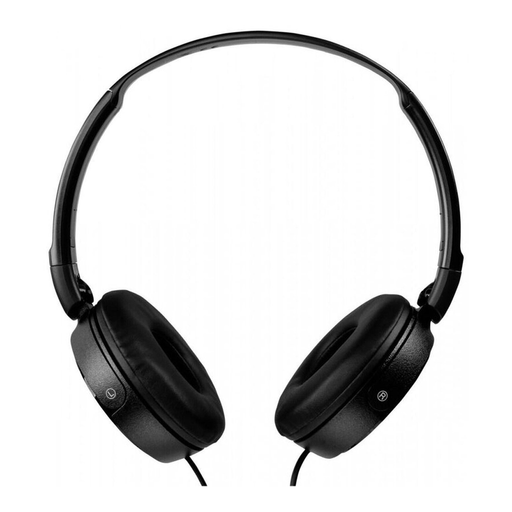
Why this choice suits this profile: Users who pay close attention to audio specifications get a stated frequency response of 10 to 24,000 Hz, a sensitivity of 98 dB/mW and 30 mm drivers.
The technical data allows you to compare the model concretely, without stopping at vague promises about sound quality.
Foldable supra-aural design, 24 ohm impedance and non-detachable 1.2 m cable.
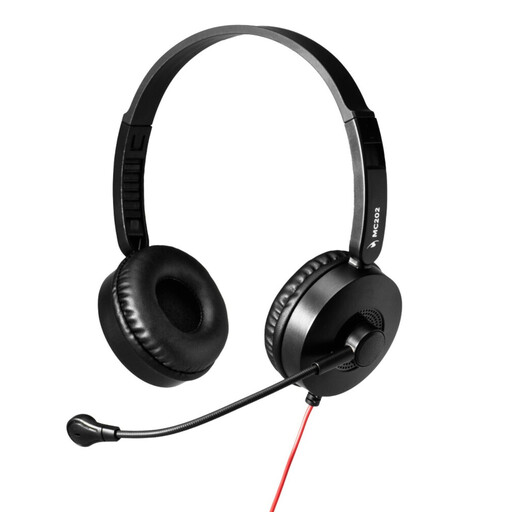
Why this choice suits this profile: This office headset is designed for meetings, remote training and calls on a PC or laptop with a USB-A port.
The listing specifies the presence of an adjustable microphone and a ready-to-use USB-A connection, rather than leaving these details vague.
Boom microphone with stated noise reduction, adjustable headband and soft ear cushions.
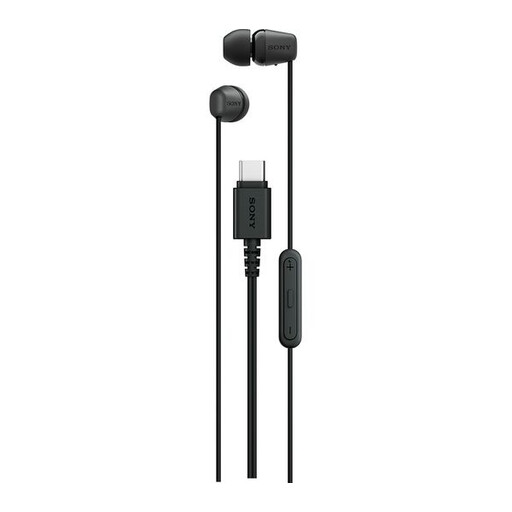
Why this choice suits this profile: These USB-C wired earbuds slip easily into a pocket and include a microphone as well as playback and volume controls.
The USB-C connection and the absence of Bluetooth are clearly stated: just check that your device supports audio via USB-C.
Stated weight of 3 g, 1.2 m cable and silicone ear tips for adjusting the fit.
We've put together a comprehensive, real-time updated list of products that fully meet these strict selection criteria and European safety regulations.
No, not directly. You'll need a USB-C to 3.5 mm jack adapter that is compatible with your smartphone's audio output. Also check that the adapter supports the microphone if you plan to make calls.
It all depends on build quality and care. Avoid pulling on the cable, always unplug the headphone by gripping the plug, and store it without winding the cable too tightly. Models with a non-detachable cable can be harder to repair if there's an internal break.
It doesn't need a battery or recharging. Any costs are therefore limited to buying an adapter, replacing ear tips for certain earphones, and general maintenance. Before choosing, compare the connection with that of your devices to avoid buying an extra accessory you don't need.