
Livraison le jour même ou le lendemain

Qualité garantie

Débloquez vos offres de bienvenue: Livraison GRATUITE | Jusqu'à -80 % | 30 jours d'essai gratuits à JoyPlus
Téléchargez l'application
In gaming, quality sound isn't a luxury?it's the key to immersion and crystal-clear communication with your team. In the face of the wireless wave, the wired gaming headset is holding its ground. And for good reason?it remains a reliable choice for its rock-solid reliability, total lack of latency, and plug-and-play simplicity. Say goodbye to the stress of a battery dying in the middle of a ranked match.
This guide is here to help you navigate the options and decode the features that truly matter. We've selected models for every type of gamer, whether you're on PC, a die-hard PS5 fan, or a multi-platform gaming nomad.
Before diving into our top picks, let's review the essential criteria that will make all the difference during your gaming sessions.
Your headset's connection type is crucial?it determines its compatibility and the features it can offer.
Sound quality and a clear mic?the two pillars of a great gaming experience.
Divine sound is useless if your headset becomes an instrument of torture after an hour. Check the weight, the earcup materials (breathable fabric for summer, leatherette for isolation), and the flexibility of the headband. For hours of pain-free gaming, a lightweight model with circum-aural earcups (which surround the ear) is often a winning bet.
Here is our selection of models that caught our attention, each with its own strengths.
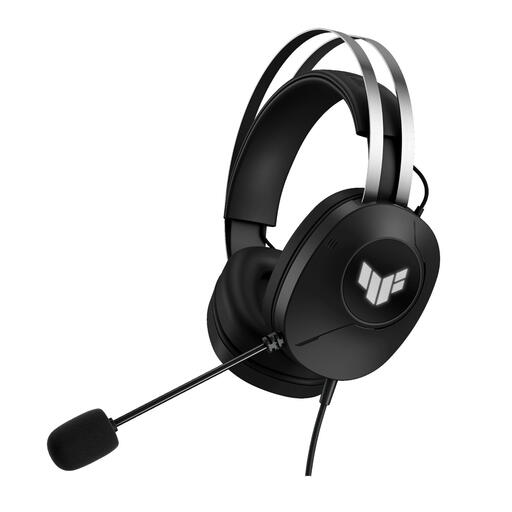
Why It Stands Out: This model targets PC and PlayStation gamers looking for an immersive, plug-and-play solution. Its USB connection and support for virtual 7.1 surround sound make it an effective tool for sound spatialization in compatible games.
Advantages:
Who Is It For? Ideal for the gamer who primarily plays on PC or PlayStation and wants to enjoy virtual surround sound without needing adapters.
See the ASUS TUF Gaming H1 Gen II
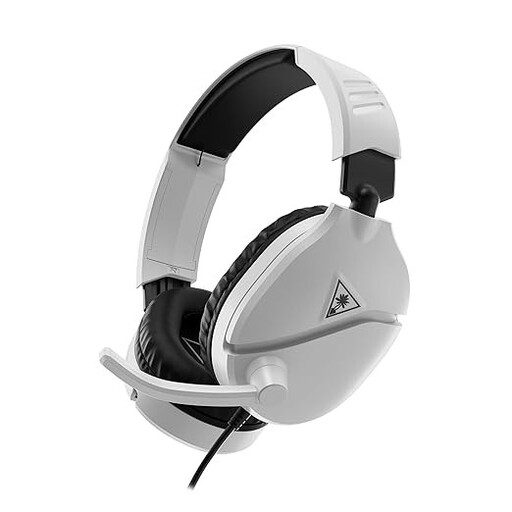
Why It Stands Out: The Recon 70 is the champion of versatility. With its universal 3.5mm jack, it's compatible with almost every platform on the market. A true all-rounder that makes it an excellent multi-platform headset.
Advantages:
Who Is It For? Perfect for the gamer who switches between multiple consoles and their PC. A reliable, hassle-free solution that gets straight to the point, with no extra software layer.
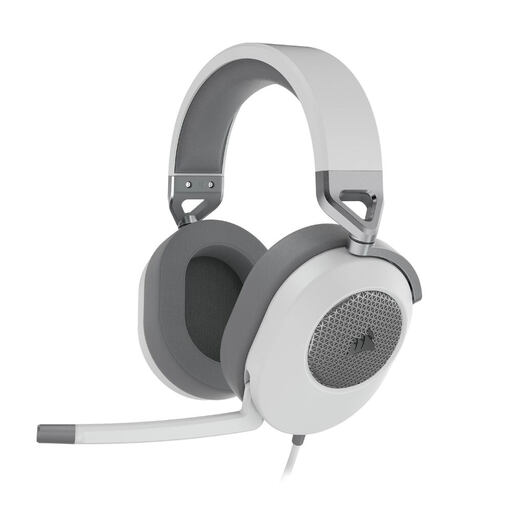
Why It Stands Out: The HS65 Surround is the art of the smart compromise. It combines the versatility of a 3.5mm jack with the power of 7.1 surround sound on PC, thanks to its USB adapter and Corsair iCUE software.
Advantages:
Who Is It For? For the demanding gamer, mainly on PC, who wants high-performance surround sound without sacrificing the ability to plug their headset into a console or smartphone.
Our selection highlights models with distinct profiles. If you don't find what you're looking for or are simply curious, the market is full of other excellent choices.
To explore a wider range of audio peripherals, take a look at our complete category.
Explore our entire collection of gaming headsets
1. What's the difference between a USB headset and a headset with a jack? A headset with a 3.5mm jack is universal: it plugs in anywhere and delivers stereo sound. A USB headset, on the other hand, integrates its own sound card. This allows it to offer advanced options (7.1 surround sound, equalizers...) but its compatibility is often limited to PC and certain consoles (mainly PlayStation).
2. Is 7.1 surround sound a gimmick or a real advantage in gaming? In FPS (first-person shooter) games especially, yes! Good 7.1 surround sound can provide a decisive tactical advantage by helping you precisely locate the origin of sounds (gunshots, footsteps...). Be aware, however: its effectiveness heavily depends on the quality of the headset's software emulation and the game's own audio mix.
3. Is a wired gaming headset automatically compatible with all consoles? No, it all depends on its connectivity. A headset with a 3.5mm jack will work on almost all modern consoles (PS5, Xbox Series X|S, Switch) by plugging it into the controller or the console itself. In contrast, a USB headset is primarily designed for PC. Its compatibility on consoles is more hit-or-miss: it will often work on PlayStation, but very rarely on Xbox. Always check the manufacturer's spec sheet before buying.