
Livraison le jour même ou le lendemain

Qualité garantie

Débloquez vos offres de bienvenue: Livraison GRATUITE | Jusqu'à -80 % | 30 jours d'essai gratuits à JoyPlus
Téléchargez l'application
You want to automate lawn mowing without installing a boundary wire, but product descriptions are full of competing promises about intelligent navigation, AI cameras and slope handling. A wire-free robotic lawn mower with an AI camera can genuinely make lawn maintenance easier, provided you check a few key points before buying.
The right model depends above all on the area to be mown, the layout of the garden and the quality of the available connection. Here are the pitfalls to avoid and the criteria to consider when comparing models sold in France.
A capacity of 800 m² or 2,500 m² generally refers to the recommended mowing area under specified conditions. If the garden is divided into several zones, includes narrow passages or has slopes, the robot may need more time and recharging cycles to cover the whole area.
Measure only the grassed areas, then subtract flower beds, patios, paths and spaces occupied by garden furniture. When choosing a robotic lawn mower for 800 m², also check whether the area is one continuous space or spread across several zones.
A boundary-wire-free robotic lawn mower generally combines mapping, sensors, a camera, positioning signals and a mobile app. You still need to install the station correctly, configure the boundaries and define no-go zones.
RTK navigation can be extremely precise, but it depends on signal reception and the surrounding environment. High walls, dense trees or a sunken area can interfere with positioning.
An AI camera, mechanical sensor or lift sensor can reduce the risk of collisions, but no system removes the need to prepare the garden. Before each mowing cycle, remove toys, cables, tools, thick branches and small objects left on the grass.
Detection can also vary depending on the obstacle’s size, colour, position and lighting conditions. It is therefore best to view this feature as a navigation aid, rather than a reason to leave just anything on the ground.
Compare the recommended area with the battery capacity and charging time. The THOMSON THOM 8 has a 5 200 mAh lithium-ion battery, offers up to 100 minutes of battery life per charge and takes around 180 minutes to recharge. This information helps you estimate the number of cycles required, without treating the stated battery life as a guaranteed duration in every garden.
An automatic lawn mower with automatic return to the station must be able to find its charging point and resume its programme. Also check where the station will be placed: it should sit on a stable surface and remain easy to access.
For a robotic lawn mower with RTK navigation, consider the signal reception conditions and whether it can manage multiple zones. The mobile app is generally used to schedule mowing times, check the robot’s status, modify a zone or install updates.
The THOMSON THOM 8 combines RTK navigation, an integrated camera, Wi-Fi, Bluetooth and the MowMate app, compatible with Android and iOS. Initial setup must be carried out in accordance with the manufacturer’s instructions, particularly when installing the station and mapping the garden.
Slope-handling capabilities are expressed in degrees or percentages. These two values are not interchangeable: a 22° slope does not correspond to 22%. Check the stated limit within the working area and, where specified, the limit that applies near edges.
The cutting height must also suit your lawn. The THOM 8 offers an adjustment range of 20 to 70 mm, with a cutting width of 180 mm. For a sloping garden, choose a model whose capabilities and sensors are clearly documented.
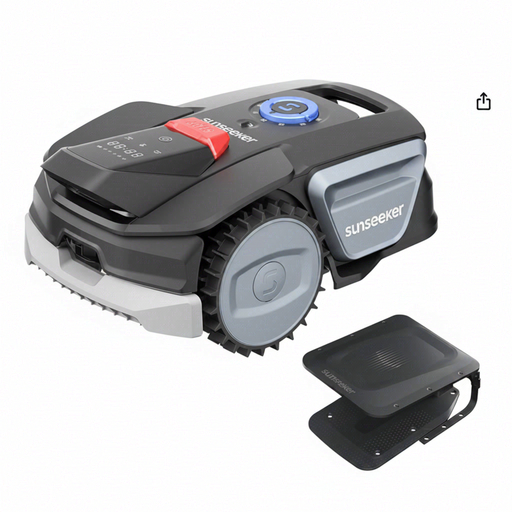
Why this choice suits this profile : Its stated capacity of 300 m² is suitable for smaller gardens, while its garage makes storage easier and protects the station.
The product description mentions wire-free design, AI vision and obstacle management. However, it is still essential to configure the working area correctly.
Stated coverage of 300 m², vision-based obstacle detection and app control.
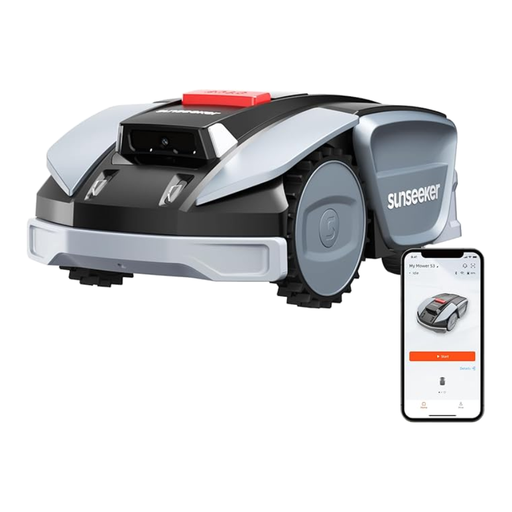
Why this choice suits this profile : This model is designed for owners who want automatic mapping, RTK navigation and multi-zone management.
Multi-zone management reduces compromises in gardens divided into separate areas. However, the map should still be checked after installation.
RTK navigation, AI vision, automatic mapping, app control and multi-zone management.
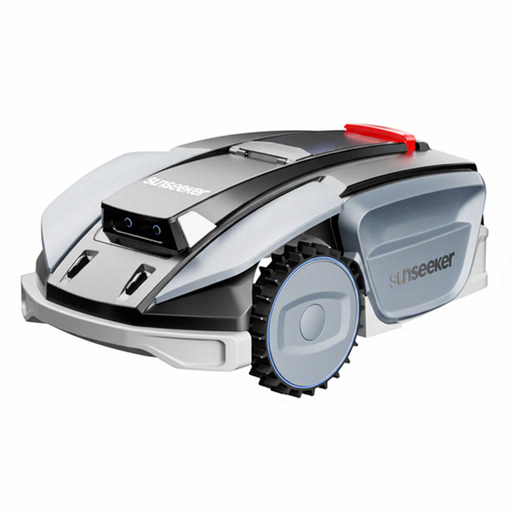
Why this choice suits this profile : Its stated coverage of 1 600 m² and all-wheel drive make it suitable for large gardens and steep slopes.
Its capacity and all-wheel drive meet the demands of challenging terrain, provided you stay within the slope limits specified by the manufacturer.
AWD, RTK navigation, AI vision, automatic mapping and multi-zone management.
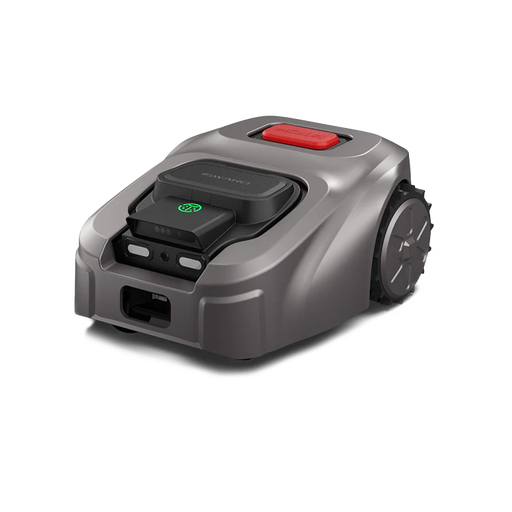
Why this choice suits this profile : Its recommended coverage of 2 500 m², LiFePO4 battery and 20 saveable maps make it suitable for extensive garden layouts.
The specifications distinguish between the maximum slope in the working area and the limit permitted near edges. This is a useful detail when comparing the stated specifications with the reality of your garden.
Stated coverage of 2 500 m², typical battery life of around 160 minutes, and vision, lift and rain sensors.
We have put together a comprehensive, real-time selection of products that meet these strict criteria and European safety requirements.
Before the first mowing cycle, clear the lawn of all movable objects and install the station away from busy areas. Set the schedule in the app, taking your neighbours, the weather and the times when the garden is in use into account.
To protect the equipment:
Electricity consumption varies depending on the area, number of cycles, slope and your supplier’s tariff. To estimate it, note the charger’s power rating, charging duration and weekly mowing frequency.
It depends on the model. Wi-Fi or Bluetooth is often used for setup and app-based control. Mowing may sometimes continue without a permanent connection, but remote functions and certain updates may require network access. Check the instructions for your chosen model before installation.
No. It can improve detection and navigation, but you must still remove objects left on the ground, check narrow passages and follow the safety instructions. Sensors do not remove the need to prepare the garden properly.
Compare the stated maximum slope, type of traction and limit that applies near edges. For a significant slope, the all-wheel drive of a model such as the SUNSEEKER S5 AWD may be useful. However, its suitability must be checked against the precise layout of your garden.