
Livraison le jour même ou le lendemain

Qualité garantie

Débloquez vos offres de bienvenue: Livraison GRATUITE | Jusqu'à -80 % | 30 jours d'essai gratuits à JoyPlus
Téléchargez l'application
A winter duvet isn’t just about thickness or how fluffy it looks. The temperature of your bedroom, the size of your bed, the type of filling, and how easy it is to care for all play a part in your everyday comfort.
Certain mistakes crop up time and again when buying. A duvet that’s too warm can feel stifling, while one that’s too light will let the cold in if your room isn’t well heated. To help you compare the options, here are the key factors to consider before you order.
A bulky duvet isn’t necessarily warmer. Its insulating power depends largely on the weight of the filling, the structure of the fibres, and how well they trap air.
The grammage, given in g/m², is a useful guide for synthetic models. The TOG rating, often used for winter duvets, also measures thermal resistance. A 15 TOG duvet is generally intended for cooler bedrooms and people who feel the cold easily. However, how warm it feels will depend on the room temperature, the pyjamas you wear, and your own sensitivity to cold.
Terms like “hypoallergenic” or “anti-dust mite” should come with verifiable details: the material, treatment, certification, and washing instructions. A certification doesn’t guarantee that every user will find it equally comfortable either.
Some product listings mention OEKO-TEX Standard 100, CertiPUR, Sanitised, or ISO 9001, for example. It’s better to check the certification’s specifics, its scope, and the manufacturer’s recommendations than to stop at a simple marketing tagline.
A duvet that’s too narrow risks leaving your shoulders uncovered, especially when sharing. For a double bed, sizes 200 x 200 cm, 220 x 240 cm, or 240 x 260 cm may work, depending on the mattress width, bed height, and how much overhang you prefer.
For a king-size bed, always check the exact product dimensions. A duvet labelled “king” could measure 220 x 230 cm or 220 x 240 cm, depending on the brand.
In a bedroom kept between 18 and 20 °C, a winter duvet offering medium to high warmth should be fine. If the room isn’t well heated, go for a model designed for cold nights, with a more insulating filling.
A 4-season duvet is another option. It usually combines a lightweight summer duvet with a medium-weight one, which you can use separately or together. This setup lets you adjust the warmth throughout the year, as long as the fastening system is sturdy enough.
A machine-washable duvet is convenient, but thick models often need a large-capacity machine. Many manufacturers recommend a washing machine of at least 12 kg, a 40 °C wash, and a low-temperature tumble dry.
With a down or feather duvet, drying is especially important to stop the filling from clumping. Always follow the care label. A duvet that isn’t dried properly can hold moisture and develop unpleasant odours.
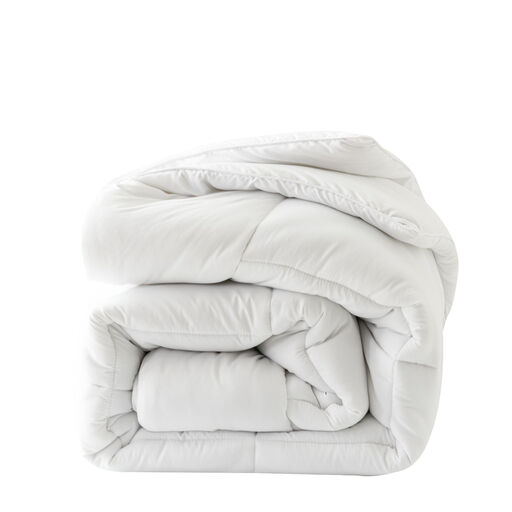
Why this suits this profile: This microfibre duvet has a 15 TOG warmth rating and a quilted design. Its size works well for a large bed, but do check your mattress dimensions.
The 15 TOG rating and microfibre composition give clearer guidance than just the word “winter”. You still need to consider your bedroom temperature before choosing.
Microfibre filling, box-stitch construction, and several sizes available.

Why this suits this profile: Its filling of 90% duck feathers and 10% down, paired with an organic cotton sateen cover, offers a natural, cosy feel for larger beds.
The filling composition is clearly detailed, far from vague terms like “natural down”. The listing also specifies washing at 40 °C and gentle drying.
220 x 240 cm size, square stitching, and certifications listed including OEKO-TEX Standard 100 and CertiPUR.
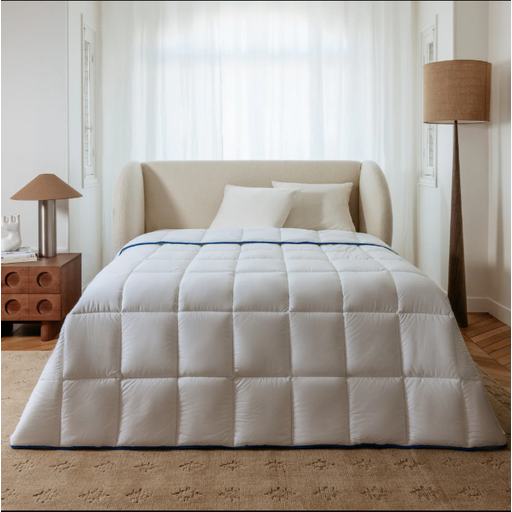
Why this suits this profile: This model combines a cotton percale cover with a filling of siliconised hollow polyester fibres. Its size suits a wide double bed.
The listing specifies the 400 g/m² grammage, dimensions, composition, and 40 °C wash. This information makes it easier to compare with other winter duvets.
100% cotton percale, siliconised hollow fibres, king-size format, and machine washable at 40 °C as stated.
We’ve put together a full, real-time updated list of products that meet these strict selection criteria and European safety regulations.
A winter duvet is ideal for cold nights and rooms that aren’t well heated. A 4-season duvet offers more flexibility, especially in homes where the temperature varies a lot between winter and the in-between seasons.
For summer, a lightweight summer duvet with a lower grammage will be more suitable. Some models made from hollow fibres or cotton are designed for rooms at 20 °C or above. Avoid choosing a very warm duvet for year-round use just because it’s thicker: thermal comfort depends on the season and your sleeping habits.
For a 160 cm bed, the 220 x 240 cm size is often preferred to give a comfortable overhang on each side. For a 180 cm bed, check the mattress width, bed base height, and personal preferences. The dimensions stated by the manufacturer are the ones to rely on.
No. A 15 TOG duvet can be too warm in a well-heated bedroom. It’s better suited to cooler rooms and people who want a high level of warmth. Check the usage recommendations and consider the usual temperature of your bedroom.
How long a duvet lasts depends on the filling, how often it’s washed, how it’s dried, and its overall condition. Replace it if the filling has become permanently flattened, the stitching is starting to come undone, or odours persist despite proper care. Gentle washing, thorough drying, and a suitable cover will help preserve its comfort.