
Livraison le jour même ou le lendemain

Qualité garantie

Débloquez vos offres de bienvenue: Livraison GRATUITE | Jusqu'à -80 % | 30 jours d'essai gratuits à JoyPlus
Téléchargez l'application
A winter duvet isn’t chosen solely by its thickness or the warmth promise on the label. Too heavy, and it quickly becomes cumbersome; with poorly distributed filling, cold spots can appear. For adults, couples and families, three criteria deserve particular attention: size, warmth level and ease of care.
Before buying a warm duvet, here are the most common pitfalls to avoid.
A thick duvet isn’t necessarily the warmest. The insulating power also depends on the filling, its weight per square metre and how it’s distributed. A 400 g/m² microfibre duvet can provide a pleasant feeling of warmth while remaining relatively light. Conversely, a duck feather duvet can be more compact and offer a different feel.
A mention of “5 cm thickness” primarily tells you about the product’s volume. It’s not enough to compare two models.
A 140x200 duvet generally suits a single bed of the same length, but it leaves little fabric to drape over the sides. For a double bed, a 200x200 duvet can work for two people. The 220x240 and 240x260 sizes offer more coverage and reduce tugging during the night.
Remember to measure the mattress, but also the height of the bed base and each person’s preferences. Couples who move around a lot in their sleep will often benefit from choosing a duvet wider than the mattress.
A machine-washable duvet may need a large-capacity drum. Some models recommend a machine of 12 kg or more, especially when they are thick or large. Also check the maximum washing temperature, drying conditions and any prohibition on bleach or dry cleaning.
A duvet that’s difficult to dry risks retaining moisture. Following the care label is therefore just as important as choosing the right filling.
A duvet and feather duvet typically combines lightness, loft and good temperature regulation. A model made up of 90 % duck feathers and 10 % down offers a firmer support than a duvet filled mostly with down. It can suit people who like structured wraps and the feeling of natural warmth.
A microfibre duvet is based on synthetic fibres, often hollow and siliconised. It’s generally easy to care for and can meet the expectations of those looking for a hypoallergenic duvet, depending on the features stated by the manufacturer. Mentions of “anti-dust mite” and “hypoallergenic” should, however, be checked on the product page. They don’t replace the usual care precautions.
Expressed in g/m², the weight per square metre indicates the amount of material used, but isn’t enough to predict the feeling of warmth. A 15 tog duvet corresponds to a high thermal level in systems that use this unit. However, you need to take into account the room temperature, your bedding and your own sensitivity to cold.
In a heated bedroom, a 4-season duvet can prove more practical. You use the lightweight version on milder nights, then the warmer one when temperatures drop.
A cotton duvet, especially in percale, offers a breathable feel and a generally matt texture. Cotton sateen provides a smoother touch. Box-stitch or compartment stitching helps keep the filling in place and limits the formation of less-filled areas.
Certifications such as OEKO-TEX Standard 100, CertiPUR, Sanitised or ISO 9001 should be considered as information relating to compliance or the manufacturing process, as presented on the product page. They do not, on their own, constitute a medical guarantee.
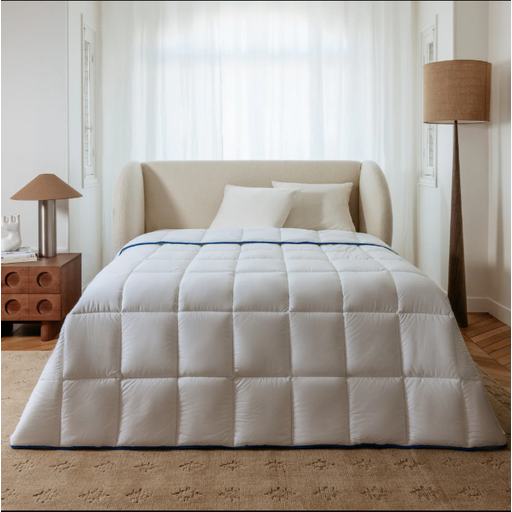
Why this choice suits this profile: This size is suitable for a single bed and its synthetic composition makes everyday care simpler.
The product page states a filling of 400 g/m² and machine washing at 40 °C, with a recommended capacity of 12 kg or more.
100 % cotton percale cover, hollow siliconised fibres and certifications mentioned on the product page, including OEKO-TEX Standard 100.
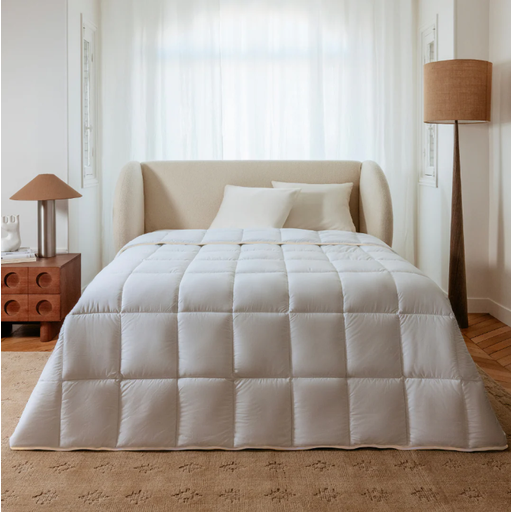
Why this choice suits this profile: Its large size suits a double bed and its natural filling appeals to those who prefer the feel of natural materials over synthetic fibres.
The box-stitch design helps distribute the feathers and down, which limits the formation of cold spots.
Filling stated as 90 % duck feathers and 10 % down, organic cotton sateen cover and 240x260 cm size.
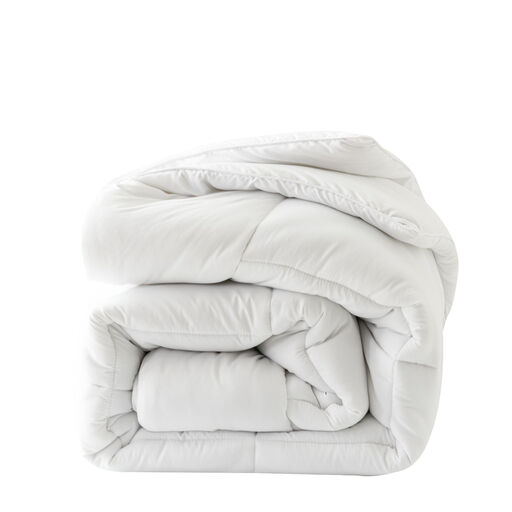
Why this choice suits this profile: Its double size and stated 15 tog rating suit cooler bedrooms and those looking for a synthetic winter duvet.
The microfibre filling avoids the constraints associated with feathers, while still featuring box-stitch construction, according to the product name.
220x240 cm size, microfibre filling and hypoallergenic mention in the model’s commercial name.
We’ve put together a comprehensive, real-time updated selection of products that meet these demanding criteria and European safety requirements.
For a bed that is 140 or 160 cm wide, the 200x200, 220x240 and 240x260 sizes are the most common. A wider duvet offers more overhang, but it also requires a suitable duvet cover and a machine large enough for washing.
No. A 15 tog duvet corresponds to a high warmth level. It can suit a cooler bedroom or someone who is very sensitive to the cold, but it risks being too warm in a well-heated home. Take into account the usual room temperature and your nightwear.
The length of use depends on the filling, how often it’s washed, the drying method and the quality of the stitching. A regularly washed duvet cover protects the duvet. Inspect it each season: loss of volume, clumps of fibres, feathers escaping or weakened fabric are all signs that a replacement may be needed.