When the temperature drops, trying to fall asleep in a freezing bedroom can quickly become a nightmare. The solution? A quality winter duvet, capable of wrapping you in warmth without making you sweat. But with choices between natural or synthetic fillings, different warmth ratings, and various sizes, it can be overwhelming to find the right one.
This guide is here to help you make the right choice. As the Product Curation Lead at Joybuy, my mission is to give you all the insights you need to find THE perfect duvet for your budget and preferences. The goal: to finally enjoy peaceful, warm winter nights.
How to Choose Your Winter Duvet
Before diving into our selection, let's review the key points to ensure you make the right choice.
1. The Filling: Natural or Synthetic?
This is the heart of the duvet! The filling determines its warmth and weight, as well as how easy it is to care for.
- Natural duvets: Filled with down and feathers (duck or goose), these are the gold standard of insulation. They regulate temperature like no other. The secret lies in the down, which provides airy warmth and an incomparable loft, while the feathers add structure and volume. It's a durable investment and a champion of breathability.
- Synthetic duvets: Made from polyester fibres (solid, hollow, siliconised, etc.), this is the smart and effective alternative. Thanks to modern innovations, some fibres now perfectly mimic the comfort of down. Its biggest advantage: it is most often hypoallergenic and treated to be anti-dust mite, a real relief for allergy sufferers. And the icing on the cake? Caring for it is a breeze.
2. Warmth Rating and Fill Weight
Expressed in g/m?, the fill weight corresponds to the weight of the filling. As a general rule, the higher it is, the warmer the duvet.
- For a warm synthetic duvet, aim for a fill weight between 350 and 500 g/m?.
- For a higher-performance natural duvet, a fill weight of 250 to 350 g/m? is more than enough for optimal winter comfort.
To simplify things, some manufacturers use a warmth rating (often from 1 to 4). For winter, you should logically aim for the highest rating.
3. The Dimensions: A Matter of Comfort
The secret to comfort? A duvet that drapes generously over each side of the bed (allow for 20 to 40 cm) to prevent cold air from seeping in. For example, for a standard double bed (140x190 cm), a 220x240 cm duvet is the perfect choice to stay snugly wrapped up.
Our Winter Duvet Recommendations
We have analysed several models to present our top picks—duvets that will keep you warm all winter long.
Warm Duck Feather Duvet 200x200cm - MORPHEA
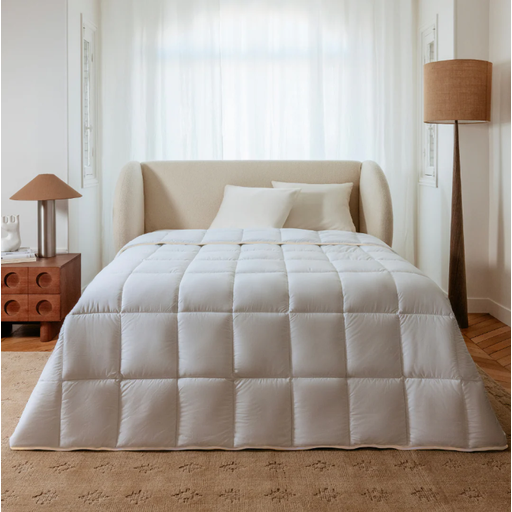
This model from MORPHEA leverages a natural filling to guarantee you cosy nights, even when the mercury drops.
- Why we love it: Its secret is a premium filling made of 90% duck down and 10% small feathers. This premium ratio ensures top-tier thermal insulation while remaining stunningly lightweight. Its organic cotton sateen cover (129 threads/cm?) is incredibly soft to the touch. The Oeko-Tex Standard 100 and Certipur labels, along with the Sanitized treatment, are solid guarantees: no harmful substances, plus antibacterial and anti-dust mite properties, as claimed by the brand.
- Its strengths:
- Breathable warmth thanks to the premium natural filling.
- Exceptional loft and lightness (thanks to the 90% down!).
- Soft and durable organic cotton cover.
- Box-stitching for perfect heat distribution.
- Who is it for?: For those who want the top-tier thermal performance and breathability of a natural duvet for a standard bed (140x200 cm).
Warm Duck Feather Duvet 220x240cm - MORPHEA
Here we find the same quality natural filling, but in an XXL version perfect for double beds.
- Why we love it: Here, the ratio is reversed: 90% duck feathers to 10% down. The result? A duvet with more structure and spring, which remains just as enveloping and warm. Its generous 220x240 cm dimensions guarantee there's enough for everyone, with no fighting over the covers!
- Its strengths:
- The perfect balance between the support of feathers and the softness of down.
- XXL size for comfort for two (or for one!).
- Organic cotton sateen cover and multiple certifications (Oeko-Tex, Sanitized).
- Natural thermal regulation.
- Who is it for?: The ideal choice for couples (on a 140 or 160 cm bed) or for anyone who loves to wrap themselves generously in a duvet that has some substance.
Winter Cotton and Polyester Duvet 220x240 cm, 5 cm thick - MORPHEA
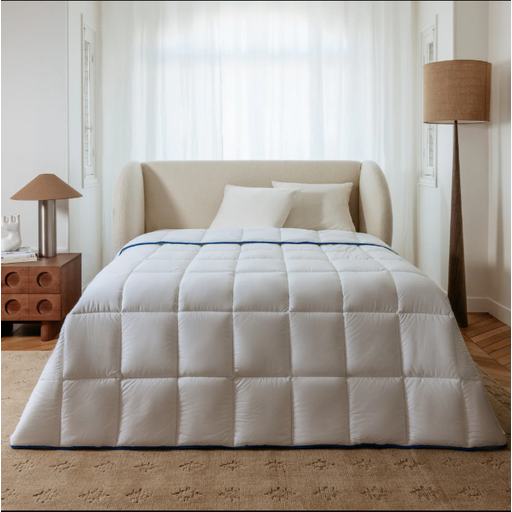
Now for the synthetic alternative! This model is proof that you can combine warmth, comfort, and easy care.
- Why we love it: Its siliconised hollowfibre filling traps air for top-notch insulation while ensuring a long-lasting loft. Its 100% cotton percale cover adds the touch of softness and breathability we love. Made in Europe and certified Oeko-Tex Standard 100, it is also hypoallergenic: excellent news for sensitive skin and allergy sufferers.
- Its strengths:
- Hypoallergenic and anti-dust mite synthetic filling.
- Easy to care for: machine washable at 40°C.
- Excellent insulating power and loft for a cocoon-like effect.
- Breathable cotton percale cover.
- Who is it for?: For anyone who suffers from allergies, wants a warm duvet with hassle-free maintenance, or is simply won over by the benefits of a quality synthetic option.
Looking for Other Options?
Haven't found the perfect match yet? Don't worry! To explore even more models, sizes, and warmth ratings, take a look at our complete collection.
? Discover Our Entire Duvet Collection
Frequently Asked Questions About Winter Duvets
What is the difference between a natural and a synthetic duvet?
It's all in the filling! A natural duvet (down, feathers) offers unparalleled insulation, breathability, and lightness, but it can be more demanding to care for. A synthetic duvet (polyester fibres) is the champion for tight budgets and allergy sufferers: it's hypoallergenic, easy to wash, and very effective.
How do I care for my winter duvet?
The first step: always read the manufacturer's label! Most synthetic duvets can be machine washed at 40°C. For natural duvets, a low-temperature wash (30 or 40°C) on a delicate cycle is an option, but dry cleaning often remains the best solution to preserve their loft over the long term. In the tumble dryer, use a low temperature and add a few dryer balls (or tennis balls!) to help the filling regain its full volume.
What fill weight should I choose for a very warm winter duvet?
For a very warm winter duvet, aim for at least 400 g/m? for a synthetic model. Thanks to the superior insulating power of down, a fill weight of around 270 g/m? is sufficient for a quality natural duvet to provide you with exceptional warmth.


