
Livraison le jour même ou le lendemain

Qualité garantie

Débloquez vos offres de bienvenue: Livraison GRATUITE | Jusqu'à -80 % | 30 jours d'essai gratuits à JoyPlus
Téléchargez l'application
When the cold sets in, the urge to snuggle into a warm, cosy bed becomes irresistible. A good winter duvet is the key to truly restorative nights. But with an overwhelming number of options, how do you find your way? The risk of making a mistake is real, and the wrong purchase can quickly lead to discomfort and wasted money.
As a product expert for Joybuy, my mission is to decode the market for you. Let's cut through the marketing jargon and get straight to the point: here are the pitfalls to avoid and the real criteria for making the right choice.
Before you start shopping, beware of these three common misconceptions that often lead to disappointment:
To get it right, three points need to be examined closely. These will determine your duvet's level of warmth, comfort, and ease of care.
Fill weight, expressed in grams per square metre (g/m? or GSM), measures the density of the filling. The higher the number, the more insulating the duvet.
This is the core component, the element that separates two different philosophies.
To avoid the nightly tug-of-war over the duvet, plan for an overhang of at least 20 to 40 cm on each side of the mattress.
To put theory into practice, here are some models that meet specific needs.
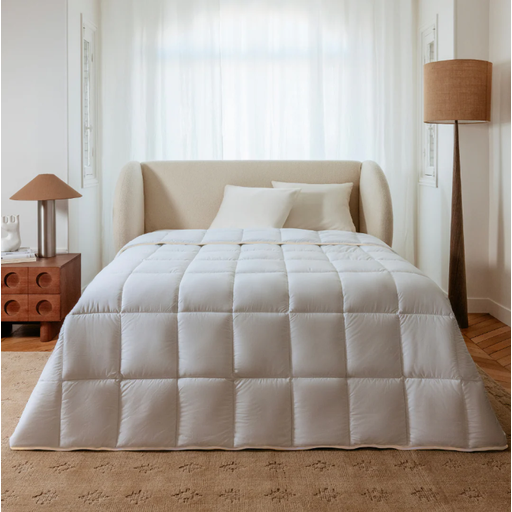
Why we chose it: Its generous 240x260 cm size is perfect for a double bed (160 or 180 cm), ensuring both partners stay covered all night long. The natural filling provides breathable warmth and superior comfort for the coldest nights.
It solves the size problem by offering a generous overhang. Its duck feather and down filling ensures high-performance thermal insulation without being overly heavy, unlike some deceptively thick synthetic duvets.
Natural thermal regulation thanks to the down, which wicks away moisture and maintains consistent warmth. Encased in an organic cotton sateen cover for added softness.
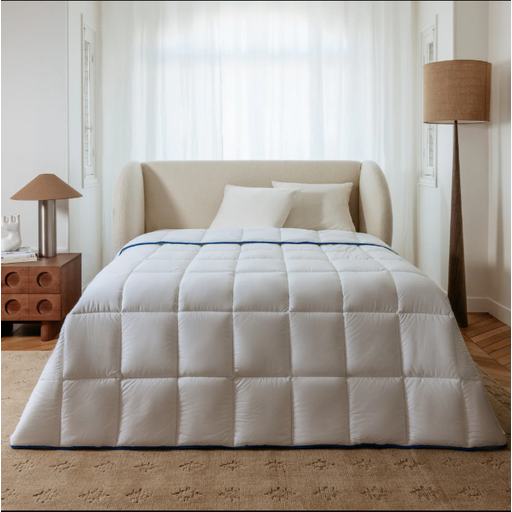
Why we chose it: The hollow siliconised fibre filling is inherently hypoallergenic. This duvet is also certified Oeko-Tex Standard 100, which guarantees a healthy sleeping environment, free from harmful substances.
It directly addresses the pitfall of uncertified materials. Its multiple certifications (Oeko-Tex, CertiPUR, Sanitized) provide assurance against the risk of allergies and irritation—a non-negotiable for sensitive skin.
Easy to care for. As a synthetic duvet, it is machine washable at 40°C, making it easy to eliminate dust mites and maintain perfect hygiene.
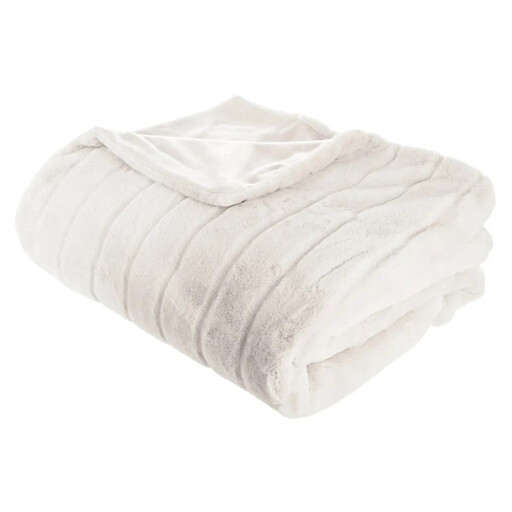
Why we chose it: For those looking for instant extra warmth, this cosy throw is an ideal solution. Its large size allows you to wrap up generously on the sofa or use it as an extra layer on the bed.
It offers a simple and effective alternative to the complexity of choosing a duvet. No fill weights to decipher: its faux fur texture is synonymous with softness and instant warmth for cosy nights in.
As practical as it is stylish. This throw adds an elegant decorative touch to a living room or bedroom, while also being easy to care for.
Discover our full selection of products that meet our quality criteria and the most stringent safety standards.
The lifespan depends on the quality of the filling and its care. On average, a synthetic duvet lasts about 5 to 7 years before its fibres lose their loft and insulating power. A natural duvet, if well-maintained, can last up to 10 years or even longer.
Always check the manufacturer's label. Most synthetic duvets can be machine washed at 30 or 40°C. Make sure to use a large-capacity washing machine (12 kg or more) to avoid compressing the duvet. For natural duvets, professional cleaning is often recommended. If you wash it yourself, use a delicate cycle and tumble dry on low heat with dryer balls (or tennis balls) to help the filling regain its volume.
For the same fill weight, a natural down duvet generally offers a better warmth-to-weight ratio, meaning it's warmer for less weight. However, today's high-end synthetic fibres are extremely effective. A synthetic duvet with a high fill weight (400-500 g/m?) will provide intense warmth, entirely comparable to a natural duvet, and will often be a more budget-friendly and easier-to-maintain option.