
Livraison le jour même ou le lendemain

Qualité garantie

Débloquez vos offres de bienvenue: Livraison GRATUITE | Jusqu'à -80 % | 30 jours d'essai gratuits à JoyPlus
Téléchargez l'application
When the cold sets in, finding the perfect warm duvet becomes the mission of the season. Faced with a jungle of technical terms and marketing promises, it's hard to know where to start. Is a high fill weight truly a guarantee of warmth? Is the famous "4-seasons" duvet the silver bullet it claims to be? Our mission: to help you cut through the noise and find the ideal cocoon of comfort for your nights.
Before you dive in, it's best to know the common mistakes that lead to disappointment once you're under the covers.
To make the right choice, focus on the few parameters that truly define the comfort and lifespan of your duvet.
This is the heart of your duvet. It determines its insulating power, breathability, and ease of care.
Forget fill weight alone and rely on the warmth rating, which is generally classified as follows:
As for size, the golden rule is that the duvet should hang over the sides of the bed by 20 to 40 cm. This ensures you stay fully covered and prevents cold draughts.
Here are a few models that cater to specific profiles, based on demanding quality and comfort criteria.
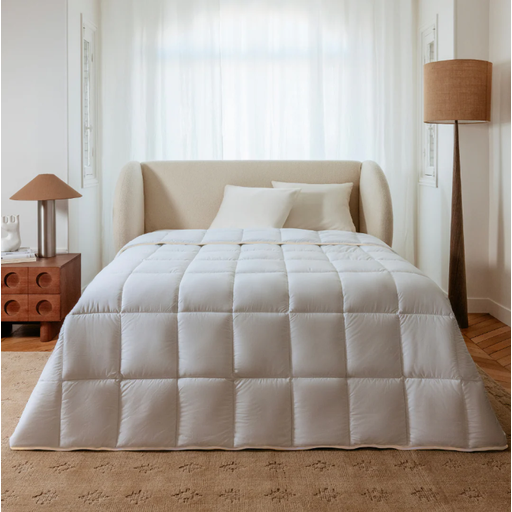
The Profile: Ideal for anyone seeking intense warmth and plush comfort during winter. Its natural filling provides first-class thermal insulation, perfect for cool bedrooms and those most sensitive to the cold.
This model focuses entirely on the quality of its filling (90% feathers, 10% down), not just raw fill weight. Its 129 thread-count cotton sateen shell guarantees softness and excellent durability.
Impeccable temperature regulation. The natural filling is breathable, providing healthy, comfortable warmth without ever causing overheating.
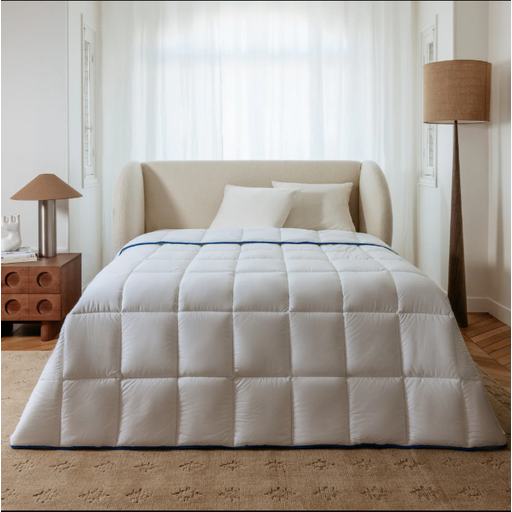
The Profile: The perfect solution for those who want a healthy sleep environment and ultra-simple maintenance. Its synthetic filling is specially designed for people with allergies.
It goes far beyond being just "synthetic." Packed with certifications (Oeko-Tex Standard 100, Sanitized), it features a high-quality cotton percale shell (91 threads/cm?).
A completely hypoallergenic, anti-dust mite, and antibacterial sleep environment. Plus, it's machine washable at 40°C for impeccable hygiene.
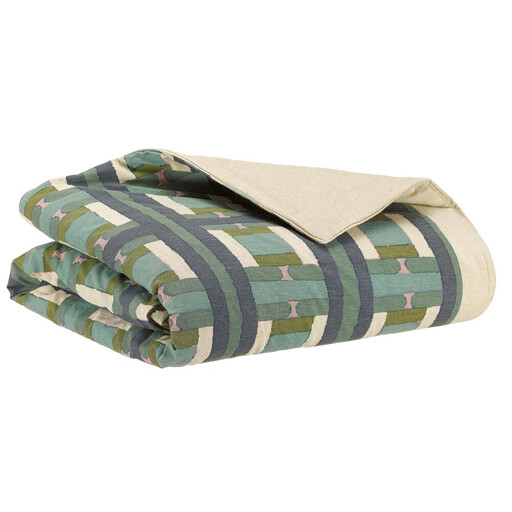
The Profile: This comforter is the perfect accessory for adding a layer of warmth at the foot of the bed or on a sofa, all while enhancing your interior decor.
It doesn't pretend to be something it's not. Its function is clear: a stylish and practical boost of warmth. It thus avoids the pitfall of the "do-it-all" product that does nothing well.
Its on-trend design and its shell made from a recycled linen and cotton blend. An object that is as beautiful as it is pleasant to the touch, perfectly blending style and comfort.
Explore our complete selection of products, all tested and approved by our experts according to strict quality criteria.
The duvet is the centrepiece of your bed, designed to cover it completely and be placed inside a duvet cover. The comforter (or eiderdown), on the other hand, is smaller and thicker. It's traditionally used as an extra layer of warmth, placed on top of the duvet at the foot of the bed. It's also a decorative item that doesn't require a cover.
First instinct: always check the care label. Generally, washing it once or twice a year is sufficient. Use a large-capacity washing machine (12 kg or more) and a delicate cycle at a low temperature (40°C max). The crucial step is machine drying on a low heat setting with dryer balls to restore the filling's full loft. When in doubt, professional dry cleaning is the safest option.
Absolutely. A hypoallergenic duvet is made with materials (most often synthetic) that minimise the risk of allergies. For optimal protection against dust mites, look for products certified with Oeko-Tex Standard 100, which guarantees they are free from any harmful substances. A tightly woven shell and regular washing are also your best allies for a healthy sleep.