For keeping bottles ready to serve
If you regularly open bottles at home, start with the serving temperature they need and how many you want to keep close at hand. A large capacity may not be your top priority.


Choose a serving wine cabinet if you want to keep bottles ready to drink, or an ageing cabinet if you’re building a collection to store for several years. Multiple zones can cater for different temperature needs, provided their settings suit your bottles. The cabinet’s capacity, ventilation and room temperature also matter when making your choice.
If you regularly open bottles at home, start with the serving temperature they need and how many you want to keep close at hand. A large capacity may not be your top priority.
If your bottles will be stored for several years, look at the cabinet’s temperature control, where it will be installed long term and the capacity you need for your bottle shapes. UFC-Que Choisir advises, in particular, not to assume that the stated capacity guarantees space for the same number of bottles of every shape.
In a flat or fitted kitchen, measure the available space before choosing a compact model. The installation type, ventilation and the noise level stated for the specific model can matter just as much as its capacity.
Choose this: if you drink your bottles regularly and want to keep them at a temperature suited to serving.
Bear in mind: a cabinet designed for serving alone may not meet your needs if you plan to store bottles for several years.
Choose this: if your priority is to store a collection for several years in a stable environment.
Bear in mind: plan for a permanent location and a capacity suited to the bottle shapes you’ll actually store, rather than relying on the stated figure alone.
Choose this: if you need different temperatures for different uses in the same appliance.
Bear in mind: having multiple zones doesn’t prove that a model is suitable for long-term storage; check what each zone is designed for and how it can be set.
| Criterion | What to check before buying | Who is it for? |
|---|---|---|
| Use and zones | What the cabinet is designed for and the temperature range of each zone; for a warm room, check the cooling technology and climate class. | I want to know whether my bottles will be ready to serve or whether I need different uses to be catered for. Defining how they’ll be used would be the priority for around 31% of consumers. |
| Stable conditions for ageing | Temperature control, protection from light and the ambient temperature range permitted for the model. | My bottles need to stay in the cabinet for several years, without relying on a room that’s too hot or too cold for the appliance. Stable conditions would come first for around 25% of consumers. |
| Capacity and placement | Bottle shapes, shelf layout, dimensions and ventilation requirements for the installation type. | I need to fit my collection and the cabinet into a defined space, without relying on a capacity figure based on different bottles. Around 25% of consumers would prioritise getting this fit right. |
| Noise in a living space | The noise level stated for the specific model and whether its climate class is suitable for the room. | In a room we use every day, I want to minimise noise without choosing an appliance that’s unsuitable for the ambient temperature. This comfort would be the main concern for around 19% of consumers. |
La Sommelière says that stated capacity is usually calculated using Bordeaux bottles. Wider bottle shapes or a different shelf layout can reduce the number you can actually store.
Check the bottle shapes in your collection and look at the shelf layout before deciding on the size of your cabinet.
Ventilation requirements vary by model. Avintage distinguishes between built-in column installations and under-counter models; don’t treat a freestanding cabinet as either unless the manufacturer says you can.
Measure the space, then follow the ventilation diagram in the manual for the model you’ve chosen.
A low stated noise level doesn’t mean a wine cabinet will work well in a warm room. Climadiff notes that its hybrid technology may be less effective when the ambient temperature is high.
If the room gets very warm, first compare its actual temperature with the model’s climate class and operating conditions.
An old, bulky appliance may need to be dealt with separately from the installation of your new wine cabinet.
Ask the retailer how to arrange collection of an old equivalent appliance, especially if delivery is planned.
A useful source of guidance when comparing stated capacity, bottle shapes and shelf layouts.
Worth exploring when climate class, placement and stated noise levels influence your choice of model.
A brand to consider for a kitchen project where the available alcove and airflow determine which type of cabinet will work.
Worth exploring when comparing one- or two-zone configurations and capacities for different spaces.
These models include a two-zone cabinet and smaller-capacity cabinets for home storage. To decide between serving and long-term storage, always check that the model’s intended use and settings match yours; its stated capacity alone isn’t enough to make the decision.
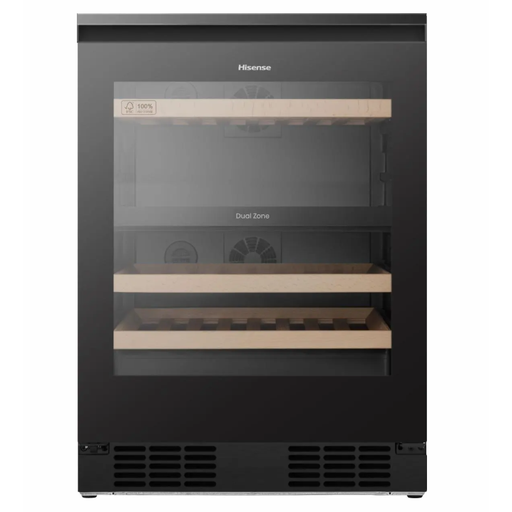 Image unavailable
Worth considering if you want two temperature zones in one cabinet.
The model name indicates a capacity of 128 L, an LED display and an F energy rating. Check the settings for each zone, the ventilation clearance required and how your bottle shapes will fit.
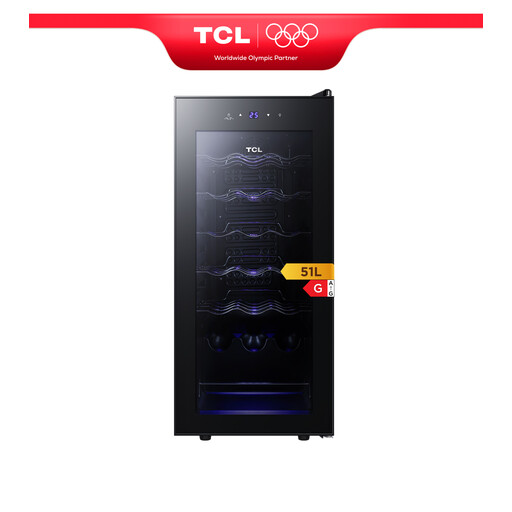 Image unavailable
Worth comparing for a small collection when space is at a premium.
It has a stated capacity of 18 bottles and 51 L, with a glass door. Check the temperature range, dimensions, ventilation clearance and space for your bottle shapes.
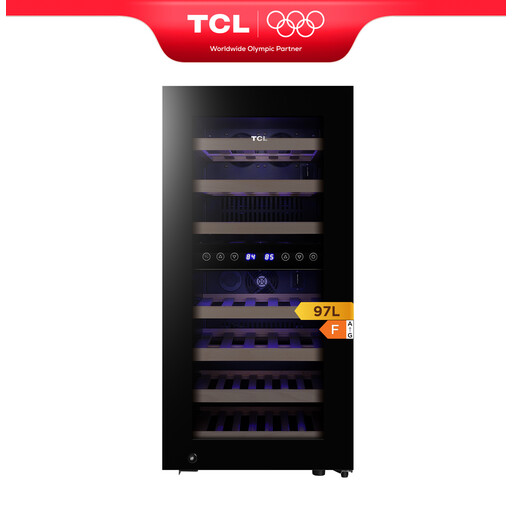 Image unavailable
Worth considering if you’re looking for a higher stated capacity than the smaller TCL models featured here.
The product name indicates space for 33 bottles, a 97 L capacity and a glass door. Before choosing where to put it or planning to store bottles long term, check the installation type, settings and capacity for your bottles.
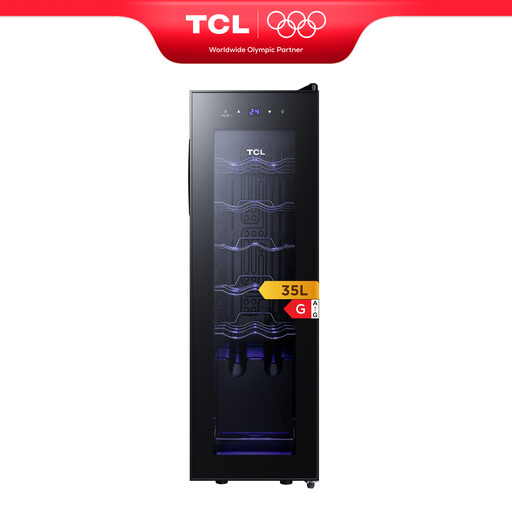 Image unavailable
Worth comparing for a small number of bottles, provided its dimensions and operation suit the room.
The product name indicates a capacity of 12 bottles and 35 L, with a glass door. Check the temperature settings, stated noise level and ventilation clearance before installation.
Only if the model’s manual allows it and you can meet its ventilation requirements. For the freestanding wine cabinets featured in its guide, Haier recommends leaving 5 to 10 cm at the sides, behind and above the appliance. These guidelines don’t replace the instructions for the model you buy.
Don’t assume the two installation types are interchangeable. Avintage distinguishes between built-in cabinets designed for a column and under-counter models, which may have different ventilation requirements. Check the alcove and the manual before ordering.
No. The stated capacity doesn’t guarantee the same storage space for every bottle shape. La Sommelière explains that capacity is generally calculated using Bordeaux bottles; wider bottles or a different shelf layout can reduce the number you’ll be able to fit.
Compare the ambient temperature range permitted by the model’s climate class with the actual temperatures in the room, in both winter and summer. Climadiff notes that a wine cabinet used outside its specified temperature range may not regulate its temperature properly.