What should you check before choosing?
Compact serving fridge
Consider this if: you have a small collection of bottles you plan to drink soon, particularly if the fridge will be in a living area.
Limitation: a small capacity or limited temperature range may not suit a larger collection or a different storage purpose.
Single-zone wine fridge
Consider this if: you want to keep your collection at one shared temperature rather than prepare several styles of wine for serving.
Limitation: a single zone can’t maintain separate serving temperatures at the same time.
Multi-temperature wine cabinet
Consider this if: you’ll genuinely use several independently controlled zones for different wines.
Limitation: some models take up a lot of space. Check their dimensions and installation requirements before settling on this configuration.
Once you’ve decided how you’ll use it, compare the specifications of the exact model with your bottles and the space where it will operate.
| Feature |
What to check |
Your needs |
| Temperature |
Check how many zones there are and the temperature range for each. The term ‘multi-temperature’ doesn’t, on its own, tell you which settings are available. |
I want one shared temperature for my collection, or separate temperatures for bottles ready to serve. |
| Capacity |
Check which bottle shape the stated capacity is based on, then look at the shelves included and the space available for wider bottles. La Sommelière calculates the capacity of its 12SILENCE and 28SILENCE using 75 cl Bordeaux bottles. |
My collection may include Champagne or other wide bottles, so I’d rather count the bottle shapes I actually have than rely on the maximum stated capacity. |
| Noise |
Check the dB rating for the exact model and consider where you plan to put it. La Sommelière states 21 dB for the 28SILENCE, while Electrolux lists 41 dB for the EWUD040F8B. These are stated specifications for two different appliances. |
In an open-plan kitchen or near a workspace, I want to consider the stated noise level before choosing where to put it. |
| Energy use |
Check the kWh/year figure alongside the energy class, capacity and number of zones. La Sommelière states 96 kWh/year for the 28SILENCE, while Electrolux lists 104 kWh/year for the EWUD040F8B; they have different uses and configurations. |
As the wine fridge runs continuously, I want to look at its annual energy use without assuming that one figure alone tells me which model will suit my needs. |
| Installation |
Check whether the appliance is freestanding or built-in. Measure the appliance, any housing unit and the door opening. Follow the ventilation clearances specified in the instructions for your chosen model. |
I need to know whether the wine fridge will fit in the space I have, without enclosing a freestanding model in a unit that isn’t suitable for it. |
What do the brands offer?
These specifications apply to the models mentioned, not to each brand’s entire range.
La Sommelière
The brand offers compact wine fridges, among other options. The 12SILENCE and 28SILENCE let you compare the stated capacities and noise levels of specific models.
- La Sommelière states a capacity of 12 bottles and a noise level of 25 dB for the 12SILENCE, and 28 bottles and 21 dB for the 28SILENCE. The capacities are based on 75 cl Bordeaux bottles.
- These figures don’t represent the noise levels across the entire range or the capacity for every bottle shape.
Liebherr
Liebherr distinguishes between single-zone wine fridges and multi-zone Vinidor models, depending on how you plan to store your bottles or prepare them for serving.
- Liebherr lists two zones, a capacity of 155 Bordeaux bottles (0.75 l) and a temperature range of +5 to +20 °C for the WPbsi 5252 Vinidor.
- Information about long-term storage and serving temperatures comes from the manufacturer. Check the specifications and dimensions of the model you choose.
Electrolux
Electrolux product information shows two types of installation: the EWUD040F8B is listed as a freestanding under-counter model, while the EWUS040B8B is a built-in model.
- Electrolux lists a capacity of 40 bottles and two zones for the EWUD040F8B, compared with 40 bottles and one zone for the EWUS040B8B.
- Whichever type of installation you choose, check the instructions for the dimensions and clearances required for that specific model.
Which wine fridges can you find on Joybuy?
This selection includes a Hisense wine fridge with two zones for separate temperatures, and two compact TCL wine fridges for storing bottles. Check the settings and installation requirements for each model to make sure they suit how you plan to use it.
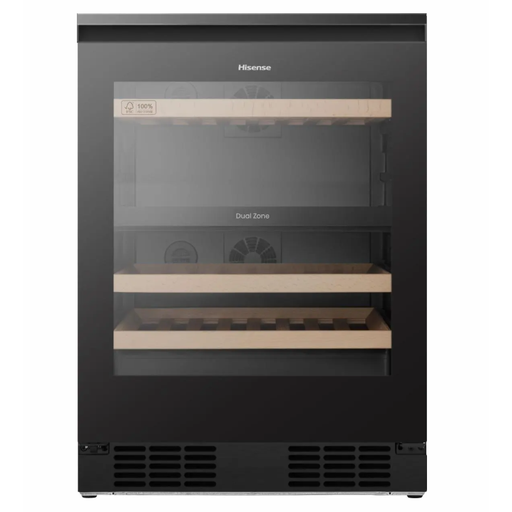 Image unavailable
Hisense RW3N122GALF, 128 L, two zones
Its two temperature zones let you set different temperatures for separate groups of bottles. The title lists a capacity of 128 L and an F energy rating. Check the instructions for the dimensions and ventilation clearances required for your chosen location. Also confirm the capacity for the bottle shapes in your collection.
View on Joybuy
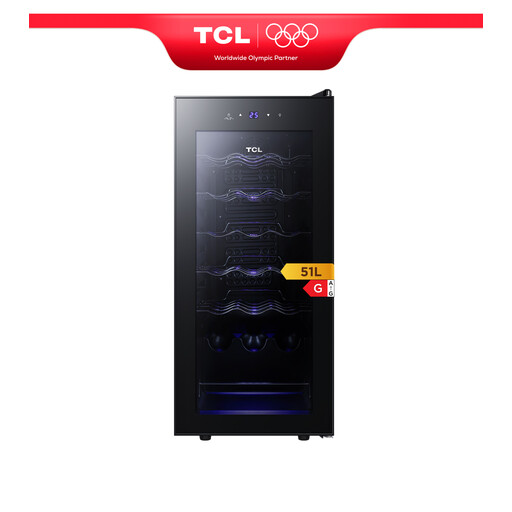 Image unavailable
TCL WC051WBG0, 18 bottles, 51 L
Its stated capacity may suit a household with limited space for storing bottles. Before choosing it for serving or for a living area, check the number of zones, temperature range and noise level. Also consult the instructions to make sure the location and ventilation are suitable.
View on Joybuy
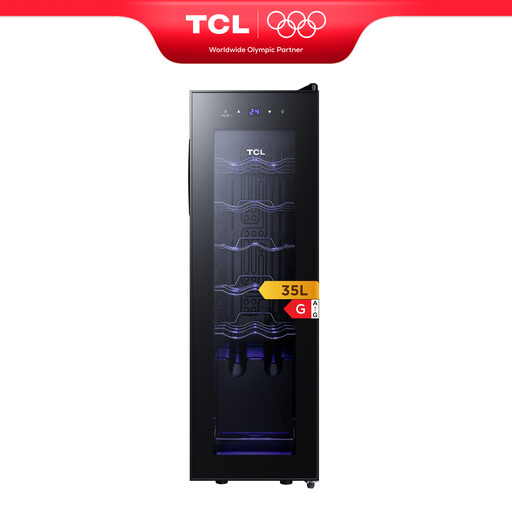 Image unavailable
TCL WC035WBG0, 12 bottles, 35 L
Its stated capacity is suited to a small collection rather than a large number of bottles. Check the temperature range and number of zones before deciding how to use it, then make sure the dimensions, noise level and ventilation requirements in the instructions are right for your chosen location.
View on Joybuy
Frequently asked questions
Is a serving fridge suitable for a collection you’ll store for a long time?
Don’t choose one for this purpose based on its name alone. Liebherr describes its single-zone models as suitable for long-term storage, while multiple zones are designed to maintain different serving temperatures. This is the manufacturer’s guidance, not a comparative test. Check the temperature range and conditions for the specific model.
Why might a wine fridge advertised for 28 bottles hold fewer?
La Sommelière calculates the capacity of its 28SILENCE using traditional 75 cl Bordeaux bottles. If your collection includes wider bottles or you change the shelf arrangement, check how many will fit before relying on that figure.
Which figures should you check for noise and energy use?
Check the dB and kWh/year figures for the exact model, then consider its capacity, zones and installation. La Sommelière lists 21 dB and 96 kWh/year for the 28SILENCE, while Electrolux lists 41 dB and 104 kWh/year for the EWUD040F8B. These stated specifications are for two differently configured appliances, not the results of a like-for-like test.
Can you put a freestanding wine fridge in a kitchen unit?
Only if the manufacturer explicitly permits this installation for the model in question. The Joybuy guide advises against enclosing a freestanding wine fridge in a unit without this approval, and says you should follow the ventilation clearances in the instructions. For a fitted space, consider a model designed for built-in installation and check its instructions.


