
Livraison le jour même ou le lendemain

Qualité garantie

Débloquez vos offres de bienvenue: Livraison GRATUITE | Jusqu'à -80 % | 30 jours d'essai gratuits à JoyPlus
Téléchargez l'application
Cleaning windows, mirrors or large glass doors takes time, especially when surfaces are high, wide or difficult to reach. A window-cleaning robot can reduce the amount of manual work and automate part of the cleaning routine. However, you still need to choose a model suited to your home, as not all of them meet the same requirements.
Before ordering a window-cleaning robot, it is best to look beyond claims such as ‘streak-free’ or ‘fully autonomous’. The quality of the results depends on many factors, including the condition of the glass, the type of cleaning pad, the amount of water used and how accurately the robot moves.
Many window-cleaning robots operate from the mains. Their integrated battery is often used only as a backup in the event of a power cut, rather than to complete a full cleaning cycle without being plugged in.
Check the technical specifications carefully:
High suction power, expressed in pascals, does not by itself guarantee even cleaning. Grip can vary depending on dust, moisture, seals, textured surfaces or the condition of the glass.
A window-cleaning robot is generally designed for smooth, flat glass. It must not be used on cracked, curved, uneven or very wet glass. The safety rope remains essential, even when the manufacturer advertises several fall-protection systems.
A pad covered in dust may move dirt around rather than remove it. Limescale can also clog the spray system. Some appliances require distilled or filtered water, while others accept a specific cleaning solution stated in the instructions.
After each cycle, remember to:
The suction system must remain stable when the robot changes direction. Models with a UPS backup battery can remain temporarily attached to the glass during a power cut, but this function never replaces mechanical anchoring.
You should also look for:
For a glass door or large window, the cable length, minimum surface dimensions and the robot’s ability to return to its starting point are often more important than a simple suction-power figure.
A window-cleaning robot with water spraying can dampen the pad as it moves across the glass. This reduces manual handling, but the liquid used must comply with the manufacturer’s recommendations. Water with a high mineral content may leave deposits or block the nozzles.
The phrase streak-free window robot should be understood as a usage promise, not a guarantee that applies in every situation. Streaks may be caused by using too much product, a dirty pad, very greasy glass or uneven drying.
For additional manual cleaning, a glass cleaner can be useful. VINCKEL Professional Glass Cleaner, sold in a 500 ml spray bottle, is suitable for windows, mirrors and other glass surfaces. Its product information states that it has a fast-drying formula and contains less than 5% surfactants. Follow the usage precautions, ventilate the room and test the product on a small area before applying it to the entire surface.
A window-cleaning robot is not automatically suitable for every type of glass. Before buying, measure:
Some appliances can also clean mirrors or smooth tiles, but only if the instructions permit this.
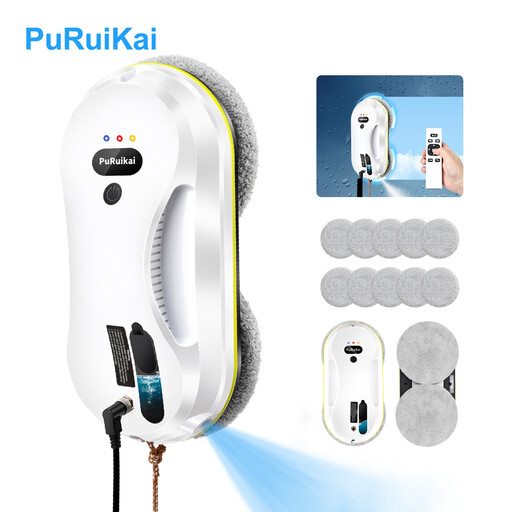
Why this choice suits this profile : This model is suitable for people who want to try automated window cleaning on smooth surfaces, with a remote control and manual or automatic spraying.
The product information states that it operates from the mains and includes power-cut protection and a safety rope. This prevents it from being confused with a genuinely cordless appliance.
Advertised suction power of 2 800 Pa, 50 ml tank, automatic edge detection and remote-control operation.
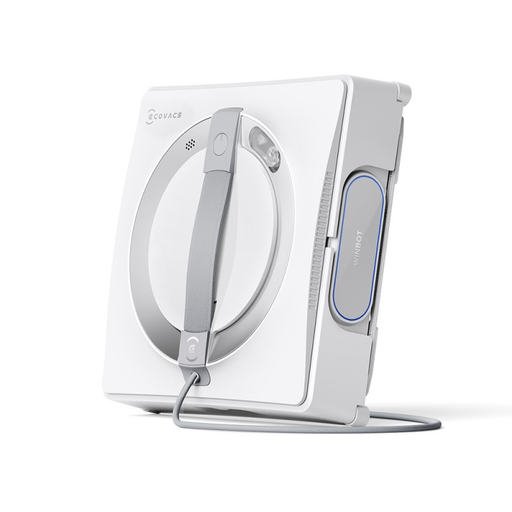
Why this choice suits this profile : Its multifunction station and two power modes are designed for homes with large glazed surfaces and users looking for greater control.
It distinguishes between battery operation and mains use, and includes a safety attachment. For outdoor use, however, dry weather and a properly secured anchor point are required.
Advertised suction power of 5 500 Pa, three-nozzle spraying, targeted cleaning modes and compatibility with the ECOVACS HOME app according to the product information.
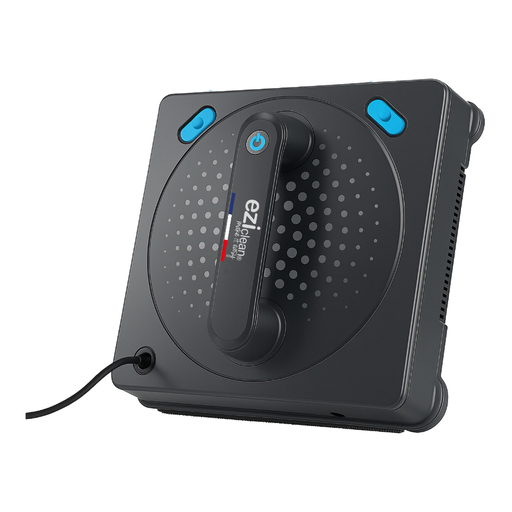
Why this choice suits this profile : People who regularly clean hard-to-reach glass may appreciate the edge detection, pad movement and remote control.
The product information specifies that only distilled water should be used and requires the safety rope on high or exterior windows.
Dual suction, vibrating pad, automatic spraying, advertised backup battery to maintain grip for up to 20 minutes, and Bluetooth or infrared control.
We have brought together a complete, up-to-date selection of products that meet these strict criteria and European safety requirements.
Before the first cycle, lightly dust the glass and attach the rope to a solid point indoors. Do not use the appliance in the rain, in strong winds or on damaged glass. Keep people and animals away from the area below the glass.
For more consistent results, use a clean pad, avoid soaking the surface and monitor the robot during its first few uses. A connected window-cleaning robot can make it easier to monitor progress via an app, but it does not remove the need for supervision or mechanical checks.
Not always. Several models are continuously powered from the mains, with their internal battery used only as protection in the event of a power cut. Others have a genuine battery mode. Check this point in the product specifications before buying.
This depends on how often it is used, the condition of the pads, nozzle maintenance and whether it is used on compatible surfaces. Storing the appliance in a dry place, cleaning it regularly and checking the rope and cable will help preserve it. You should also check the warranty terms and the availability of accessories.
You need to factor in electricity, periodic pad replacement and, for models with a spraying function, distilled water or an approved solution. The actual cost therefore depends on the number of windows, how often the robot is used and the consumables recommended by the manufacturer.