
Livraison le jour même ou le lendemain

Qualité garantie

Débloquez vos offres de bienvenue: Livraison GRATUITE | Jusqu'à -80 % | 30 jours d'essai gratuits à JoyPlus
Téléchargez l'application
Are you a renter whose building regulations prohibit you from installing an outdoor camera? Or do you simply want to keep an eye on your entryway or garden without the hassle of drilling? The challenge is often the same: how to get a clear view of the outside by placing a camera inside, behind a window pane.
Daytime sun reflections, nighttime glare from lights, and above all, night vision completely washed out by the bounce of infrared LEDs on the glass... the obstacles are numerous. This guide is designed to help you see things more clearly by scrutinizing the best solutions on the market that don't require a single hole in your walls.
Choosing the right window security camera means focusing on very specific technical details. Here are the points you absolutely must not overlook to make the right choice.
The main challenge for monitoring through glass is reflection. A standard camera uses infrared (IR) LEDs for its night vision. The problem: when placed behind a window, this invisible light reflects off the glass, creating a white halo that makes the image completely unusable.
To overcome this hurdle, two solutions exist. Look for models that feature:
For renters or anyone who doesn't want to damage their walls, a drill-free camera for apartments is the only viable option. Manufacturers offer several solutions:
A good security camera does more than just record.
Let's move on to our selection of models that perfectly meet the challenge of surveillance through a window.
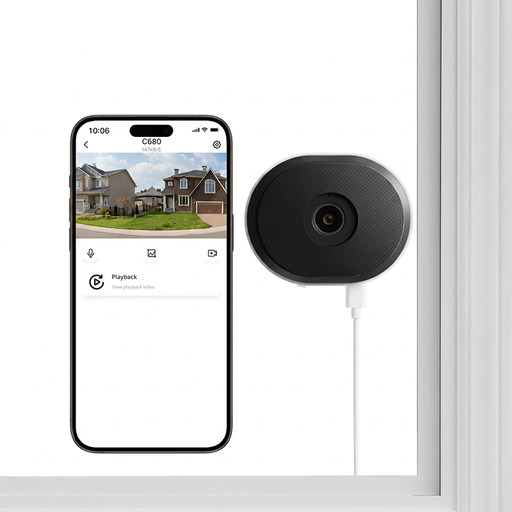
Why it stands out: This is THE specialist for this task. Its anti-reflection technology was developed specifically for surveillance through a window. It neutralizes glare day and night for a perfectly clear image, even through double-paned glass.
Key Features:
Who is it for? For anyone, renter or homeowner, who wants a hassle-free solution and a perfect image through a window, day or night. It's the ultimate plug-and-play solution for this very specific use case.
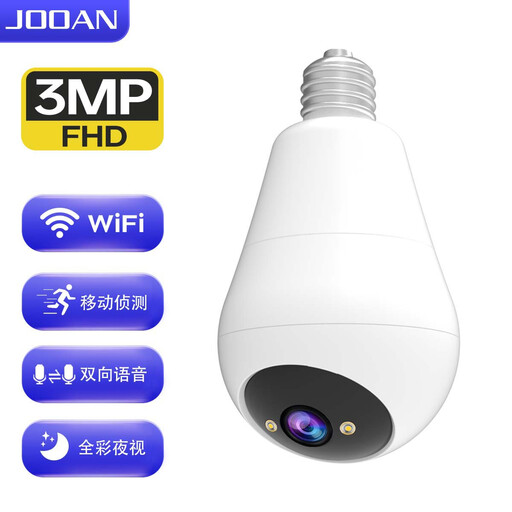
Why it stands out: Its E27 light bulb form factor is simply brilliant. It screws into an existing lamp socket, making it as discreet as it is clever.
Key Features:
Who is it for? For those looking for an easy-to-conceal 360° surveillance solution, by using a light socket near a window or for monitoring a storefront from the inside. Please note: for use behind glass, you will need to disable the infrared and rely on the white light, which may be visible and less discreet.
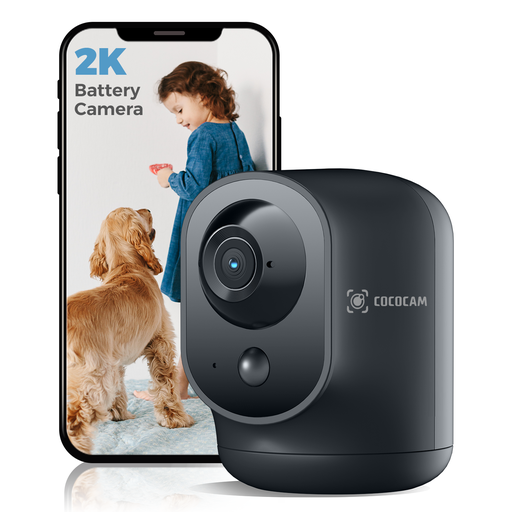
Why it stands out: Its secret weapon is its built-in battery. It offers complete placement freedom, without depending on a power outlet.
Key Features:
Who is it for? Ideal for temporary monitoring or for locations near a window without a power outlet. Its flexibility is an asset for changing the area under surveillance. Crucial point: to use it behind glass at night, you must disable the IR LEDs in the app to avoid reflections.
Our selection focuses on the specific case of surveillance through a window, but the market is obviously full of other solutions. Every situation is unique.
To explore a wider range of products, from classic outdoor cameras to complete security systems, feel free to browse our dedicated category for remote surveillance systems.
1. Can a camera really see through a window at night? Yes, but only if it's specifically designed for it. A standard camera with infrared (IR) night vision will generate a white halo, making the image completely unusable. Effective models, on the other hand, use either anti-reflection technology or ultra-sensitive sensors capable of producing a colour image with very little ambient light ("Starlight" mode), without activating their own IR LEDs.
2. Is it legal in France to install an indoor camera that films outside? On this point, the law is very clear. You have the right to film the interior of your property, which includes your garden, your driveway, or your doorstep. However, it is strictly forbidden to film public property (street, pavement) or your neighbours' property (their garden, door, windows). Therefore, be sure to aim the camera precisely so that its field of view is strictly limited to your private space. Also, remember to notify visitors (delivery drivers, guests, etc.) about the video surveillance with a sign.
3. Is 5?GHz Wi-Fi really necessary for a camera? Not essential, no. Strongly recommended, yes. The 2.4?GHz frequency band is often very congested, which can cause dropouts or a degradation in video quality. 5?GHz Wi-Fi, which is less prone to interference, offers a more stable connection and better throughput, which is ideal for flawlessly streaming a high-resolution (2K or 4K) video feed.