
Livraison le jour même ou le lendemain

Qualité garantie

Débloquez vos offres de bienvenue: Livraison GRATUITE | Jusqu'à -80 % | 30 jours d'essai gratuits à JoyPlus
Téléchargez l'application
Cleaning a glazed door, a high-up window or a shower screen can quickly become a chore. A window-cleaning robot makes the job easier, but not every model is suitable for every use. Before placing your order, pay particular attention to compatibility with your surfaces, the safety system and the power supply.
The words “built-in battery” do not necessarily mean that the robot can operate without a cable for an entire cycle. On some appliances, the battery is mainly used as a backup in the event of a power cut. The robot must therefore remain plugged in while cleaning.
If you are looking for a genuinely cordless window-cleaning robot, check the following:
This distinction is particularly important for exterior windows, conservatories and balconies, where a power socket is not always easily accessible.
A high value in pascals does not, on its own, guarantee a secure grip on the glass. Adhesion also depends on how clean and even the surface is, the condition of the pads and the robot’s ability to detect edges.
An anti-fall window-cleaning robot must always be used with its safety cable attached to a stable point inside the property. The backup battery and sensors provide additional protection, but they never replace this physical attachment.
Window-cleaning robots are generally designed for smooth, flat surfaces free from cracks. Textured glass, very raised seals, a curved surface or an uneven frame can affect adhesion and disrupt navigation.
Before ordering, check in particular:
The suction system holds the window-cleaning robot against the glass. Compare the stated power, but also the safety features that come with it: loss-of-adhesion detection, an alarm, a backup battery and the supplied cable.
For working at height, choose a model whose instructions clearly explain the anchoring procedure. Check the carabiner, rope and connectors before every cycle. Also remember to keep children and pets away from the area beneath the window.
An intelligent window-cleaning robot may feature automatic navigation, frame detection and several cleaning paths. These functions are useful on large glazed surfaces, but they do not eliminate the need to remove dust first when the glass is covered in sand or abrasive particles.
Depending on your needs, look for the following modes:
The reservoir and spray system affect how consistently the glass is cleaned. Some models work only with distilled water, while others accept a solution specified in the instructions. Tap water can leave mineral deposits or eventually clog the nozzles.
After each use of an electric window cleaner, take the time to:
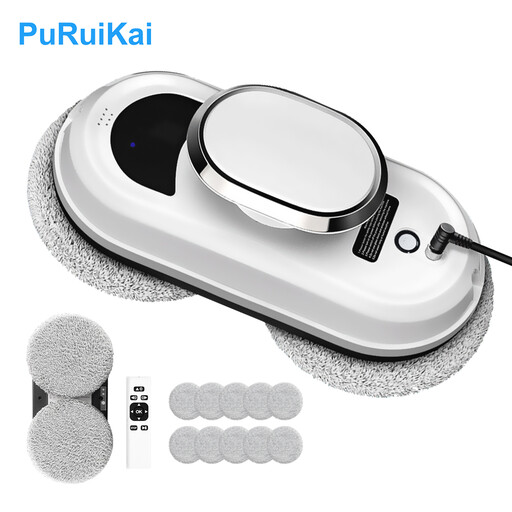
Why this model suits this profile : Its remote control and automatic cleaning paths make it easy to get started with robotic glass cleaning, provided there is a power socket nearby.
The product details state that the appliance must remain plugged in and that its battery is for backup use only. This means you will not mistakenly buy it believing that it is genuinely cordless.
Stated suction power of 2 800 Pa, automatic edge detection, power-cut protection and a 4.5 m safety rope.
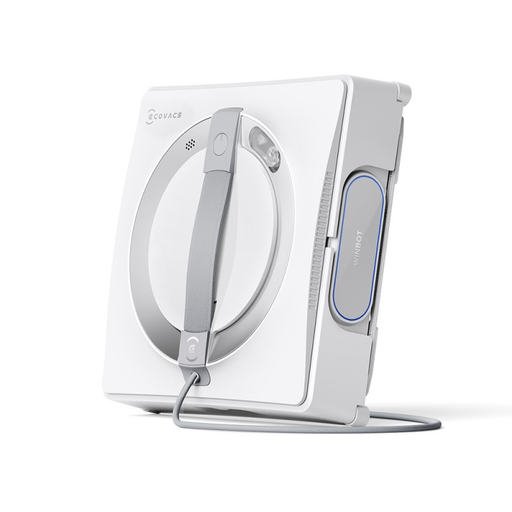
Why this model suits this profile : Its multifunction station and two power modes are ideal for homes with large glazed surfaces or hard-to-reach windows.
The station brings control, charging, storage and transport together in one place. The 12-level safety system and dedicated attachment help reduce the risk of forgetting a step during installation.
Stated battery life of up to 110 minutes, wide-angle spraying through three nozzles, plus deep-cleaning, quick, spot and edge modes.
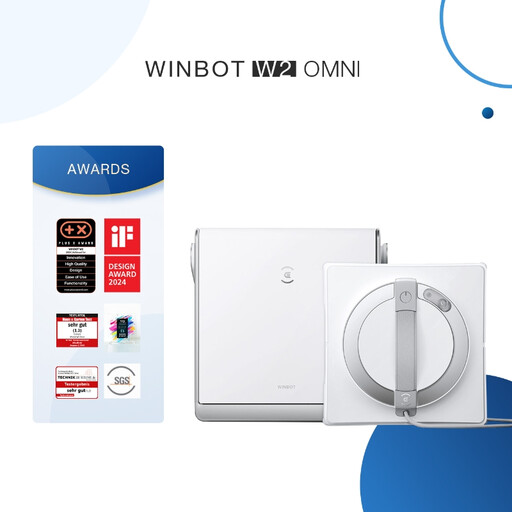
Why this model suits this profile : It is designed for homes with a mix of ground-level windows, sloping glazing, large glazed doors and frameless surfaces.
The product details specify a minimum window size of 30 × 40 cm, along with automatic return to the starting point. It is still essential to check the dimensions of each pane.
Station with automatic cable management, 4 500 mAh battery, three-nozzle spray system and control via the ECOVACS HOME app.
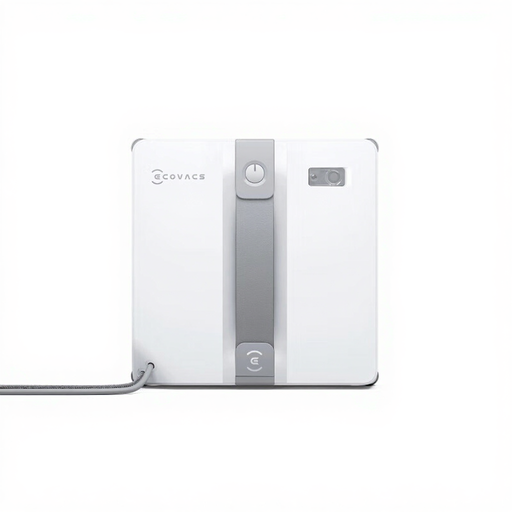
Why this model suits this profile : Its compact design can make all the difference on narrow panes, French doors or areas where a larger appliance would struggle to manoeuvre.
The key is to check its overall dimensions and the minimum compatible surface area. Measure your window before buying rather than relying solely on the word “compact”.
Described as compact, with WIN-SLAM navigation and a design suited to narrow windows. See the detailed dimensions on the product page.
We have brought together a complete, real-time updated selection of products that meet these exacting criteria, as well as European safety requirements.
Before starting an automatic window cleaner, carefully prepare the work area:
A robot does not always guarantee a perfect finish. Corners, seals and old marks may require an additional manual pass. Running costs generally include electricity, washing or replacing the pads and, depending on the model, distilled water or a dedicated cleaning solution.
The robot automates its cleaning path, but it should not be left unattended, especially when working on a high-up window. The cable must be properly secured, the glazing checked and the appliance removed immediately if an alarm sounds or it loses adhesion.
This varies depending on how often it is used, storage conditions, pad maintenance and the condition of the suction system. Clean the various components after every cycle, avoid storing the appliance somewhere damp and follow the replacement intervals stated in the instructions.
Some appliances are compatible with flat surfaces such as mirrors and smooth tiles. Always check the details for the model in question: a porous, textured or uneven surface may prevent the robot from adhering properly and increase the risk of falling.