
Livraison le jour même ou le lendemain

Qualité garantie

Débloquez vos offres de bienvenue: Livraison GRATUITE | Jusqu'à -80 % | 30 jours d'essai gratuits à JoyPlus
Téléchargez l'application
Tired of the chore of cleaning windows? Between the time it takes, the stubborn streaks, and the risks of cleaning high-up windows, the task can quickly turn into a real headache. A window-cleaning robot is the modern, practical solution for getting sparkling clean windows without the effort.
However, the market is flooded with models making tempting promises, and it's easy to fall for certain marketing traps. To help you see things more clearly, we've identified the most common mistakes and the essential criteria to check before you buy.
Marketing has a way of creating unrealistic expectations. Here are three key points to watch out for to avoid disappointment and unnecessary expense.
Many buyers imagine that an automatic window cleaner runs on a battery, much like a stick vacuum. This is one of the main sources of confusion. In reality, nearly all high-performance, secure models must be plugged into a power outlet during operation.
The built-in battery isn't for portable use; it serves as an Uninterruptible Power Supply (UPS). Its sole purpose is to keep the robot attached to the window for 20 to 30 minutes in the event of a power outage, giving you time to retrieve it safely. Buying such a device hoping for complete freedom of movement is a recipe for disappointment.
Product descriptions often boast about "intelligent path planning." Be warned: not all these systems are created equal. Entry-level models sometimes just use a random path that misses entire sections of the surface and leaves unsightly streaks. An effective window-cleaning robot must offer a methodical path (Z-shaped or N-shaped) to guarantee full coverage and a consistent result.
A robot falling from an upper floor is a very real danger. Safety is therefore a non-negotiable criterion. Some low-cost devices skimp on vital components: a safety tether that is too thin or too short, or a backup battery with insufficient power to maintain suction during an unexpected event.
To be sure of your future device's performance and reliability, here are the three fundamental parameters to examine closely.
This is the one thing you should never overlook. Make sure the robot has a UPS system and check its battery life (a duration of 20 to 30 minutes is a good benchmark). The safety tether is just as essential: it must be sturdy and long enough to reach a solid anchor point (railing, heavy furniture). A remote-controlled window-cleaning robot should never be used without this tether.
A window-cleaning robot with an integrated automatic spray offers far superior user convenience. It distributes the cleaning solution evenly directly onto the surface where it's needed. No more manual pre-spraying! This makes the cleaning process much more effective. Also, pay attention to the quality of the microfibre pads: they are crucial for achieving a flawless, streak-free finish.
The most advanced navigation systems (sometimes called WIN-SLAM or similar) allow the robot to map the glass surface. It then calculates the most efficient path to leave no spot untouched. The automatic edge detection feature is essential, especially for frameless surfaces like shower screens, mirrors, or glass balustrades.
To help you see how these criteria apply in practice, here is a selection of models suited to different needs and budgets.
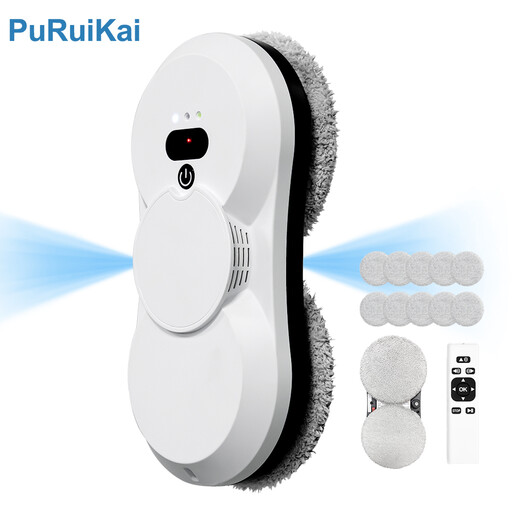
Why we like it: Perfect for getting started with window-cleaning robots. It includes the essentials (auto-spray, remote control, safety features) at an affordable price. A reliable solution for standard-sized windows.
It debunks the "cordless" myth: it runs on mains power, and its battery is just a 30-minute anti-fall safety feature. No unpleasant surprises upon delivery.
Its dual spray system (auto and manual) and methodical path ensure a thorough clean and complete coverage.
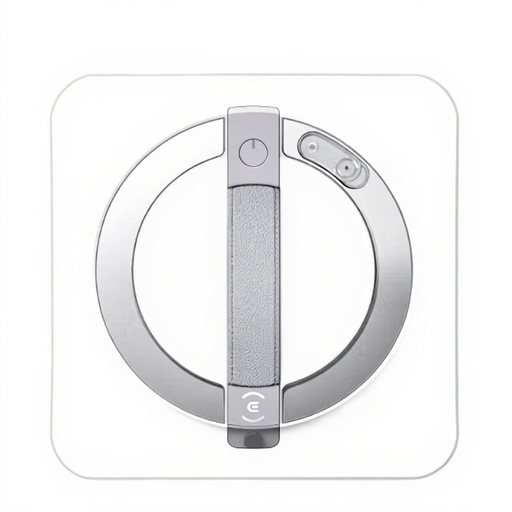
Why we like it: Designed for those who aim for perfection on very large surfaces (conservatories, bay windows...). Its cutting-edge technology guarantees impressive efficiency and cleaning coverage.
It avoids the pitfall of random navigation thanks to its WIN-SLAM 4.0 planning system, which ensures an optimised path and full coverage, even on the most complex windows.
Its three-nozzle, wide-angle spray technology, combined with an anti-slip system, ensures perfect adhesion, even on wet surfaces.
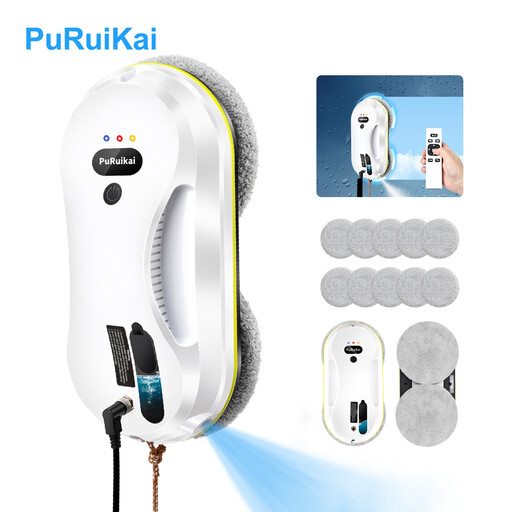
Why we like it: An excellent compromise between features and simplicity. It's the reliable partner for regular maintenance of smooth surfaces: windows, mirrors, bathroom tiles...
On the safety front, it checks all the boxes: a 30-minute backup battery and a sturdy tether. You can clean upper-floor windows with peace of mind.
Its suction power of 2800 Pa ensures flawless adhesion, all with relatively quiet operation (around 65-70 dB).
We have put together a complete selection of products that meet our selection criteria and current safety standards.
The risk is minimal if proper precautions are taken. Quality devices combine three levels of safety: strong suction power that holds it to the window, a backup battery (UPS) that takes over in case of a power cut, and a safety tether that must be secured to a fixed point before every use.
It's best to follow the manufacturer's recommendations to the letter. Most often, the use of demineralised water is recommended to avoid clogging the fine spray nozzles with limescale. Some models are compatible with specific cleaning solutions, but you must avoid foaming detergents, which could damage the suction motor.
This is something to be aware of. Due to their shape (square or round), most robots leave a tiny uncleaned area in the corners. That said, they cover over 98% of the glass surface effortlessly and safely. The time and convenience saved are therefore still significant.