
Livraison le jour même ou le lendemain

Qualité garantie

Débloquez vos offres de bienvenue: Livraison GRATUITE | Jusqu'à -80 % | 30 jours d'essai gratuits à JoyPlus
Téléchargez l'application
Cleaning windows is such a chore! Especially when you're dealing with large bay windows or hard-to-reach panes. It's a repetitive, time-consuming, and sometimes even risky task. The window cleaning robot has emerged as the perfect solution for getting spotless windows with zero effort. But faced with a crowded market and tempting marketing promises, it's easy to get lost and regret your purchase.
As a product expert for Joybuy, my mission is to help you see things more clearly. Let's forget the technical jargon and advertising claims and focus on what really matters: the practical details. Here are the pitfalls to avoid and the criteria you should never overlook to make the right choice.
Some features, often touted as major selling points, turn out to be disappointing in practice. Here are three things to watch out for so you don't make the wrong choice.
To be sure of the effectiveness and reliability of your future window cleaning robot, carefully examine these three fundamental characteristics.
As we've seen, being plugged into the mains is the standard. The non-negotiable safety feature is the safety cord. This sturdy cable must be attached to a fixed anchor point (window handle, radiator, heavy furniture) before starting the robot, especially for cleaning high windows. Remember to check its length to ensure it can cover the entire surface. The presence of a backup battery (UPS) is just as essential to guard against a potential power cut and prevent a fall.
Cleaning effectiveness rests on two pillars: the intelligence of its path and its ability to moisten the surface.
Suction power, measured in Pascals (Pa), is a key criterion. A high value (usually between 2800 and 5500 Pa) ensures a perfect grip on the surface, even on slightly uneven or horizontal surfaces (like a conservatory roof).
Finally, a connected window cleaning robot can be controlled from a mobile app. This is ideal for starting a cycle remotely, choosing a specific cleaning mode, or even manually guiding the robot to a stubborn spot.
There's a solution for every need. Here are a few models that suit specific user profiles, based on the criteria we've just discussed.
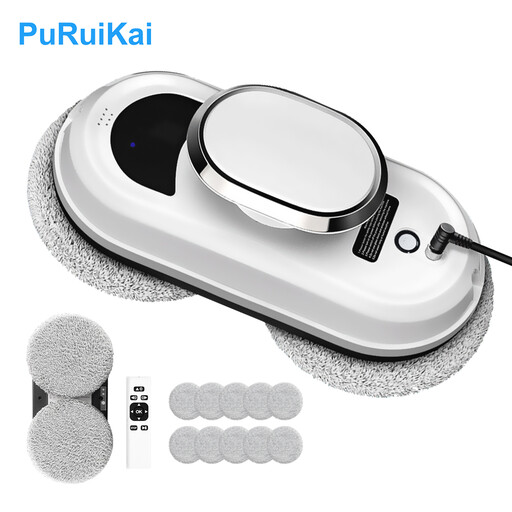
Why it's a good choice: Perfect for taking your first steps with a window cleaning robot. It focuses on the essentials: simple intelligent navigation, a remote control, and the necessary safety features, all at a very affordable price.
This model is transparent: it plugs into the mains, period. Its spec sheet clearly states that the internal battery is only for backup, avoiding any unpleasant surprises about its autonomy.
It includes dual safety with its backup battery and 4.5m cord. Its 2800 Pa suction power is more than enough for most standard windows.
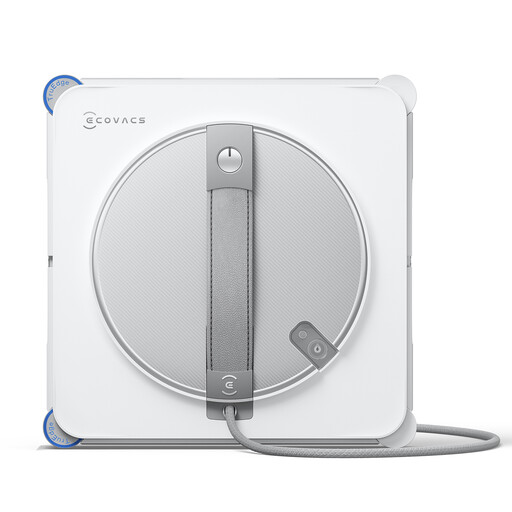
Why it's a good choice: Built for the challenges of large glass surfaces like conservatories. It's the ultimate robot for bay windows, with technologies focused on perfect coverage of hard-to-reach areas.
It tackles the corner problem head-on with its TruEdge technology. Its wide-angle, three-nozzle spray eliminates the need for manual wetting and ensures a uniform result on large panes.
Edge and corner cleaning is its strong suit. The docking station simplifies storage and handling, while WIN-SLAM 4.0 navigation ensures an optimised path without missing any spots.
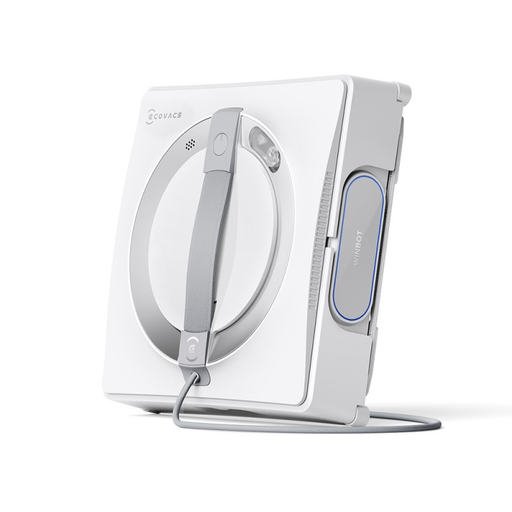
Why it's a good choice: For those who want the best: an all-in-one, ultra-high-performance, and incredibly simple solution. Its multifunction station and suction power make it a top-tier choice for total peace of mind.
It ticks all the boxes and avoids the three main pitfalls: it clarifies its dual power mode (mains or battery up to 110 min), its WIN-SLAM 4.0 navigation optimises edge coverage, and its three-nozzle spray is fully automated.
Its 6-in-1 docking station does it all: charging, control, and even serves as a carrying case. Its 5500 Pa suction power and 12-level protection system offer remarkable safety and efficiency.
We have put together a complete selection of products that meet our rigorous selection criteria and current safety standards.
The risk is minimal if you follow the proper precautions. The robots are held against the window by strong suction. In the event of a power cut, the backup battery (UPS) takes over for 20 to 30 minutes. Finally, the safety cord, which must be attached before every outdoor or high-altitude use, acts as the final safety net against any fall.
The microfibre pads are reusable. After each cycle, it is recommended to put them in the washing machine (at a low temperature and without fabric softener) to remove the dirt. Their lifespan depends on the frequency of use, but one set of pads can last for several months. Remember to replace them when they seem worn or lose their absorbency.
No, once the robot is properly installed and secured, it is completely autonomous. You don't need to stay next to it. However, it is wise to keep an eye on it during its first use to familiarise yourself with its behaviour, especially when it is cleaning exterior windows.