
Livraison le jour même ou le lendemain

Qualité garantie

Débloquez vos offres de bienvenue: Livraison GRATUITE | Jusqu'à -80 % | 30 jours d'essai gratuits à JoyPlus
Téléchargez l'application
Cleaning high windows, large glazed areas or an awkward-to-reach exterior surface can quickly become a chore. A window-cleaning robot can be a welcome helping hand, but choosing the device with the highest suction power or the best mobile app is not enough. Certain details have a direct impact on safety, compatibility with your glazing and the quality of the results.
Here are the main pitfalls to avoid and the criteria to check before buying a window-cleaning robot for your home or office.
The presence of a built-in battery does not necessarily mean that the robot can operate without a cable. On several models, it is used solely as a backup battery in the event of a power cut. The device must therefore remain plugged in throughout the cleaning cycle.
The PuRuiKai PRK-01, for example, advertises protection against power cuts lasting up to 20 minutes, but its main power supply remains wired. This is an important distinction to bear in mind for windows far from a socket or for large glazed areas.
A value expressed in pascals, such as 2 500, 5 500 or 5 600 Pa, indicates the adhesion strength advertised by the manufacturer. On its own, it does not guarantee a streak-free clean. The result also depends on the initial cleanliness of the glass, the quality of the pads, the amount of liquid used and the route followed by the robot.
A suction-based window-cleaning robot should be used on a smooth surface that has been cleared of the heaviest dirt and is free from cracks. Seals, raised areas, textured glazing and porous surfaces can affect adhesion.
Even if the device has edge detection or a backup battery, the safety rope remains essential for an exterior or high-level window. It must be secured to a solid point inside the property and must not be trapped by the power cable.
Also check the carabiner, the rope length and the condition of the accessories before every use. An anti-fall system reduces certain risks, but it does not replace careful installation.
Start by examining the layout of your windows. For glazing close to a socket, a wired model with a backup battery may be perfectly suitable. If you plan to move the device easily from one room to another, a docking station or rechargeable battery will give you greater freedom.
The WINBOT W2 PRO OMNI advertises up to 110 minutes of battery life and can also operate from the mains. By contrast, some PuRuiKai window-cleaning robots are designed to remain plugged in during cleaning.
An automatic window cleaner must be compatible with the size of your glazing. The WINBOT W2 PRO OMNI specifies a minimum window size of 30 × 40 cm. Compare this figure with the dimensions of your small windows, fanlights and other narrow panes.
For a large glazed area, also check the robot’s ability to detect edges, frames and unframed areas. Compact models are often more practical in confined spaces, while a wider device may cover a large surface while reducing the amount of repositioning required.
Microfibre pads should be removable and washable. Automatic spraying makes it easier to dampen the glass, but too much water can leave streaks or reach electrical components.
Some devices, such as the EZIclean Windobot S12 Vibra Max, recommend using distilled water only. Always use the liquid authorised in the instructions. After each cycle, clean the pads, empty the tank and allow the accessories to dry to help prevent odours and deposits.
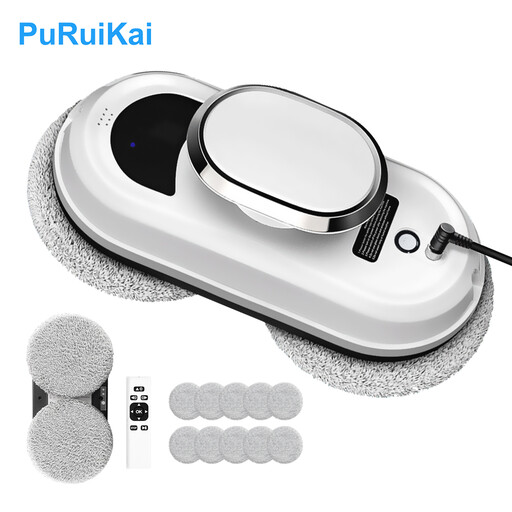
Why this choice suits this profile: Its remote control and automatic programming make it suitable for first-time users of a window-cleaning robot, provided there is a socket nearby.
The product details state that mains power is compulsory and that the battery is used only to keep the device running in the event of a power cut. This avoids any confusion about possible cordless use.
Advertised suction power of 2 800 Pa × 2, automatic edge detection, a 4.5 m safety rope and protection against power cuts lasting up to 20 minutes.
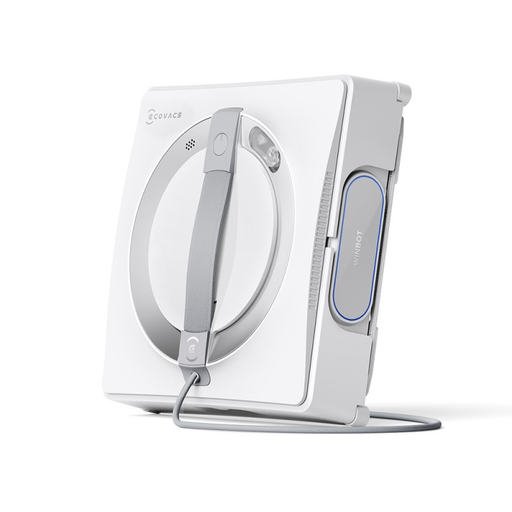
Why this choice suits this profile: Its multifunction station and different cleaning modes are designed for homes with large glazed areas, where users want to retain control over the settings.
Its different modes and WIN-SLAM 4.0 planning adapt the route to the dimensions and layout of the glazing, rather than relying on a single fixed route.
Two power modes, up to 110 minutes of advertised battery life, three-nozzle spraying and a 12-level protection system according to the product details.
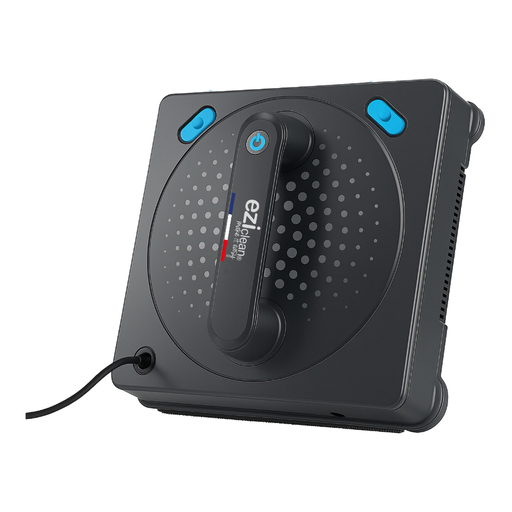
Why this choice suits this profile: It is aimed at people who want to clean windows, mirrors and other smooth glazed surfaces regularly, thanks to its built-in spraying system.
The instructions require distilled water, prohibit use on cracked windows and recommend charging the backup battery before every use.
Dual suction, vibrating pad, automatic spraying, edge detection and advertised support for 20 minutes in the event of a power cut.
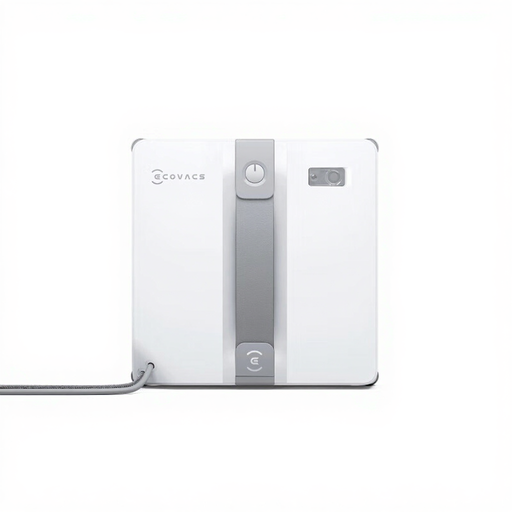
Why this choice suits this profile: Its compact size makes it worth considering for small panes, French doors or areas where a bulky device would be difficult to position.
Its compact design takes up less space, but make sure you check the minimum window dimensions and the usage conditions listed in the product details before buying.
A compact design, as advertised, suited to narrow windows and layouts where manoeuvrability matters more than covering a very large glazed area.
We have put together a complete, real-time updated selection of products that meet these strict selection criteria and European safety requirements.
Before each cycle, check the following:
A robot for large glazed areas does not always eliminate the need for manual preparation. Greasy marks, bird droppings and heavy deposits may require an initial pass with a suitable sponge. The robot can then take care of routine maintenance.
It can follow a route automatically, but you should still keep an eye on it, particularly when it is working on an exterior or high-level window. The safety rope must be properly secured, and the device should be removed immediately in the event of an alarm, loss of adhesion or power cut.
This depends on how often it is used, storage conditions and maintenance. Clean the pads after every cycle, check the cables and replace consumables when they are worn. The backup battery should also be maintained in accordance with the recommendations in the instructions.
In addition to the purchase price, the main costs are electricity, replacement pads and the liquid recommended by the manufacturer. Models that require distilled water may involve an additional recurring cost. Also check the availability of accessories before placing your order.