
Livraison le jour même ou le lendemain

Qualité garantie

Débloquez vos offres de bienvenue: Livraison GRATUITE | Jusqu'à -80 % | 30 jours d'essai gratuits à JoyPlus
Téléchargez l'application
Cleaning a glass door, a high window or a large glazed surface can often be time-consuming and means getting out the step ladder, not to mention the repetitive movements involved. A window-cleaning robot can make the task easier, provided you choose a device that is compatible with your glazing and follow the safety instructions carefully.
Product listings often highlight suction power, spray functions or app connectivity without always explaining the limitations of use. Here are the key points to check before buying a window-cleaning robot.
A cordless window-cleaning robot runs on its battery throughout the entire cleaning cycle. Other models need to remain plugged in and only use their battery in the event of a power cut. This difference is particularly important for windows far from a socket or glazing installed on a balcony.
Check the type of power supply stated in the product listing carefully. A backup battery does not turn a corded device into a cordless robot.
A high value in pascals may seem reassuring, but it does not guarantee good adhesion on every surface by itself. The robot’s grip also depends on how clean the glass is, the condition of the cleaning pads, the flatness of the surface and the absence of cracks.
An anti-fall robot must always be used with its safety cable, especially on an exterior or high-level window. This device limits the consequences of the robot becoming detached, but it does not mean you can leave the appliance unsupervised while it is operating.
A window-cleaning robot with water spray dampens the cleaning pad or applies a small amount of liquid to the glass. It can help loosen certain types of dirt, but a very dusty surface will generally need to be dusted before use. Too much cleaning product can also leave marks or reduce adhesion.
Check the instructions to find out which liquid is permitted. Some models require filtered or distilled water, while others only accept a solution recommended by the manufacturer.
Most window-cleaning robots are designed for smooth and flat surfaces: standard glazing, mirrors, glass doors or smooth tiles, depending on the model. They are generally unsuitable for textured, porous, uneven or heavily sloping surfaces unless compatibility is explicitly stated.
Before placing your order, measure your smallest windows. Some devices require a minimum surface area, such as 30 × 40 cm. Also check for projecting frames, thick seals or obstacles that could interfere with the robot’s movement.
A window-cleaning robot may rely on edge sensors, logical navigation or route mapping. These features reduce the risk of missed areas, but they do not necessarily guarantee an even result when the frames are very irregular.
‘Edge’, ‘intensive’, ‘quick’ or ‘spot’ modes allow you to adapt the cycle to a glass door, mirror or particularly dirty area. The quality of the result also depends on the condition of the cleaning pads and how regularly they are replaced.
As a minimum, look for:
Before each use, inspect the cable, carabiner, cleaning pads and power cord. Do not use the device in the rain, on cracked glass or in strong winds, as its adhesion could be compromised. Keep children and pets away from the area below the window.
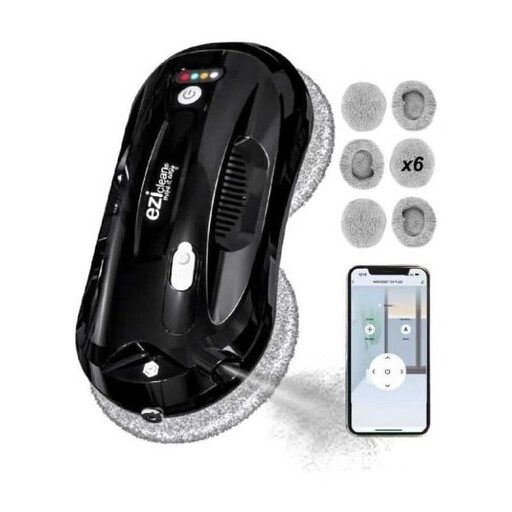
Why this choice suits this profile : Its compact design, advertised weight of 2 kg and smartphone control make it an accessible model for first-time use on windows, mirrors or smooth tiles.
The listing specifies that the device is intended for flat surfaces and must be used with the safety cable. These instructions help prevent unsuitable use.
Wireless smartphone control, advertised low-noise operation and charging station included.
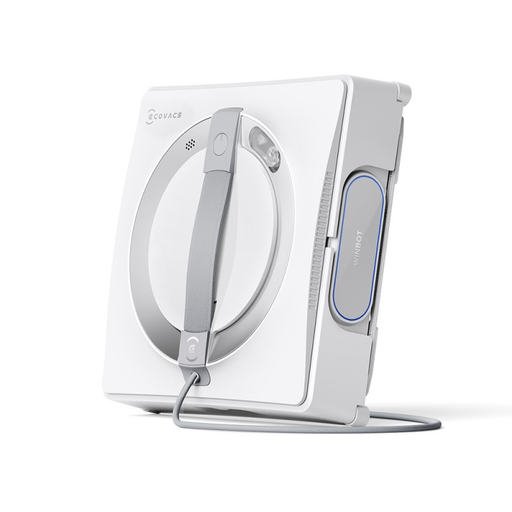
Why this choice suits this profile : Its multifunction station and two power modes are aimed at households with large glazed surfaces looking for a more comprehensive solution.
The listing clearly distinguishes between battery mode and mains operation, and reminds users that the safety attachment is mandatory.
Advertised battery life of up to 110 minutes, three-nozzle spray system, WIN-SLAM 4.0 navigation and 12-level protection system.
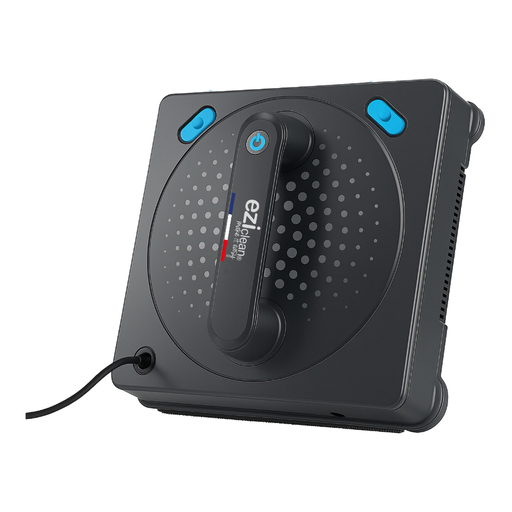
Why this choice suits this profile : Its vibration, automatic spray and hold function in the event of a power cut meet the needs of large windows that are cleaned frequently.
The instructions require distilled water, an attachment cable and a charged backup battery before installation. These details help prevent preparation mistakes.
Two suction cups, vibrating pad, edge detection and advertised hold time of 20 minutes in the event of a power cut.
We have put together a complete, real-time-updated list of products that meet these demanding selection criteria and European safety regulations.
To use a window-cleaning robot correctly:
Running costs mainly include electricity, wear and tear on the cleaning pads, water or a compatible solution and, depending on the model, battery replacement. Regular use on glass that is not very dusty limits the build-up of dirt on the pads and may extend their service life.
Some models are advertised as compatible with frameless glazing, but this feature must be confirmed in the technical specifications. The surface must remain flat, smooth and free from cracks. The safety cable is still essential.
Yes. Even when equipped with an anti-fall system or backup battery, the device must be monitored. A power cut, incorrectly positioned cleaning pad, excessively wet glass or an obstacle may interrupt the cycle.
Its service life depends on how often it is used, storage conditions, pad maintenance and the condition of the battery. Follow the charging instructions, avoid getting the body of the device wet and replace worn accessories with compatible products.