
Livraison le jour même ou le lendemain

Qualité garantie

Débloquez vos offres de bienvenue: Livraison GRATUITE | Jusqu'à -80 % | 30 jours d'essai gratuits à JoyPlus
Téléchargez l'application
Williams pear nectar appeals with its fuller texture compared with a classic juice and its instantly recognisable fruity notes. However, not all bottles are created equal. Between an overly sweet recipe, a limited fruit purée content and a format that is impractical for family consumption, certain mistakes can quickly drive up the cost of each glass.
Before buying Williams pear juice or a fruit drink, take the time to check three things: the fruit content, the ingredients list and the volume you actually need. Here are the criteria to consider to make an informed choice.
These terms do not mean exactly the same thing. Juice generally refers to liquid extracted from fruit or reconstituted from fruit, while nectar may contain fruit purée and offer a thicker texture. As for a simple ‘pear drink’, its fruit content can vary considerably.
The product name alone is therefore not enough. Check the ingredients list and look for a clear indication of pear purée or pulp.
The Williams name suggests a fragrant pear, but on its own it says nothing about the final composition. Two products that claim to use this variety may contain noticeably different proportions of fruit and have very different recipes.
A clearly stated Williams pear purée provides more useful information. Also check whether sugar has been added, particularly if you prefer a fruit drink whose flavour is not dominated by sweetness.
A 1L pear nectar is better suited to sharing or repeated servings at breakfast. The 33cl pear nectar format is more practical for one person, a picnic or occasional consumption, without having to keep an opened bottle for too long.
A large bottle that is opened and then forgotten in the fridge may lose some of its flavour before it is finished. The right volume therefore depends as much on the price per litre as on your drinking habits.
To compare several products objectively, start by checking the fruit percentage. The product details for the Alain Milliat pear nectar in the 1 L format state 50% summer pear purée, with sugar, citric acid and ascorbic acid included in the ingredients list.
This information cannot predict your preferences exactly, but it helps distinguish a fruit-rich recipe from a drink made mainly from water, sugar or flavourings.
Added sugar deserves particular attention. For Alain Milliat nectar, the nutritional information states that per 100 ml there are 45 kcal, 10 g of carbohydrates, including 9 g of sugars, as well as 0 g of fat and 0 g of salt.
This information makes it easier to compare products. It is not medical advice; it simply helps you choose a serving size and consumption frequency suited to your eating habits.
The details for both Alain Milliat formats state that no declared allergens are present. This drink may therefore suit people looking for a fruit drink with no declared allergens, provided you always check the label of the product you receive.
Before opening, the bottles can be stored at room temperature. Once opened, they should be kept in the fridge and consumed within three days. Remember to shake the bottle before opening to ensure an even texture.
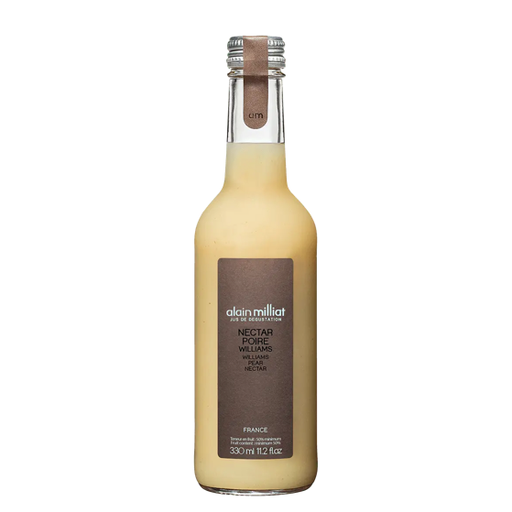
Why this choice suits this profile : This smaller format lets you discover the nectar without immediately investing in a large bottle. It is ideal for an individual serving, chilled at breakfast or during a break.
The limited volume reduces the risk of leaving an opened bottle for several days. The product details state that it contains 50 % summer pear purée and no declared allergens.
33 cl format, 45 kcal per 100 ml, refrigerated storage for three days after opening.
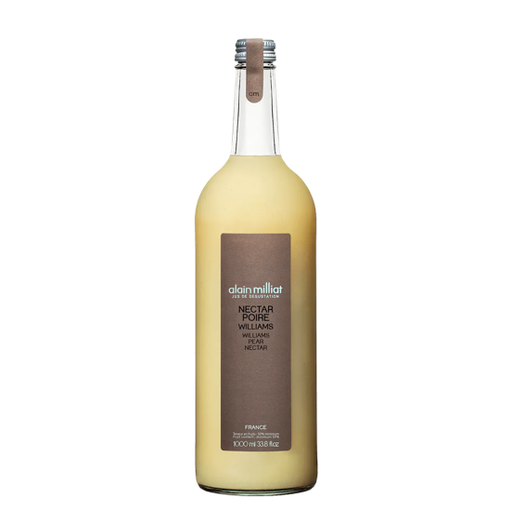
Why this choice suits this profile : The family-size format is ideal for serving a refined pear nectar at the table, at brunch or alongside a meal.
The published ingredients list gives details of the purée content, sugar and acidifiers, rather than making only a vague flavour claim.
1 L bottle, stated 50 % summer pear purée content and no declared allergens according to the product details.
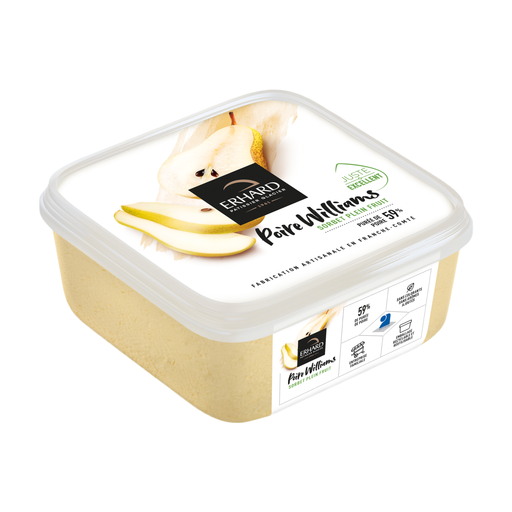
Why this choice suits this profile : This is not a drinkable nectar, but a complementary option for households that enjoy Williams pear as a dessert or with a meal.
The difference between this and a drink is clear: this product should be stored in the freezer and must not be refrozen after thawing.
Sorbet containing 59 % Williams pear purée, with no dairy product in the stated recipe, in a 488 g format.
It can be enjoyed neat, preferably well chilled, at breakfast or with a dessert. You can also use it in a homemade recipe, checking its texture and sugar content beforehand so you can adjust the recipe accordingly.
For the Alain Milliat formats featured here, the product details recommend storing the nectar in the fridge and consuming it within three days of opening. Seal the bottle carefully and shake it before serving.
It depends on the price shown, promotions and how much you actually consume. The 1 L format may be worthwhile for several people, while the 33 cl format helps limit waste when enjoyed occasionally. Compare the price per litre, but also consider how much your household can realistically finish within the recommended storage period.