
Livraison le jour même ou le lendemain

Qualité garantie

Débloquez vos offres de bienvenue: Livraison GRATUITE | Jusqu'à -80 % | 30 jours d'essai gratuits à JoyPlus
Téléchargez l'application
Whether you live in an apartment or a house, wanting to protect your home is a completely legitimate concern. The market is flooded with solutions, but navigating the jungle of technologies can quickly become a headache. Between 4K, color night vision, and models with or without a subscription, it's easy to feel overwhelmed.
This guide is here to help you see things more clearly. Our mission, as product experts, is to decode the spec sheets for you, focusing only on the truly relevant options tailored to real-world needs. We will review the essential criteria to consider before you take the plunge, and then present our selection of the best models for specific use cases.
Before you make a decision, let's go over a few technical features that will make all the difference in your day-to-day use.
Image quality is, of course, the name of the game. A high resolution allows you to clearly identify a face or a license plate. While Full HD (1080p) is the acceptable minimum today, 2K models or, even better, 4K cameras, offer an unparalleled level of detail.
Night vision is just as crucial. Most cameras offer infrared black-and-white vision. However, color night vision, which is becoming more mainstream, is a game-changer: it allows you to distinguish the color of clothing or a vehicle—details that can prove invaluable in the event of an incident.
The choice of power supply will depend on your camera's location:
Modern cameras are much more than just eyes. AI motion detection can differentiate between a human, an animal, or a car. The result: a drastic reduction in false alerts triggered by a moving branch or a change in light.
For video storage, there are two main approaches:
After scrutinizing dozens of models, here are three cameras that stand out from the crowd, each with a distinct approach and a well-defined use case.
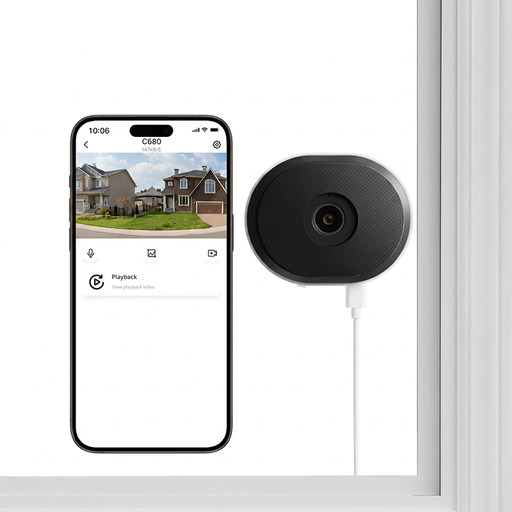
Why It Stands Out The ZOSI C680 tackles a very specific problem: how to monitor the outside from your living room, without the hassle of a facade installation? Its anti-reflection technology is designed to film through a window, day or night, without the image being ruined by glare. Its drill-free installation makes it the perfect companion for renters.
Key Features
Who Is It For? Ideal for apartment renters who want to keep an eye on their entrance, courtyard, or parking space without having the right (or the desire) to install a camera outside.
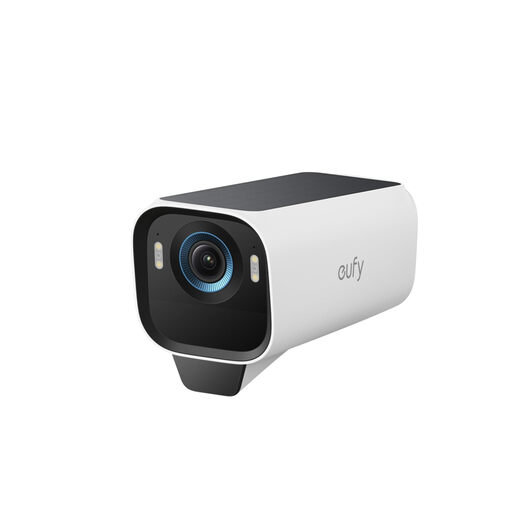
Why It Stands Out The eufyCam S3 Pro ticks all the boxes for a high-end outdoor camera: 4K resolution, solar power for virtually unlimited battery life, and local storage that frees you from any subscription. Its MaxColor Vision technology promises, according to eufy, to maintain vivid colors in complete darkness, without even needing to activate a spotlight.
Key Features
Who Is It For? For homeowners who demand an outdoor security camera system that is powerful, autonomous, and respects their privacy—all without the constraint of a subscription.
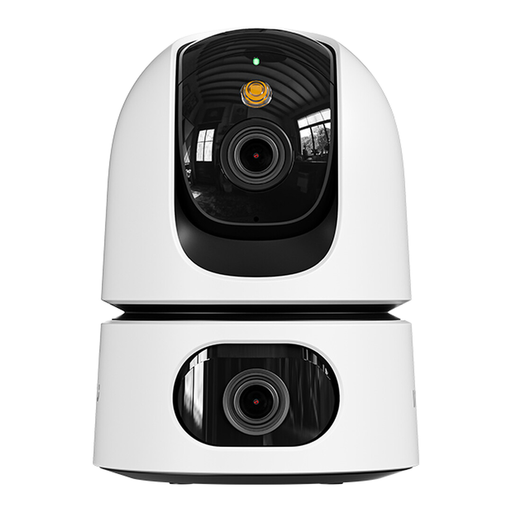
Why It Stands Out The IMOU Ranger Dual stands out thanks to its innovative dual-lens concept. It combines a fixed lens, which keeps an eye on a critical area (like the front door), and a second motorized Pan & Tilt lens capable of rotating 360° to scan the rest of the room. A clever design that eliminates blind spots and ensures total coverage with a single device.
Key Features
Who Is It For? Perfect for families with children or pets, but also for anyone looking for a complete and intelligent indoor surveillance solution for a large living room, office, or small business.
Security is a personal matter, and your situation may require a custom solution. If these three models don't tick all your boxes, or if you're simply curious to compare other options, feel free to explore our full selection.
? Explore our selection of motion detection cameras
Yes, but the solutions are different. Some cameras use a SIM card and a 4G/5G network to transmit data, which is useful for remote sites (country house, construction site). Others are closed-circuit television (CCTV) systems where cameras are connected by cable to a recorder (NVR/DVR), without an internet connection. However, for typical home use, the Wi-Fi security camera remains the simplest and most accessible solution, allowing you to keep an eye on your home from your smartphone, wherever you are.
A subscription-free camera relies on local storage. Video recordings are saved directly to a physical medium that you control: most often a microSD card inserted into the camera or a hard drive connected to a base station (like eufy's HomeBase) or an NVR. The advantages are clear: no monthly fees and complete control over the privacy of your data.
Yes, but under strict conditions that vary by region. You are generally allowed to film the interior of your property as well as its immediate surroundings (your front door, your private garden). However, it is strictly forbidden to film public property or your neighbors' property. If you employ domestic staff (housekeeper, nanny), you are obligated to inform them of the cameras' presence. In any case, for outdoor areas, it is highly recommended to check your local laws and regulations to ensure you are in full compliance.