
Livraison le jour même ou le lendemain

Qualité garantie

Débloquez vos offres de bienvenue: Livraison GRATUITE | Jusqu'à -80 % | 30 jours d'essai gratuits à JoyPlus
Téléchargez l'application
Peace of mind at home is priceless. Yet, with the overwhelming number of security cameras on the market, it's easy to feel lost. Is a subscription required?? Is the installation complex?? Will the image quality be good enough at night??
As product experts at Joybuy, our mission is to help you find clarity. This guide gets straight to the point?: giving you the keys to choosing the right model for your actual needs, whether you own a house with a garden or rent an apartment. We will break down the essential features to help you make an informed choice, all without superfluous technical jargon.
Before you dive in, it's crucial to assess your needs. Here are the three criteria that will guide your decision.
Be aware, the term wireless security camera can be misleading. While it does refer to a camera connected via Wi-Fi, it will always need a power source.
A camera is only useful if its footage is usable. Resolution is a determining factor. A 2K resolution (around 3MP) is already an excellent balance. 4K, on the other hand, allows you to zoom in on specific details, like a license plate, with formidable clarity.
Colour night vision represents a major advancement over traditional black-and-white infrared. Thanks to more sensitive sensors and sometimes a small integrated spotlight, it allows you to distinguish the colour of clothing or a vehicle even in complete darkness—a detail that can prove crucial.
This is often the deciding factor for users.
We have scoured the market based on these criteria. Here are three models that stand out, each meeting a specific need.
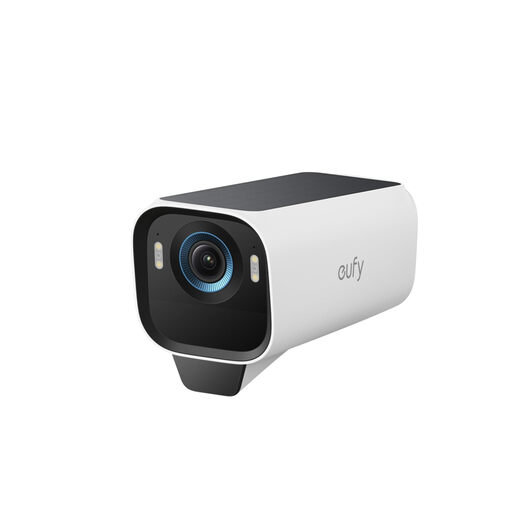
Why it stands out
This model checks all the most sought-after boxes?: 4K resolution, power from a solar camera, and subscription-free operation. It is designed for those seeking a high-performance, autonomous outdoor solution with no hidden fees.
Pros
Who is it for??
For homeowners who want to equip their exterior with a high-end, durable solution without recurring fees. It's the ideal choice for monitoring a garden, driveway, or yard.
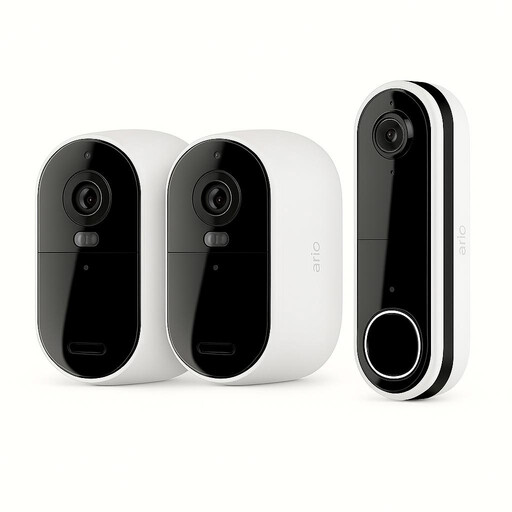
Why it stands out
This surveillance camera kit doesn't just monitor the perimeter of your property?: it also secures your front door. An all-in-one solution that combines two outdoor cameras and a video doorbell, all managed from a single app.
Pros
Who is it for??
For those looking to deploy a unified security system for their home. This pack is ideal for monitoring both the perimeter (garden, garage) and the main entry point, all with centralised management.
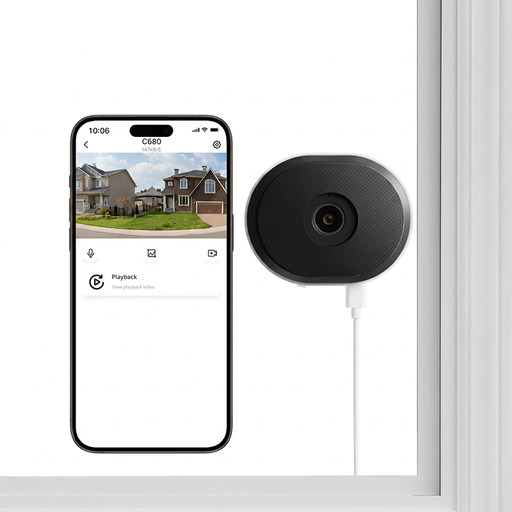
Why it stands out
This camera solves a common problem?: how to monitor the outside from indoors, without window glare ruining the image. Its anti-glare technology and no-drill installation make it a unique solution for apartments and renters.
Pros
Who is it for??
Ideal for renters and apartment dwellers who want to monitor a driveway, car park, or courtyard from their window, without being able (or wanting) to install an outdoor camera or drill through walls.
Our selection covers several key needs, but the security camera market is vast. To explore other models, more comprehensive kits, or cameras with very specific functions, feel free to browse our full catalogue.
Discover our entire range in the IP Camera Housing category to find the perfect system for you.
Yes and no. An IP camera with local storage (SD card or base station) will continue to record even during an internet outage. However, a connection is essential to receive notifications on your smartphone, view the live feed remotely, or access videos saved to the cloud.
Regulations are generally clear?: you have the right to film the interior of your property and its immediate surroundings (garden, driveway, front door). However, it is strictly forbidden to film public spaces (the street, the pavement) or your neighbours' property. If your camera might capture, even partially, a publicly accessible area, you may need to check with your local data protection authority. You must also inform people that they are being recorded, typically via a sign.
Solar-powered cameras are equipped with batteries. The solar panel's job is to keep them continuously charged. A few hours of direct sunlight per day are usually enough to provide several days of battery life. In winter or during long periods without sun, the camera will run on its internal battery. The battery life will then depend on its capacity and the frequency of motion detections. Proper positioning of the solar panel to receive maximum sunlight is therefore essential to maximise its efficiency.