
Livraison le jour même ou le lendemain

Qualité garantie

Débloquez vos offres de bienvenue: Livraison GRATUITE | Jusqu'à -80 % | 30 jours d'essai gratuits à JoyPlus
Téléchargez l'application
The idea of streaming your favourite music throughout your entire home, from one room to another, without interruption and with impeccable sound, is certainly appealing. This is the promise of multiroom WiFi systems. However, the market is a jungle of options and technical jargon. Before you pull out your credit card, it's best to know the common pitfalls to make an informed, future-proof choice.
As the Head of Product Recommendations at Joybuy, my role is to help you cut through the noise. Here are the most common mistakes to avoid:
To build a Hi-Fi audio system that will stand the test of time, focus on a few technical fundamentals.
For a seamless multiroom experience, WiFi isn't an option; it's a requirement. Unlike Bluetooth, it uses your home network to stream music. The advantages: range that covers the entire house and enough bandwidth to stream high-quality audio without destructive compression.
Check for compatibility with standard protocols like AirPlay 2 (for the Apple ecosystem) or Google Chromecast (native on Android and in many apps). These technologies make it easy to group and control speakers from different (but compatible) brands from a single smartphone. A hybrid Bluetooth and WiFi speaker offers the best of both worlds, but for multiroom, WiFi remains the undisputed champion.
The true quality of a powerful wireless speaker can't be found in the wattage on a spec sheet. Instead, pay attention to these elements:
To ensure your setup can evolve with your needs, opt for open ecosystems. In addition to AirPlay 2 and Chromecast, brands like Audio Pro offer their own Audio Pro multiroom app while also ensuring compatibility with market standards. It's the best of both worlds. This gives you the confidence that you can sync the music from your living room speaker with the one in the kitchen, even if the models are different (as long as they are compatible).
There's a right solution for every need. Here is a selection of products that tick all the boxes for quality and connectivity.
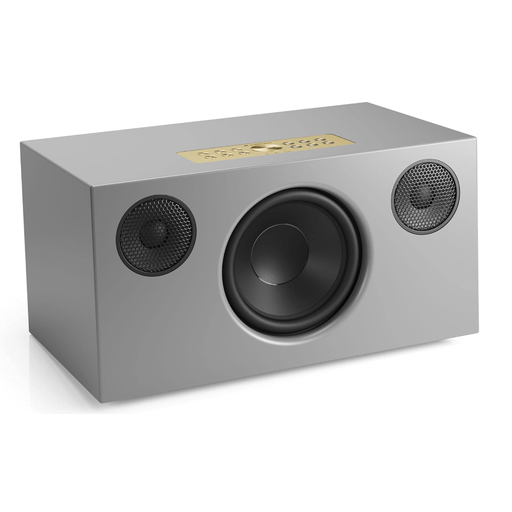
Why we chose it: The ideal centrepiece for a living room. It combines considerable sound power with a highly precise Hi-Fi reproduction, capable of filling large spaces without breaking a sweat.
It doesn't just boast 80W on paper; it harnesses it perfectly thanks to a Class-D amp, a large 5.25-inch woofer, and two tweeters. Its triple compatibility (Audio Pro, AirPlay 2, Chromecast) makes it future-proof.
Remarkable power and sound clarity, coupled with universal multiroom connectivity.
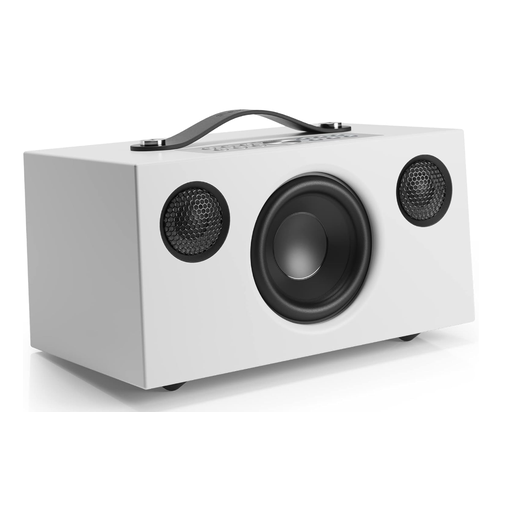
Why we chose it: Perfect for a bedroom, an office, or as the first building block of a multiroom system. Its Scandinavian stylish smart speaker design allows it to blend into any decor, while delivering a surprisingly rich and dynamic sound for its size.
It includes the same multiroom protocols (AirPlay 2, Google Cast, Audio Pro) as its bigger siblings, ensuring perfect integration into an evolving ecosystem. This is a true WiFi speaker, not a disguised Bluetooth gadget.
A compact form factor, a sleek design, and a complete multiroom ecosystem, all at an accessible price point.
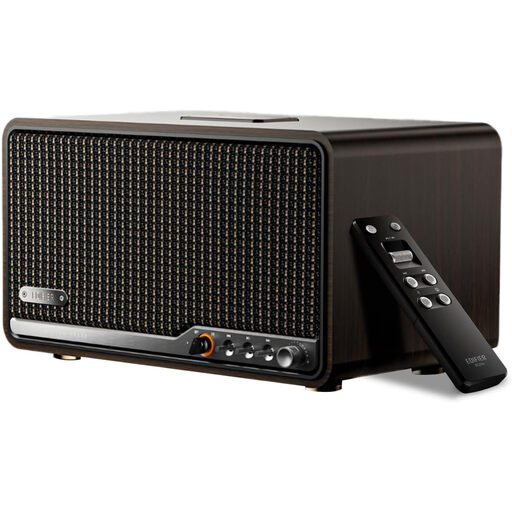
Why we chose it: For those who swear by a wide soundstage and analytical listening. This pair of speakers offers true stereo separation, essential for immersive listening, and handles high-resolution audio formats.
It does away with the mono sound compromise of single speakers. Support for Hi-Res Audio and the LDAC codec over Bluetooth 5.4, in addition to WiFi via AirPlay 2, ensures optimal transmission quality, regardless of the source.
True Hi-Fi stereo sound and compatibility with lossless audio formats.
We have curated a complete range of products that meet our demanding specifications and the latest standards.
A Bluetooth speaker connects directly to your smartphone or tablet over a short range. It's simple and portable. A WiFi speaker connects to your home internet network. This allows it to stream higher quality audio over a greater range and, most importantly, sync with other speakers to create a true multiroom ecosystem.
Yes, as long as they share a common streaming protocol. If all your speakers are compatible with AirPlay 2 or Google Chromecast, you can group and control them from the same app, regardless of their brand. This is why it's crucial to choose speakers that are compatible with these open standards.
In standby mode, a smart speaker's consumption is minimal, comparable to any modern electronic device. When playing music, consumption obviously depends on the volume, but modern amplifiers (like Class-D) are designed to be very energy-efficient. For normal home use, the impact on your electricity bill will be very moderate.