
Livraison le jour même ou le lendemain

Qualité garantie

Débloquez vos offres de bienvenue: Livraison GRATUITE | Jusqu'à -80 % | 30 jours d'essai gratuits à JoyPlus
Téléchargez l'application
Protecting your home or business premises is a priority. But with the vast array of models available, choosing the right Wi-Fi security camera can quickly become a daunting task. Technical specifications, installation types, advanced features… it's easy to get lost.
This guide is here to shed some light. As experts, our mission is to demystify the market to help you make an informed choice that fits your needs and budget, without drowning you in marketing jargon.
Before diving into our selection, let's review the key criteria that will guide your choice.
Image clarity is the number one criterion. Resolution is your best indicator here: a 2K (around 3 megapixels) or 4K camera will offer much finer detail than a standard 1080p model. This is crucial for identifying a face or a license plate.
Don't underestimate night vision, either. Most models make do with black-and-white infrared vision. But the increasingly common colour night vision technology is a game-changer. It allows you to distinguish the colour of clothing or a vehicle even in low light, providing a much higher level of detail.
A modern wireless security camera does more than just record continuously. Its role is to alert you, but only when it matters. This is where artificial intelligence (AI)-powered motion detection comes in. This key feature distinguishes real threats (humans, vehicles) from irrelevant motion (swaying branches, pets), drastically reducing the number of false alerts on your smartphone. Be sure to check if the camera allows you to set custom detection zones to focus only on critical access points.
This depends entirely on your home and its limitations.
In any case, every IP camera connects to your Wi-Fi network, allowing you to view the video feed remotely from a dedicated app.
Here are three models that meet very different needs, selected for their performance and ease of use.
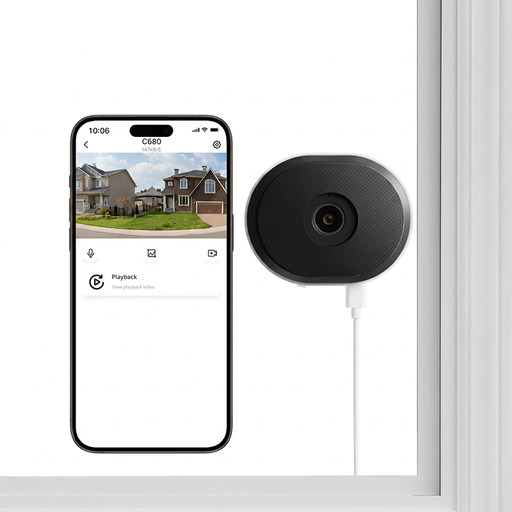
Why it stands out: The ZOSI C680 tackles a common problem: monitoring the outside from the inside. Its anti-glare lens technology allows it to film clearly through a window, day or night, without the image being ruined by reflections from the glass or ambient lights.
Key features:
Who is it for? Ideal for renters in apartments or anyone who doesn't want to drill into their walls. Perfect for keeping an eye on an entrance, driveway, or garden from the comfort of your home.
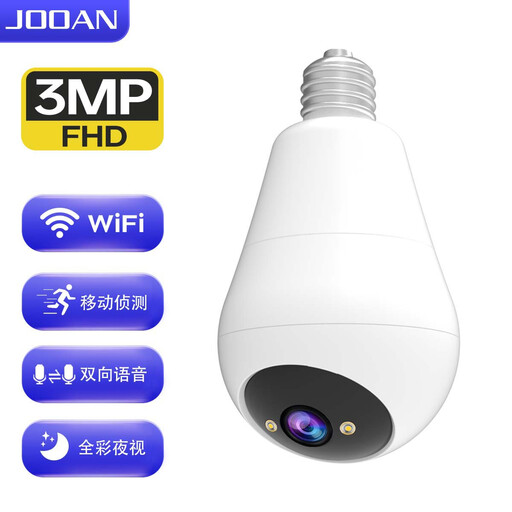
Why it stands out: This camera merges lighting and surveillance into an ultra-discreet format. By simply screwing into a standard light socket (E27), it becomes virtually invisible. It's an ingenious solution for 360° surveillance that doesn't draw attention.
Key features:
Who is it for? Perfect for those looking for a discreet and easy-to-install surveillance solution, both indoors and outdoors (under a shelter). Ideal for an entryway, garage, or above a patio.
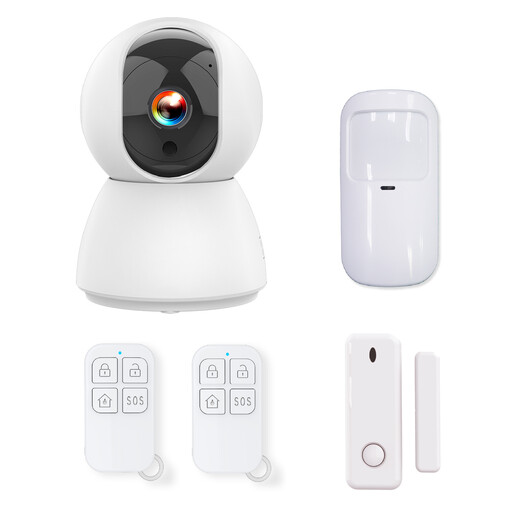
Why it stands out: Much more than a simple camera, this is a true connected and modular home alarm system. The 4 MP motorised camera acts as the central hub: it integrates a 90 dB siren and communicates wirelessly with various sensors for comprehensive protection.
Key features:
Who is it for? For homeowners or small business managers who want a complete, centralised security ecosystem, rather than just a standalone camera.
The models featured here cover specific use cases, but the world of home security is vast. If you're considering a more robust system with more sensors or different features, exploring other configurations is an excellent idea.
To discover a wider range of integrated solutions, feel free to browse our selection of home security kits.
Yes, installing a security camera in your home is generally legal. However, you must strictly respect the right to privacy. The camera should only film the interior of your property and its immediate surroundings (your garden, your doorstep). It is strictly forbidden to film public spaces or your neighbours' property. If you employ domestic staff, you are required to inform them of the cameras' presence.
Two main options exist. Local storage, most often on a microSD card (not included) inserted into the camera. This solution gives you complete control over your data with no subscription fees. Cloud storage, usually offered via a paid subscription, saves your videos on remote servers. This is the best protection in case the camera is stolen or destroyed. Many models, like the ZOSI C680, offer both.
Connection stability is more important than raw speed. A standard DSL or fibre connection is more than sufficient. For optimal reliability, choose a camera that supports dual-band Wi-Fi (2.4 GHz and 5 GHz). The less-congested 5 GHz band offers a more stable and faster connection, which is a real advantage for streaming high-resolution video smoothly.