What should you look at first?
Choosing between wholewheat, part-wholewheat and regular pasta depends first on how important fibre is to you, then on your taste and texture preferences. Whichever you choose, you’ll still need to consider your portion size and the rest of your meal.
Wholewheat pasta
Worth considering: if you want to choose a recipe made with wholewheat semolina and compare fibre content.
Bear in mind: the taste and texture may differ from your usual pasta, but that doesn’t necessarily mean it has fewer calories.
Part-wholewheat pasta
Worth considering: if the taste or texture is putting you off switching to wholewheat pasta.
Bear in mind: it isn’t made entirely from wholewheat semolina. The Panzani Whole Wheat Penne sold by Auchan contains 50% wholewheat semolina.
Regular pasta
Worth considering: if you’d rather stick with your usual way of preparing pasta than choose one made with wholewheat semolina.
Distinguish it from: wholewheat pasta. Regular or fresh pasta doesn’t become wholewheat because of its shape or Nutri-Score; check the ingredients.
| Criteria |
What to check |
Who is it for? |
| Fibre |
Whether the ingredients include wholewheat semolina, and the fibre per 100 g for products shown in the same state. |
If I get hungry between meals, I want to prioritise fibre without assuming pasta alone will make the difference. Around 45% of consumers put this need first. |
| Ingredients and energy |
The proportion of wholewheat semolina, if stated, followed by the energy and fibre per 100 g. |
When choosing what to serve, I want to distinguish a fully wholewheat recipe from a blend and compare their energy content for the same quantity. This is the top priority for around 33% of consumers. |
| Taste and texture |
Whether the recipe is wholewheat or part-wholewheat, and the cooking time on the packet. |
If the texture of wholewheat pasta puts me off, I’d rather find an alternative that fits in with my usual habits. This is a priority for around 22% of consumers. |
Wholewheat pasta available on Joybuy
These fusilli, pennette rigate and farfalle give you a range of pasta shapes sold as wholewheat. To compare them as part of your approach to managing your weight, check the ingredients and nutritional values for each product, as well as the portion you plan to serve.
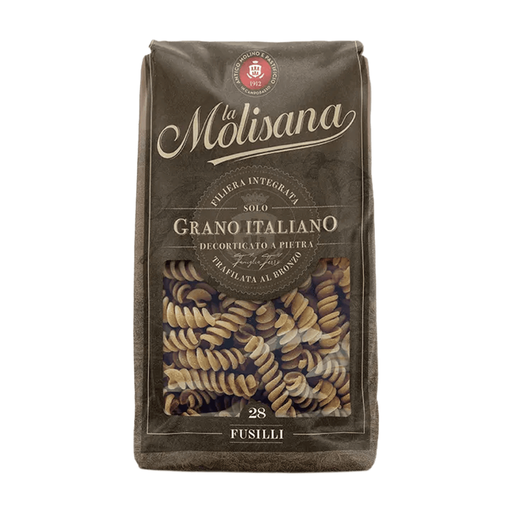 Image unavailable
Fusilli Integrali
When choosing wholewheat fusilli, check the ingredients list and compare the fibre and energy per 100 g with other pasta shown in the same state.
View on Joybuy
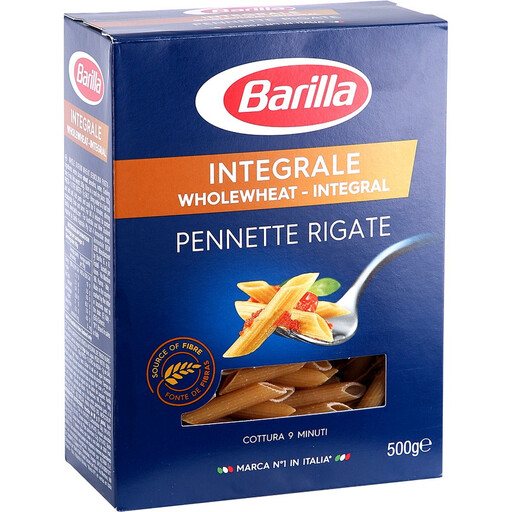 Image unavailable
Barilla Whole Wheat Pennette Rigate Tub, 500 g
These wholewheat pennette rigate come in a 500 g pack, making them a useful option to compare with other wholewheat pasta shapes. Check the ingredients and values per 100 g for this variety before comparing it with another product.
View on Joybuy
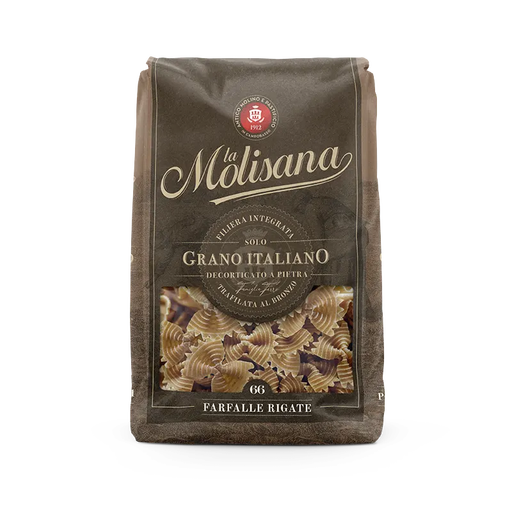 Image unavailable
La Molisana Farfalle Integrali n° 066, 500 g
If you prefer farfalle, this 500 g Integrali pack is worth considering. Check the fibre value on the packet before comparing it with other wholewheat pasta.
View on Joybuy
Frequently asked questions
Does wholewheat pasta help you lose weight?
No. Choosing wholewheat pasta alone doesn’t guarantee weight loss. As ameli.fr points out, a food containing fibre isn’t automatically low in calories. Consider your portion size and the ingredients in your sauce too.
How can you tell fully wholewheat pasta from a part-wholewheat recipe?
Start by reading the ingredients list and checking whether a proportion of wholewheat semolina is stated. For example, the Panzani Whole Wheat Penne sold by Auchan contains 50%, so it isn’t made entirely from wholewheat semolina.
Should you change your habits gradually when choosing wholewheat pasta?
A gradual change may be better if you don’t usually eat much fibre. Increasing your intake quickly can cause digestive discomfort, so make sure you drink enough water too.
Is wholewheat pasta made from wheat suitable if I need to avoid gluten?
No. Wholewheat pasta made from wheat contains gluten. If you need to avoid it, check the ingredients and any ‘may contain’ statements for each product rather than relying on the word ‘wholewheat’ alone.
Is Nutri-Score enough to compare pasta?
No. It doesn’t replace checking the ingredients and nutritional information. To compare wholewheat and part-wholewheat pasta, look at the ingredients, energy and fibre per 100 g, making sure you’re comparing like with like.


