People looking to compare fibre content
You’re looking for dried wholewheat pasta and want to compare fibre and carbohydrate values on the same per-100 g basis. ameli recommends comparing nutritional information when shopping if you have diabetes.


When shopping for someone with diabetes, choose pasta whose ingredients clearly list whole durum wheat semolina, then compare the fibre and carbohydrate content per 100 g across dried products. This comparison doesn’t determine the right portion for you: consider the whole meal and, if needed, follow the advice of your healthcare team, as ameli recommends.
You’re looking for dried wholewheat pasta and want to compare fibre and carbohydrate values on the same per-100 g basis. ameli recommends comparing nutritional information when shopping if you have diabetes.
You’re looking for a familiar shape, such as spaghetti, penne, torti or macaroni, while checking the ingredients on the pack. Shape and texture matter if the whole family will be eating the same product.
You compare the ingredients, nutritional values and allergen information on supermarket own-brand products, then check that your chosen product is available at your local store.
When comparing dried pasta, start with the ingredients and values per 100 g. Then consider the portion size, what you’ll serve with it and any practical needs in your household.
| Criteria | What to check | Who is it for? |
|---|---|---|
| Ingredients and fibre | Look for whole durum wheat semolina in the ingredients, then compare the fibre content per 100 g across dried pasta products. | I want to identify wholewheat pasta and compare its fibre content without relying on the colour of the pack. Around 40% of consumers would make the ingredients their top priority. |
| Carbohydrates and portion size | Check the carbohydrate and sugar values per 100 g, then consider how much you’ll eat and what you’ll serve with it. | When planning a meal with diabetes in mind, I need to look beyond the figures on the pack alone. This would be the main concern for around 30% of consumers. |
| Shape and preparation | Choose a shape that suits your recipes and follow the cooking time on the pack. | If my household mostly eats macaroni or penne, I’m looking for a wholewheat option we’ll actually cook; around 20% of consumers would put everyday use first. |
| Local availability and labelling | Check which products are available at your local store and read the ingredients and allergen information. | I want to be able to find the product I’ve chosen again and check its label before using it. For around 10% of consumers, availability would be the main consideration. |
The shape or name of a range doesn’t tell you everything about the ingredients and nutritional values of each product.
Read the ingredients on the pack you’re buying, then compare fibre and carbohydrate values per 100 g across dried pasta products.
According to ameli, Nutri-Score is optional and applies to the product per 100 g; it doesn’t determine a suitable portion for someone with diabetes.
Also check the nutrition table, portion size and what you’re serving with the pasta.
This wheat pasta contains wheat; warnings about traces of other allergens vary by product.
If you have an allergy, check the ingredients and trace warnings on the specific pack, especially if you switch to a different shape or recipe.
Barilla France’s range includes wholewheat spaghetti made with whole durum wheat semolina and water.
Panzani presents its Complètement Bon range as a way to switch to wholewheat pasta, with several familiar shapes.
One Carrefour whole durum wheat pasta product lists whole durum wheat semolina in its ingredients.
Auchan’s range includes wholewheat spaghetti and organic wholewheat macaroni.
Bio Village’s range includes organic wholewheat spaghetti.
Lustucru Sélection’s range includes fresh pasta, filled pasta and tagliatelle.
These two 500 g products are wholewheat pasta in different shapes. To choose between farfalle and pennette, start with your recipes, then check the ingredients, nutritional values and allergen information on each pack.
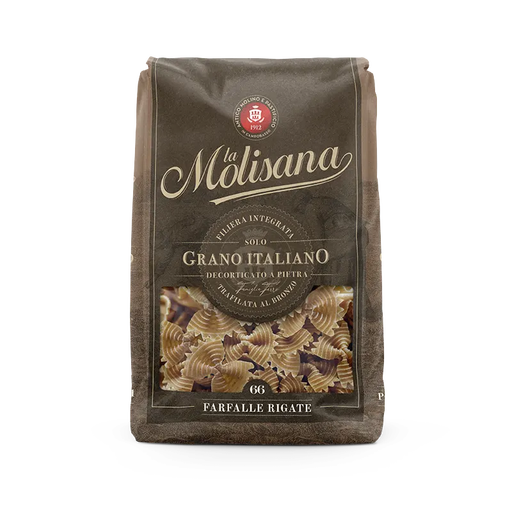 Image unavailable
Farfalle is a good option if you’d like to use this shape in your recipes. The pack contains 500 g; check its label for the ingredients, values per 100 g and allergen information.
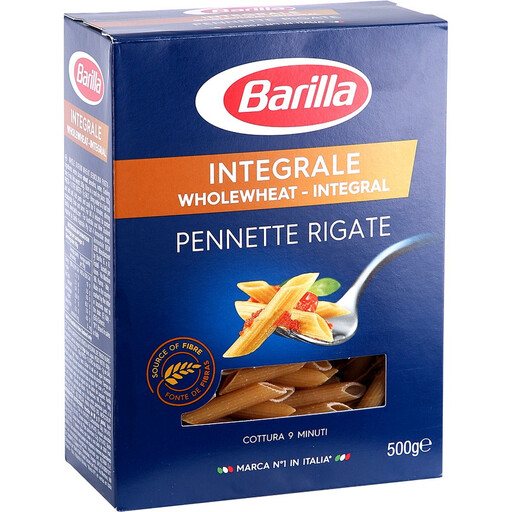 Image unavailable
Pennette is worth considering if this shape suits your household’s recipes. The pack contains 500 g; read the ingredients and nutritional values before comparing it with other dried pasta.
No. ameli describes a varied diet with no forbidden foods and portions suited to your needs. Wholewheat pasta should still be considered as part of the whole meal; ask your healthcare team for advice specific to your situation.
Compare the ingredients and the fibre, carbohydrate, sugar, fat and salt values on the same per-100 g basis. As ameli advises when shopping with diabetes in mind, check the nutritional information, then consider how much you’ll eat.
Look for whole durum wheat semolina in the ingredients list of the product you’re considering. Product information for wholewheat pasta from Carrefour, Auchan and Barilla gives some examples, but the pasta shape or range name doesn’t guarantee the recipe in every pack.
In France, the DGCCRF states that the labelling of pre-packed food includes, among other things, an ingredients list, a nutrition declaration and the net quantity. Also check the allergen information on the specific pack, particularly if you switch products.
Follow the instructions on the pack you’ve chosen. For its wholewheat spaghetti, Auchan recommends resealing the bag securely after opening or transferring the pasta to an airtight container, away from heat and moisture.