Parents introducing wholemeal pasta
You’d like to gradually replace your usual pasta without suddenly changing the taste and texture of a meal. Manger Bouger also mentions semi-wholemeal starchy foods as an option for children.


If your child is put off by the taste of wholemeal pasta, start with a transition recipe and a sauce they already know. If wholemeal ingredients are your priority, look for ‘whole durum wheat semolina’ in the ingredients. A short pasta shape may make it easier to pair the sauce with the pasta, but there’s no guarantee your child will enjoy the meal. Check the allergens on every pack, particularly if a medical diet applies at school.
You’d like to gradually replace your usual pasta without suddenly changing the taste and texture of a meal. Manger Bouger also mentions semi-wholemeal starchy foods as an option for children.
You want to look for wholemeal semolina in the ingredients, compare fibre per 100 g and read the allergen information for the product you buy.
You need to distinguish your child’s preferences from a medical dietary requirement. The French Ministry of National Education says an individualised care plan can be put in place to manage certain special requirements at school.
First, decide between a transition recipe and pasta made with wholemeal semolina. Then consider the pasta shape and a sauce your child already enjoys.
Consider this: when a change in taste or texture is likely to be the main obstacle. Panzani presents its Complètement Bon range as an option for this purpose, although that doesn’t guarantee how your child will take to it.
Bear in mind: don’t assume a transition recipe is made solely with wholemeal semolina without checking.
Consider this: if wholemeal ingredients are your top priority. The ingredient lists for Barilla Wholewheat Penne Rigate and Auchan wholemeal penne both specify whole durum wheat semolina.
Bear in mind: if your child isn’t keen on this pasta yet, introducing it gradually may work better than replacing all their usual pasta dishes at once.
| Criterion | What to check | Who it’s for |
|---|---|---|
| Taste and texture | Check the product name and ingredients of a transition recipe, and serve it with a sauce your child already enjoys. | If my child immediately rejects pasta that tastes different, I want to make the first try easier without assuming they’ll like it. Around 42% of consumers would make this their priority. |
| Wholemeal ingredients | Look for wholemeal semolina in the ingredients, then compare fibre on a like-for-like basis, per 100 g. | I mainly want to know what the pasta contains before choosing its shape or sauce. Clearly identifiable ingredients would be the priority for around 33% of consumers. |
| Shape and sauce | Choose a shape your child is happy to eat and check the cooking instructions for the texture you’re looking for. | If the sauce is left at the bottom of the plate or the texture isn’t popular, I’d rather start with a familiar shape. Around 25% of consumers would put this combination first. |
A recipe designed to help with the transition and pasta made with wholemeal semolina don’t necessarily meet the same ingredient criteria.
Read the product name and ingredient list for the specific product. If fibre is important to your comparison, use the values per 100 g.
A child who’s used to a different texture may not enjoy the change. Manger Bouger says some children may find semi-wholemeal versions easier to digest.
Introduce the new recipe gradually and make sure your child has water to drink with their meal.
Wholemeal wheat pasta contains gluten, and some products may also list other allergens. A food preference is not the same as an allergy or a prescribed diet.
Check the information on the pack you buy. If your child has a medical dietary requirement at school, ask the school about the arrangements in place, including whether an individualised care plan may be appropriate.
A shape that doesn’t hold the sauce well may make this new dish feel less familiar to your child. Barilla describes the ridges on its Wholewheat Penne Rigate as designed to hold the sauce.
Try a short pasta shape with a sauce your child already likes, then adjust the cooking time according to the pack instructions and the texture you’re looking for.
These products are useful for comparing specific recipes and shapes; don’t assume that every pasta from a brand has the same features.
The Complètement Bon range is worth considering if your main aim is to encourage your child to try pasta containing whole wheat.
The Wholewheat Penne Rigate in the Integrale range is worth considering if you’re looking for a recipe made with wholemeal semolina.
Auchan wholemeal penne and spaghetti let you compare two shapes made with whole durum wheat semolina.
The Carrefour range includes several wholemeal wheat pasta shapes, including penne, fusilli, small pasta shells and spaghetti.
These wholemeal pennette are a short pasta shape to serve with a familiar sauce. To decide whether they’re right for your child’s meal, also check the ingredients and cooking instructions on the pack.
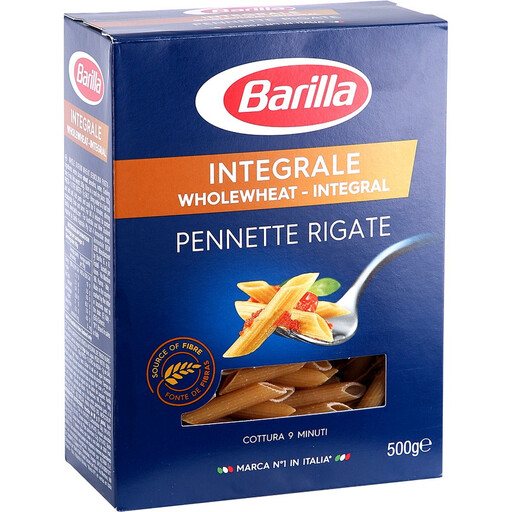 Image unavailable
Pennette could be a good option if you’d like to serve a sauce your child already knows.
Pack size: 500 g tub. Before serving a meal with dietary requirements, check the ingredients and allergens on the pack. If texture matters to your child, also check the cooking instructions.
Yes. You can introduce it gradually without expecting your child to immediately accept its taste or texture. Manger Bouger also mentions semi-wholemeal starchy foods, which some children may find easier to digest. Serving the pasta with a familiar sauce means you don’t have to change every part of the meal at once.
Read the ingredient list for the product you choose. The words ‘whole durum wheat semolina’ identify this ingredient, while the name of a transition range isn’t enough to confirm the exact ingredients. To compare the fibre in two packs, use the nutritional values per 100 g.
No. Pasta made from wholemeal wheat contains gluten, so it isn’t suitable for a meal that must be gluten-free. If your child has a medical dietary requirement at school in France, contact the school to find out what arrangements are in place. The French Ministry of National Education says an individualised care plan can be put in place in certain situations.
Check the ingredients and allergens for the pasta and sauce separately. Then check the nutritional information if you want to compare products. The DGCCRF says allergens must be highlighted in the ingredients list of prepacked foods, so always check the information on the products you actually buy.