Hosts who pay attention to what’s in their pasta
You’re preparing a home-cooked meal and would like to serve pasta made from wholemeal semolina. The ingredients list helps you distinguish it from products made with only some wholemeal wheat.


For an evening meal with a homemade sauce, choose pasta made from wholemeal semolina if its ingredients are your priority. If your guests prefer the pasta they’re used to, a partly wholemeal variety or classic pasta may be a better fit for the table. Then choose the shape to suit the sauce: Barilla recommends its ridged wholemeal penne for chunky sauces and its wholemeal spaghetti for lighter sauces. Check the ingredients, allergens and cooking time for the product you buy.
You’re preparing a home-cooked meal and would like to serve pasta made from wholemeal semolina. The ingredients list helps you distinguish it from products made with only some wholemeal wheat.
You’ve planned a chunky sauce or, on the other hand, a lighter one, and you’re looking for a pasta shape that will work well with the dish you’re serving.
You’d like to serve wholemeal pasta without assuming that everyone will enjoy the same texture. A partly wholemeal variety is an option, as long as you check its ingredients.
When choosing pasta for a home-cooked meal, start with the ingredients you’re looking for, then match the shape to the sauce and check the cooking time before planning when to serve it.
| What to consider | What to check | Who is it for? |
|---|---|---|
| Ingredients | Read the ingredients to distinguish durum wheat wholemeal semolina from a partly wholemeal blend. If fibre is important to you, compare the values given per 100 g of dry product. | I want to know how much wholemeal wheat is in the pasta I’ll be serving, rather than relying on the product range name. Around 36% of consumers might make this their priority. |
| Shape and sauce | Consider whether the sauce is light or chunky. Barilla says the ridges on its wholemeal penne are suited to sauces, while its wholemeal spaghetti is recommended for lighter sauces. | My sauce has pieces in it, so I want to choose a suitable shape; for a thinner sauce, I’d be more likely to choose spaghetti. Around 36% of consumers would put matching pasta to sauce first. |
| Guests and cooking | Check the proportion of wholemeal wheat, the pack size and the cooking time for the product you choose. | My guests are most familiar with classic pasta, and I need to serve the meal on time. For around 28% of consumers, this ease of planning would come before other considerations. |
Pasta made from wholemeal semolina and a partly wholemeal variety do not offer the same choice of ingredients.
Start with the ingredients list, then check the nutritional information, including fibre per 100 g. Don’t infer the ingredients from the Nutri-Score alone.
The shape affects how well the pasta works with a thin or chunky sauce. Barilla says the ridges on its wholemeal Penne Rigate are suited to sauces, while the brand recommends its wholemeal spaghetti for lighter sauces.
Choose your sauce before deciding between short, ridged pasta and spaghetti.
Pasta made from wholemeal wheat contains wheat. Some Auchan and Carrefour products also mention possible traces of other allergens in their product details.
For every pack intended for a guest with an allergy, check the ingredients and trace allergen information on the packaging of the product you actually buy.
These products provide useful points of comparison for ingredients, shape and cooking time. Their features apply to the specific products listed, not to every pasta made by each brand.
The wholemeal wheat range includes spaghetti and Penne Rigate, both in 500 g packs.
The Penne Complètement Bon product, in a 500 g pack, is an option for a table of guests who can’t decide between classic and wholemeal pasta.
The product reviewed is a 500 g pack of wholemeal wheat spaghetti.
The wholemeal spaghetti product reviewed is available in a 500 g pack.
E.Leclerc lists Turini wholemeal wheat spaghetti in a 500 g pack.
These three wholemeal pasta shapes are worth considering with a homemade sauce. First compare their shapes and stated pack sizes, then check the other useful information on each product page and its packaging.
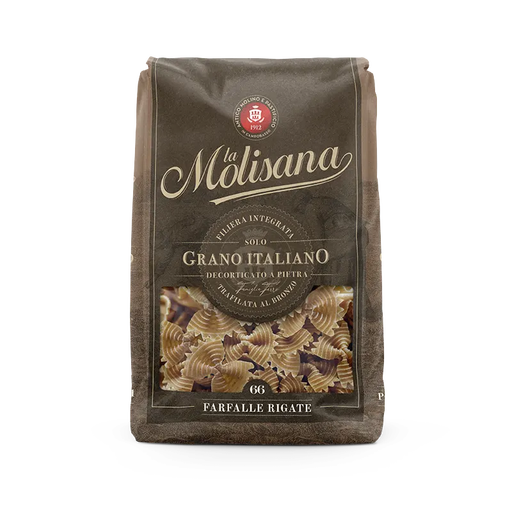 Image unavailable
Farfalle pasta is worth considering if you’d like to serve a homemade sauce with wholemeal pasta.
Pack size listed: 500 g. Check the ingredients, allergens and cooking time on the pack you choose.
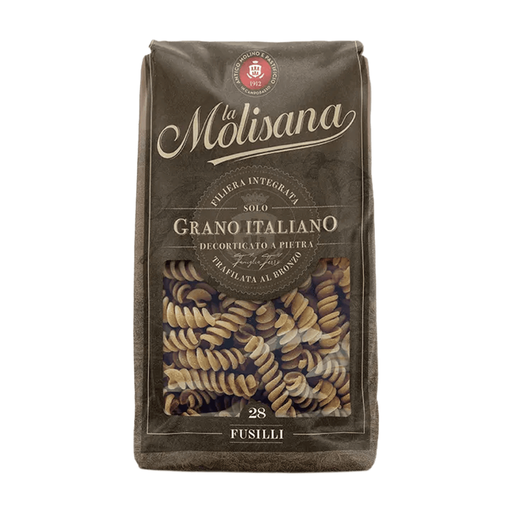 Image unavailable
Fusilli is a great way to vary the pasta you serve with a homemade sauce.
Check the pack size, ingredients, allergens and cooking instructions before preparing your portions.
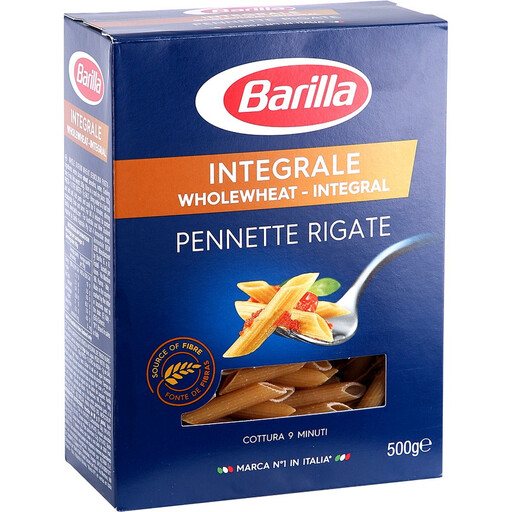 Image unavailable
A wholemeal wheat pennette rigate option if you prefer a short pasta shape for your homemade sauce.
Pack size listed: 500 g. Check the packaging for the cooking time and allergen information for this product.
Not necessarily: it depends on the ingredients you’re looking for and your guests’ preferences. Pasta made from wholemeal semolina suits those who prioritise its ingredients. If your guests are used to classic pasta, a partly wholemeal variety is another option; check its ingredients to see how it differs.
No, the wholemeal wheat pasta mentioned here is made from wheat and contains gluten. If a guest needs to avoid gluten, don’t rely on the word ‘wholemeal’: check the label of the product you choose.
There’s no single cooking time: it varies by product and the result you’re after. Barilla recommends 9 minutes for its Penne Rigate Integrale, while Auchan recommends 8 minutes for its wholemeal spaghetti mentioned here to cook al dente. Follow the instructions on the pack you’re preparing.
Reseal the pack and store the dried pasta away from heat and moisture. Also check the best-before date and storage instructions on the packaging.
No, the Nutri-Score is no substitute for the ingredients list when you’re checking what pasta is made from. Look for ‘durum wheat wholemeal semolina’ if that’s what matters to you, then read the nutritional information for the specific product.