Older person or carer looking to vary their grains
Manger Bouger encourages adults to choose wholemeal pasta. For a regular meal with sauce, the pasta’s ingredients matter, but they don’t tell the whole story about someone’s nutritional needs.


Choose a shape of wholemeal pasta the person enjoys and that’s easy to serve with the sauce you have in mind. Barilla recommends ridged penne for holding the seasoning, and wholemeal macaroni or spaghetti for lighter recipes. Check the ingredients of the specific product you choose, and don’t assume its shape means the texture will be suitable for someone who has difficulty chewing or swallowing.
Manger Bouger encourages adults to choose wholemeal pasta. For a regular meal with sauce, the pasta’s ingredients matter, but they don’t tell the whole story about someone’s nutritional needs.
Small pasta shapes can be easier to use in some dishes. Your choice also depends on the sauce, the person’s preferences and the texture once the pasta is cooked.
If wholemeal pasta isn’t well liked, you could consider a recipe made with only some wholemeal semolina. Just remember that this is different from pasta made entirely with wholemeal semolina.
For a meal with sauce, first check the pasta’s ingredients. Then choose a shape the person enjoys and that works well for serving the dish.
| Priority | What to check | Consumers concerned |
|---|---|---|
| Grain content | Read the ingredients list and distinguish between durum wholemeal wheat semolina and a recipe that contains only some wholemeal semolina. | If I want to include more wholegrains in my meals, I want to know what the pasta actually contains; around 40% of consumers would put this first among their concerns. |
| Shape and serving | Compare short shapes with spaghetti, depending on the sauce you plan to serve, and check the texture after cooking. | If I often serve dishes with sauce, I look for a shape that’s easy to serve and eat; shape and serving would be the priority for around 30% of consumers. |
| Enjoyment of the taste | Check the stated proportion of wholemeal wheat and choose a recipe the person is happy to eat. | If the taste of wholemeal pasta might put someone off their meal, I’d take their preference into account before changing their usual pasta; around 30% of consumers would prioritise whether they enjoy the taste. |
Serving a sauce with white pasta doesn’t change the grain used to make the pasta.
For the product you buy, look for wholemeal wheat in the pasta’s name and ingredients list, separately from any information about the sauce.
According to Panzani, its Complètement Bon range contains 50% wholemeal wheat semolina. That doesn’t mean the pasta is made entirely with wholemeal semolina.
Compare the stated proportion and ingredients list rather than relying on the packaging alone.
Changing pasta alone won’t address unintentional weight loss or difficulty chewing or swallowing.
In these situations, seek advice from a healthcare professional before changing the meal or its texture.
These ranges offer useful points of comparison for pasta shapes and ingredients. Always check the specific product you’re choosing.
The Whole Wheat range includes penne rigate, macaroni and spaghetti.
The Complètement Bon range includes penne and macaroni for anyone considering a recipe containing wholemeal wheat.
Carrefour offers wholemeal durum wheat pasta and Carrefour Extra wholemeal wheat spaghetti.
Auchan offers wholemeal wheat pasta in shapes including penne, fusilli and spaghetti.
These two products offer different shapes to consider for a meal with sauce: farfalle and pennette rigate. Their shape doesn’t determine what texture will suit each person once cooked.
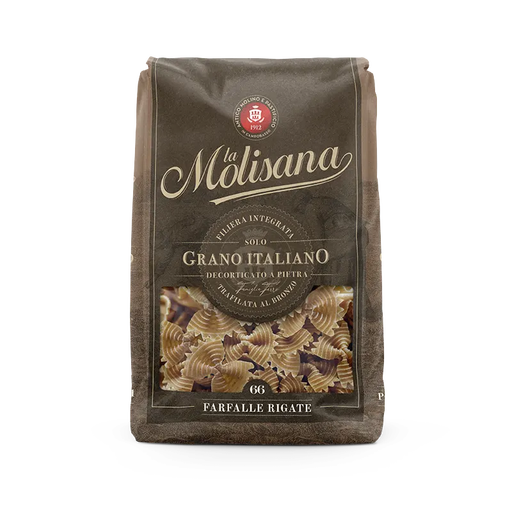 Image unavailable
These farfalle offer an alternative to penne or spaghetti for a dish with sauce.
The name includes the word Integrali; check the ingredients and allergens on the pack. Once cooked, consider whether the texture suits the person’s needs.
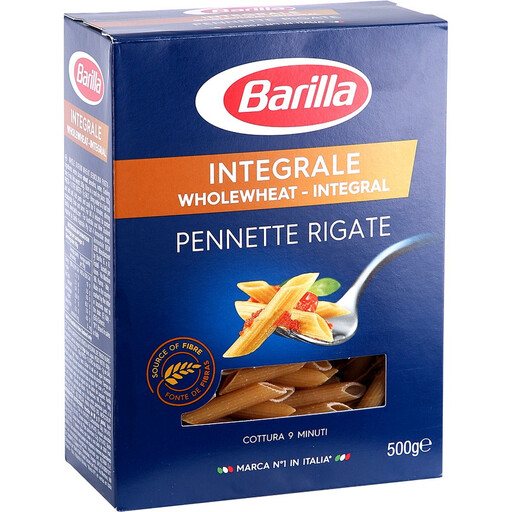 Image unavailable
This short pasta shape could be a good choice if you’d rather serve sauce with pennette than spaghetti.
The name indicates wholemeal wheat and a 500 g Tub pack. Check the ingredients and cooking instructions; the shape alone won’t tell you whether the texture is suitable for someone who has difficulty chewing or swallowing.
It can be part of regular meals, but the choice depends, among other things, on what the person enjoys eating and which textures suit them. The French National Authority for Health (Haute Autorité de Santé) highlights the risk of malnutrition in people aged 70 or over. If someone is losing weight unintentionally or having difficulty eating, seek professional advice rather than relying on a change of pasta.
Ridged penne are worth considering if you want the seasoning to cling to the pasta. Barilla pairs its macaroni and wholemeal spaghetti with lighter recipes. Choose with the person’s preferences in mind too, and check the texture once the pasta is cooked.
No. According to Panzani, its Complètement Bon range contains 50% wholemeal wheat semolina, which doesn’t mean all the semolina is wholemeal. To tell the recipes apart, read the stated proportion and the ingredients list for the product you choose.