What should you check first?
First decide how wholemeal you want your pasta to be, then check that the shape and recipe suit your household. When planning the meal, look at the nutritional information for the pasta and sauce separately.
| Criteria | What to check | Who is it for? |
|---|
| Pasta ingredients |
Check the ingredients to see whether whole durum wheat semolina is the only cereal ingredient, or whether it is combined with standard semolina. |
If I’m looking for fully wholemeal pasta, the product name alone isn’t enough to tell me what it contains. Around 50% of consumers would prioritise this level of wholemeal content. |
| Taste and household habits |
Compare the shape and stated cooking time, and check the proportion of wholemeal semolina if it’s given. |
If I want to stick with a popular family recipe, I might prefer a familiar shape or consider partially wholemeal pasta. This would be the priority for around 30% of consumers. |
| The meal and portion size |
Check the carbohydrates per 100 g of pasta and the carbohydrates, sugars and salt per 100 g of sauce, then take the amounts served into account. |
When I make a meal with sauce, I want to consider the whole plate and my individual dietary guidance. Around 20% of consumers would put this first. |
The phrase ‘made with whole wheat’ doesn’t tell you by itself how much wholemeal semolina a product contains. For example, Panzani says its Complètement Bon range contains 50% whole wheat semolina, while the ingredients list for one of Auchan’s wholemeal pasta products names only whole durum wheat semolina. When planning a meal, Diabetes UK highlights that the amount of carbohydrate you eat has more bearing on blood glucose than the glycaemic index alone.
Brands to know when comparing recipes
These ranges illustrate some of the different recipes you may come across while shopping. The exact product and its packaging are what matter.
Panzani
The Complètement Bon range includes pasta made with a partially wholemeal recipe.
- Panzani says this range contains 50% whole wheat semolina.
- This isn’t the same as a recipe made entirely with wholemeal semolina. The brand describes its taste as similar to that of standard pasta.
Barilla
The Whole Wheat range includes familiar shapes such as spaghetti and penne.
- Barilla gives a cooking time of 10 minutes for its whole wheat spaghetti.
- Check the ingredients and nutritional information for the specific shape you choose, rather than assuming the whole range has the same ingredients.
Auchan
The retailer offers several pasta recipes with similar names, so it’s worth comparing their ingredients.
- For its 500 g wholemeal coquillettes, Auchan lists only whole durum wheat semolina.
- Another whole wheat coquillettes product lists 15% whole durum wheat semolina combined with durum wheat semolina, so take care not to confuse the two recipes.
Carrefour
The retailer’s range includes wholemeal pasta and semi-wholemeal spaghetti.
- These names help you identify two types of recipe to compare on their respective packs.
- ‘Semi-wholemeal’ doesn’t mean the same as ‘wholemeal’, so check the ingredients of the product you choose.
Pasta available on Joybuy
These two whole wheat pasta products come in different shapes to pair with a sauce. Their names don’t replace checking the ingredients and nutritional information of the product you choose.
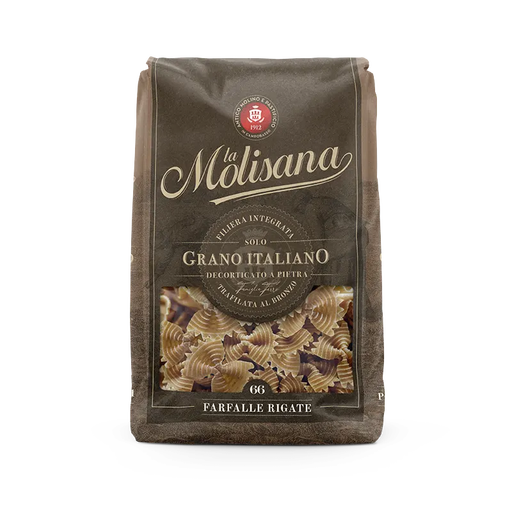 Image unavailable
La Molisana Farfalle Integrali N°066, 500 g
Farfalle pasta to consider if you’re looking for pasta described as wholemeal to serve with a sauce. Check the pack’s ingredients list and nutritional values before comparing portion sizes.
View on Joybuy
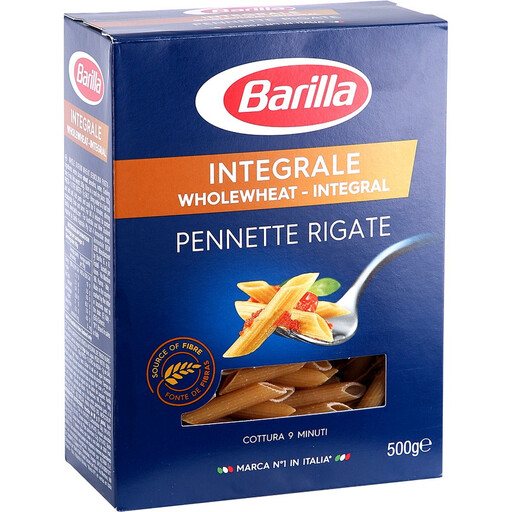 Image unavailable
Barilla Whole Wheat Pennette Rigate Tub, 500 g
Pennette rigate to consider if you’d like to use this type of pasta in a dish with sauce. Check the ingredients and nutritional values for this product to compare it with other pasta in the range.
View on Joybuy
Frequently asked questions
Is wholemeal pasta automatically suitable for everyone with diabetes?
No. The word ‘wholemeal’ alone isn’t enough to determine whether a meal meets someone’s needs. The French national health insurance service advises that diets should be tailored to the individual. The amount of pasta, the sauce and guidance from a healthcare professional all matter too.
How can you tell fully wholemeal pasta from a partially wholemeal recipe?
Read the ingredients list and check the proportion of wholemeal semolina, if it’s given. One of Auchan’s wholemeal coquillettes products lists only whole durum wheat semolina, while Panzani says its Complètement Bon range contains 50% whole wheat semolina.
What should you compare when choosing a jarred sauce?
Compare its ingredients and nutritional values, particularly carbohydrates, sugars and salt per 100 g, then consider how much sauce you’ll serve. The French consumer affairs authority, DGCCRF, describes nutrition labelling as a way to understand pre-packed foods; on its own, it doesn’t determine a suitable portion for everyone.
Can a fibre claim help you predict how a meal will affect blood glucose?
No. A product’s fibre information can’t predict an individual’s blood glucose response to a meal. Also consider the amount of carbohydrate you eat and the sauce’s ingredients, while following guidance suited to your circumstances.


