Parents of children who are wary of new foods
You want to change the pasta recipe without also changing the shape and side dish your child already knows.


If your child is quick to reject new things, start with a pasta shape they already know. You could try a partly wholemeal recipe before moving on to fully wholemeal pasta. If ingredients are your priority, compare the ingredients and fibre listed on the packets. For a school meal, also check the allergens and any guidance that applies to your child.
You want to change the pasta recipe without also changing the shape and side dish your child already knows.
You want to tell the difference between a partly wholemeal recipe and one made with whole durum wheat semolina. Manger Bouger says wholegrain or semi-wholegrain starchy foods can be offered to children according to their appetite.
If your child has an allergy or follows a medically prescribed diet, check the ingredients and any possible traces listed on the packet, then follow the school’s guidance.
| What to consider | What to check | Who is it for? |
|---|---|---|
| Taste and texture | Check the proportion of wholemeal semolina and choose a shape your child already knows. | If my child rejects new things, I’d rather stick with a familiar shape and avoid changing the whole meal at once; around 39% of consumers would put acceptance first. |
| Ingredients and fibre | Compare the ingredients list and the fibre per 100 g, using the same basis for comparison. | I want to choose between a partly wholemeal recipe and one made with wholemeal semolina; this would be the main concern for around 31% of consumers. |
| Allergens and school | Check the allergens on the packet you buy and confirm the school’s meal guidance if it applies to your child. | If my child has an allergy or follows a medically prescribed diet, I need to check what they can eat at school; around 15% of consumers would put these checks first. |
| Shape and cooking | Choose a shape that suits the meal and follow the cooking times for that specific product to get the texture you want. | To make a dish my child will eat again, I look for a shape and cooking method that are easy to repeat; consistency would come first for around 15% of consumers. |
Wholemeal pasta made from wheat contains gluten. Depending on the product, the packaging may also mention other allergens that could be present as traces.
Check the ingredients and allergens on the packet you buy, even if you already know the range.
It can take time to get used to wholegrain starchy foods. Manger Bouger says some children may find semi-wholegrain versions easier to digest.
Consider making the change gradually and take your child’s appetite into account, rather than changing their whole meal at once.
Panzani presents its ‘Complètement Bon !’ range as a way to make the transition, but the description alone can’t tell you whether your child will like its texture or taste.
Try a familiar shape and side dish first, then decide whether this recipe works for your meals.
The wholewheat range includes spaghetti, penne rigate and tortiglioni.
Panzani says its ‘Complètement Bon !’ range is made with 50% wholewheat semolina and includes penne, torti and coquillettes.
Lustucru Bio Complètes penne are described as being made with whole durum wheat semolina.
One 500 g pack of Carrefour wholemeal pasta is made with whole durum wheat semolina.
The Turini and Bio Village ranges include wholemeal pasta shapes such as penne and twists.
Auchan’s 500 g pack of wholewheat penne is made with whole durum wheat semolina.
This wholewheat pennette rigate is a short pasta shape to consider if your child already knows this type of pasta. If you’re making the switch for the first time, compare the wholewheat content of partly wholemeal recipes too.
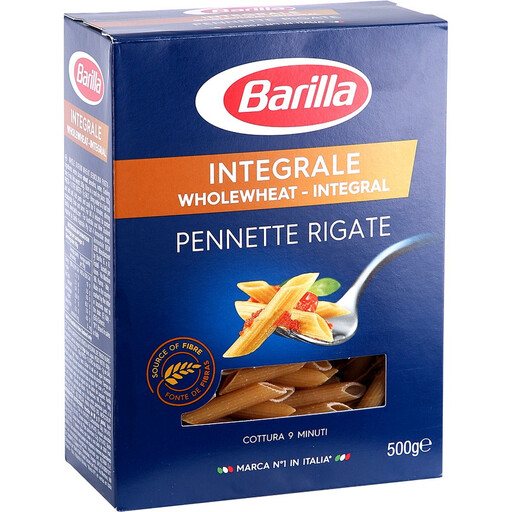 Image unavailable
Try this short wholewheat pasta with a side dish your child already knows, without assuming they’ll like the texture.
500 g tub. Before serving it at school, check the ingredients and allergens on the pack you buy.
Yes. Manger Bouger says wholegrain or semi-wholegrain starchy foods can be offered to children according to their appetite. Some children may find semi-wholegrain versions easier to digest, so consider how well your child gets on with the meal.
Serving a familiar shape with a side dish they know means you don’t have to change everything at once. Panzani’s ‘Complètement Bon !’ range, which is advertised as containing 50% wholewheat semolina, could be a stepping stone, but there’s no guarantee your child will like it.
No. Pasta made with whole durum wheat semolina contains gluten. If your child needs to avoid gluten, check the ingredients for the product you choose rather than relying on the word ‘wholemeal’.
If your child has an allergy or follows a medically prescribed diet, check the ingredients on the packet and the school’s guidance. The French Ministry of National Education says that an individual care plan, where one is in place, can set out a specific diet and any adjustments needed for the child’s education.
Follow the cooking times given for the product you choose and adjust the texture to suit what your child will eat. As a guide for the Auchan wholewheat penne featured here, Auchan gives a cooking time of 7 minutes for a firm texture, 8 minutes for al dente and 10 minutes for a softer texture.