What should you look for first?
To compare pasta made entirely with wholemeal semolina with a recipe containing only some wholemeal semolina, start with the ingredients. Then compare the fibre content on a like-for-like basis, per 100 g of dry product, and choose a meal time and portion that already suit you.
| Criteria |
What to check |
Who it matters to |
| Tolerance and meal timing |
Compare fibre per 100 g and avoid trying a new portion just before an important ride. |
Before a ride, I’d rather eat a meal I know I can tolerate than suddenly increase my fibre intake and risk discomfort; around 42% of consumers would put tolerance at the top of their list. |
| What you usually eat |
Look for wholemeal semolina in the ingredients, then compare the carbohydrate and fibre content per 100 g of dry product. |
For my regular meals as a cyclist, I look for a wholegrain starchy food with a clear ingredients list; nearly 33% of consumers would make this their main priority. |
| Making it part of your routine |
Choose a shape that works with your recipes and check the proportion of wholemeal semolina and the cooking time for the specific product. |
If the shape or recipe doesn’t work with my usual meals, I may not buy it again; around 25% of consumers would put ease of fitting it into their routine first. |
Brands to compare
These ranges show why you should compare the recipes and labels of specific products rather than assume you know what’s in them from the brand name alone.
Barilla
The Wholewheat range includes macaroni, linguine, penne rigate, spaghetti and tortiglioni, among other shapes.
- The range includes several shapes, so you can stick with the type of pasta your recipe calls for.
- Check the ingredients and nutrition information for your chosen shape; Barilla describes the texture as “al dente”.
Panzani
The Complètement Bon range includes penne, twists and macaroni.
- Panzani says its recipe is made with 50% wholemeal wheat semolina.
- This doesn’t mean the recipe is made entirely with wholemeal semolina, so check the specific product you buy.
Lustucru
Lustucru describes its Bio Complètes penne as being made with 100% wholemeal durum wheat semolina.
- The stated ingredients make it easy to distinguish this product from a recipe that is only partly wholemeal.
- This penne contains gluten; also check the packet for allergen information and possible traces.
Carrefour
A wholemeal durum wheat pasta product is available in a 500 g bag.
- Its ingredients list includes wholemeal durum wheat semolina.
- Check the allergen information and ingredients on the packet you choose.
E.Leclerc
The retailer offers Turini wholewheat pasta in several shapes, as well as Bio Village twists.
- The Turini range includes penne, spaghetti, twists and macaroni.
- Compare the ingredients for each product: the range name alone doesn’t tell you exactly what’s in the recipe.
Auchan
The macaroni products reviewed include recipes made entirely with wholemeal durum wheat semolina, as well as one combining regular and wholemeal semolina.
- The ingredients lists distinguish the wholemeal product from the one containing 15% wholemeal semolina.
- Don’t assume the proportion of wholemeal semolina from the words “wholewheat” alone.
A wholemeal pasta option on Joybuy
This selection features Integrali farfalle for meals where you’d like to choose a wholemeal pasta shape. If you’re planning to eat it before a ride, bear your usual tolerance in mind and check the information on the packet.
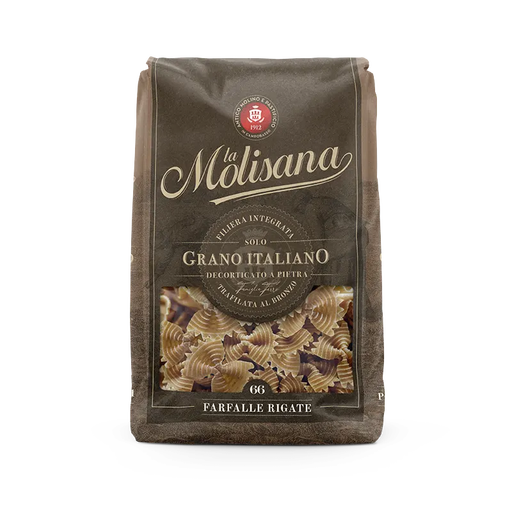 Image unavailable
La Molisana Farfalle Integrali N°066, 500 g
A wholemeal pasta shape to consider for meals you already enjoy; if you’re planning to eat it before a ride, try the portion and meal timing first.
If these details affect your choice, check the ingredients list, fibre content and allergen information on the packet you receive.
View on Joybuy
Frequently asked questions
Can you eat wholemeal pasta just before a bike ride?
Yes, if you already know the portion and meal timing work for you, but avoid suddenly increasing your fibre intake before an important ride. Manger Bouger warns that increasing your intake too quickly can cause intestinal discomfort. Try your usual eating habits during training, as FFVélo recommends before an event.
How can you tell if pasta is made entirely with wholemeal semolina?
Read the ingredients list for the specific product: it may contain only wholemeal durum wheat semolina, while another recipe may combine regular and wholemeal semolina. One Auchan product reviewed contains 15% wholemeal semolina, so the words “wholewheat” alone aren’t enough to tell you how much it contains.
Is wholemeal wheat pasta suitable for a gluten-free diet?
No. Wholemeal pasta made from wheat contains gluten, as Lustucru states for its Bio Complètes penne, for example. If you need to avoid an allergen, check the ingredients and information on the exact packet; the French Ministry of the Economy says that allergens must be highlighted on the labels of prepacked foods.
How should you store an opened packet of pasta?
Keep the pasta in a cool, dry place and reseal the packet after opening. These instructions appear on Auchan product listings; also check the information on the packet you’ve bought.
Is Nutri-Score enough to help you choose wholemeal pasta?
No. To tell the difference between a recipe that’s entirely wholemeal and one that’s a mix, check the ingredients and nutrition information too, including the fibre per 100 g. The DGCCRF describes Nutri-Score as a voluntary labelling system; it doesn’t replace checking for allergens or choosing a meal that suits your usual habits.


