Who are these options for?

Households that prioritise wholegrains

You want to know exactly what flour is used in the bread served at dinner, rather than relying on the name or appearance of the fougasse. Manger Bouger recommends choosing wholegrain or semi-wholegrain starchy foods when they’re made from grains.

Families looking to make gradual changes

You’re looking for ways to include wholegrains in your children’s meals while taking their habits and appetites into account. Manger Bouger advises that, for children aged 4–17, the amount of wholegrain or semi-wholegrain starchy foods should be adjusted to their appetite.

Hosts who want to share fougasse without cooking

A ready-to-heat fougasse makes serving dinner easier. Before choosing one for the table, though, check the flour used, the topping ingredients and the allergens in that specific product.

What should you look for before buying?

If wholemeal fougasse is your priority, start with the flour. Then consider the size and topping to suit everyone gathered for dinner.

What matters What to check Who it matters to
Type of flour Look for “wholemeal”, “wholegrain” or “semi-wholemeal” in the ingredients. Compare the fibre per 100 g if this information is given in the nutritional details. If I’m choosing fougasse for its grain base, I want to be able to identify the flour used, even when it has a topping. Around 50% of consumers say this is their top priority.
Serving at dinner Check the weight, the stated number of servings and the reheating instructions, if provided. If I want to serve dinner without making dough, I need a product that’s the right size for everyone at the table. Ease of serving comes ahead of other criteria for around 30% of consumers.
Changing family habits Check whether it contains semi-wholemeal flour and take everyone’s appetite into account; check the allergens in the recipe you choose. When children are trying different types of bread, I prefer to choose something that takes their habits into account rather than changing the whole meal at once. Gradually introducing new options is the main priority for around 20% of consumers.

Mistakes to avoid

  • Assuming a topped fougasse is wholemeal

    The product listings for Auchan’s olive fougasse and Carrefour Traiteur’s bacon fougasse mention wheat flour, but don’t specify that it’s wholemeal. The topping doesn’t tell you what grain the base is made from.

    If you’re looking for wholemeal fougasse, check the product name and ingredients for the one you’re buying. Alternatively, making it at home lets you choose T150 wholemeal flour.

  • Serving everyone the same portion

    A family dinner can bring together people of different ages and appetites. For children aged 4 to 17, Manger Bouger advises adjusting the amount of wholegrain or semi-wholegrain starchy foods to their appetite.

    Serve fougasse with everyone in mind, and consider semi-wholemeal flour if you want to make gradual changes to your household’s eating habits.

  • Checking only the flour and forgetting the topping

    Two fougasses made with similar flour can have different topping ingredients. So the type of flour alone doesn’t tell you everything about the product you’re serving.

    Compare the ingredients lists and, where provided, the nutritional information per 100 g, especially the salt and fat content.

  • Assuming wholemeal is suitable for every allergy

    Wholemeal wheat flour is still wheat flour. A topping may add other ingredients that need to be taken into account.

    Check the allergens in the specific product. The DGCCRF states that allergens in prepacked foods must be highlighted in the ingredients list.

Retailers and bakeries to know

Carrefour

Carrefour offers a ready-to-heat deli fougasse, as well as T150 wheat flour for making one at home.

  • Carrefour Traiteur lists its bacon fougasse as serving three people. Carrefour also stocks T150 wholemeal wheat flour.
  • The ingredients list for this bacon fougasse states that it contains wheat flour, but doesn’t specify that it’s wholemeal.

Auchan

Auchan sells topped fougasses and also stocks T150 wholemeal wheat flour for baking bread.

  • Auchan’s listing for FRANCINE T150 flour describes it as wholemeal flour suitable for baking bread.
  • The listing for the olive fougasse we checked states that it contains wheat flour, but doesn’t confirm that it’s made with wholemeal flour.

PAUL

PAUL describes its wholemeal bread as being made with flour milled from the entire wheat grain.

  • This bread is another option to consider alongside dinner.
  • PAUL’s description of its wholemeal bread doesn’t tell you what goes into its fougasse. Check the details for the specific product you’re considering.

Flour for making fougasse

This Joybuy selection is for making fougasse at home with T150 wholemeal wheat flour. It’s flour for baking with, not a ready-to-serve fougasse.
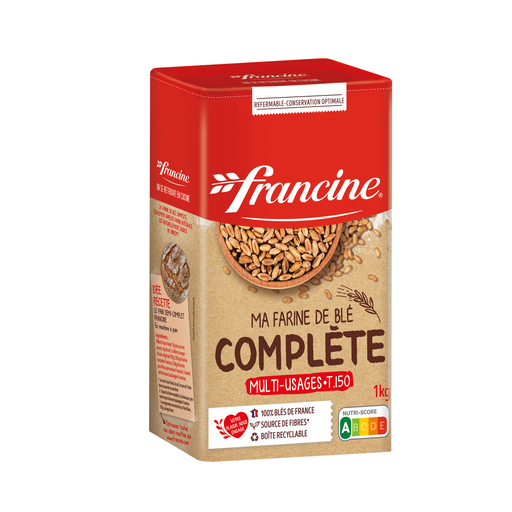
FRANCINE T150 wholemeal wheat flour, 1 kg pack

FRANCINE T150 Wholemeal Wheat Flour, 1 kg

If you want to choose the grain base for your homemade fougasse, this wholemeal flour can be used to make the dough, which you’ll then need to shape and bake. The pack contains 1 kg of T150 wholemeal wheat flour; Auchan’s listing for the same flour says it’s suitable for baking bread. If you’re comparing fibre, check the amount per 100 g on the packaging.

View on Joybuy

Frequently asked questions

How can you tell if a fougasse is wholemeal?

Look for an explicit reference to wholemeal or wholegrain flour in the product name and ingredients list. “Semi-wholemeal” refers to a different option, so don’t confuse it with wholemeal flour. The colour and the presence of olives aren’t enough to tell you.

Should you serve wholemeal fougasse to children?

You can consider wholegrain or semi-wholegrain starchy foods as part of a meal, taking your child’s appetite into account. Manger Bouger says that, for children aged 4–17, portions should be based on appetite. If you’re changing your household’s eating habits, semi-wholemeal is one way to do so gradually.

Is a “multigrain” fougasse always wholemeal?

No. The term alone doesn’t tell you whether the flour used is wholemeal. Check the ingredients for the specific fougasse rather than judging the flour by its name.

How can you compare two prepacked fougasses?

First, check the ingredients to identify the flour and topping, then compare the nutritional information on the same basis. The DGCCRF states that nutrition information is given per 100 g or 100 ml. For two fougasses, comparing the values per 100 g lets you assess them fairly, even if the portions differ.

Which allergens should you check in a topped fougasse?

Check the allergens in the specific recipe, particularly wheat in fougasses whose ingredients list includes wheat flour. A topping may add other allergens. The DGCCRF states that allergens in prepacked foods must be highlighted in the ingredients list.