If you want to serve soft, sliced brioche with your coffee, Harrys Sliced Wholemeal Brioche offers the right format. According to Harrys, it contains 27.8% wholemeal wheat flour, as well as 27.5% wheat flour. If you’re happy to swap brioche for a crunchy rusk, Brioche Pasquier Wholemeal Rusks are another option. Compare the fibre per 100 g on the packaging, as the published figures for Harrys brioche differ between Harrys and Auchan.
Who are these options for?
Households keeping an eye on ingredients
You want to stick with brioche for a coffee and a treat, while choosing a recipe that states its wholemeal flour content and fibre. The product name is no substitute for checking the ingredients and nutritional values per 100 g.
Fans of soft brioche
You prefer a slice of brioche with your coffee and don’t want to replace it with a crunchy rusk. In that case, the sliced format and storage instructions matter just as much as the ingredients.
Those open to a crunchy alternative
You’re happy to switch product categories to compare the wholemeal flour and fibre listed for a rusk. This option won’t replicate the texture or recipe of brioche.
What should you check before choosing?
First decide whether brioche’s texture is a must for your coffee and a treat; then compare the labels of products that fit your preference.
| What to consider |
What to check |
Who is it for? |
| Wholemeal flour and fibre |
Check the proportion of wholemeal flour in the ingredients and the fibre per 100 g. Harrys states that its brioche contains 27.8% wholemeal wheat flour; Brioche Pasquier states that its rusks contain 99% wholemeal wheat flour. |
If ingredients matter most, I want to distinguish the proportion of wholemeal flour from the amount of fibre shown. Around 50% of consumers would make this comparison their priority. |
| Texture and how it’s served |
Choose between sliced brioche and crunchy rusks. For Harrys brioche, check the storage instructions on the pack you buy. |
I want a soft slice with my coffee, not a rusk instead. Around 30% of consumers would therefore favour brioche. |
| Availability |
Check that the specific product is in stock at the shop and available through your chosen collection method. |
If I shop online for collection or delivery, I need to be able to find my chosen product at my local shop. Local availability would be the priority for around 20% of consumers. |
Common mix-ups to avoid
-
Assuming “wholemeal” means “100% wholemeal flour”
The ingredients list for Harrys brioche states that it contains 27.8% wholemeal wheat flour and 27.5% wheat flour. So the name alone doesn’t tell you everything about its ingredients.
Compare the ingredients list and the fibre per 100 g. Choose wholemeal rusks only if you’re happy with the change in texture.
-
Focusing only on the “no additives” claim
Harrys says its brioche contains no additives, while also noting that some ingredients may have a similar function. This claim doesn’t mean you can skip checking the recipe.
If this matters to you, read the full ingredients list on the packaging.
-
Comparing portions of different sizes
A figure per slice can’t be directly compared with one per 100 g. The Harrys product information states 7 g of fibre per 100 g, while Auchan’s product information lists 7.5 g per 100 g for the same product.
Use the same 100 g basis to compare nutritional information, then check the packaging of the product you buy.
-
Forgetting to check allergens
Auchan’s product information for Harrys brioche lists wheat, eggs and milk, and warns that it may contain traces of soya, nuts and sesame.
If you need to avoid an ingredient, check the ingredients list and allergen information on the specific pack you buy.
Brands and retailers to consider
Harrys
Harrys Sliced Wholemeal Brioche lets you stick with brioche for your coffee and a treat.
- According to Harrys, the recipe contains 27.8% wholemeal wheat flour and provides 7 g of fibre per 100 g.
- It also contains 27.5% wheat flour. Auchan lists 7.5 g of fibre per 100 g for this product, so check the label on the pack you buy.
Brioche Pasquier
Brioche Pasquier Wholemeal Rusks are worth considering if you’re happy to have rusks instead of brioche.
- Brioche Pasquier’s product information states that the rusks contain 99% wholemeal wheat flour and 11 g of fibre per 100 g.
- They’re crunchy rusks, not soft brioche.
Carrefour
Carrefour lists Harrys Sliced Wholemeal Brioche in a 485 g pack.
- The product information lets you check the pack size and ingredients before looking for it at your local shop.
- Check the specific product and its availability at your chosen shop, using your preferred collection method.
Auchan
Auchan’s product information for Harrys brioche brings together useful details about the recipe and storage.
- It lists the ingredients, allergens and nutritional values, and advises storing the brioche at room temperature, away from heat.
- Its fibre figure differs from the one published by Harrys, so check the packaging of the product you buy.
A crunchy option on Joybuy
This selection features rusks to serve if you’d prefer a crunchy alternative to brioche with your coffee.
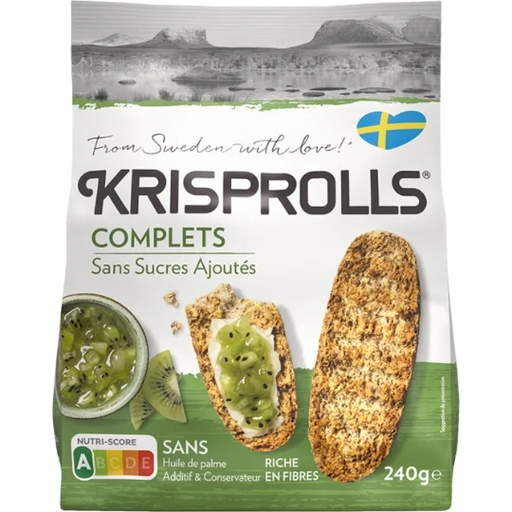 Image unavailable
KRISPROLLS Swedish Wholemeal Natural Unsweetened Rusks, 240 g
Worth considering if you’d rather serve rusks than soft brioche. The product comes in a 240 g pack; check the packaging for ingredients, nutritional information and allergens.
View on Joybuy
Frequently asked questions
Does brioche labelled “wholemeal” contain only wholemeal flour?
Not necessarily. For Harrys Sliced Wholemeal Brioche, the ingredients list published by Harrys states that it contains 27.8% wholemeal wheat flour and 27.5% wheat flour. Check the ingredients of the product you’re considering rather than judging its composition by its name.
How can I compare the fibre in brioche and rusks?
Compare the figures per 100 g: Harrys lists 7 g of fibre per 100 g for its brioche, Auchan lists 7.5 g for the same product, and Brioche Pasquier lists 11 g per 100 g for its Wholemeal Rusks. Check the packaging, and bear in mind that rusks don’t have the same texture as brioche.
How should I store Harrys brioche after opening?
For the product listed by Auchan, the instructions say to store it at room temperature, away from heat. Reseal the bag after use and follow the instructions on the pack you buy.
Which allergens should I check in Harrys wholemeal brioche?
Auchan’s product information lists wheat, eggs and milk, and warns that it may contain traces of soya, nuts and sesame. Check the allergen information on the packaging of the product you plan to serve.


