Households comparing fibre content
You’re looking for wholemeal bread for everyday toast and want to compare the fibre listed on the label, rather than relying on the product name alone.


For jam on toast, choose a format to suit the texture you want: wholemeal sandwich bread for a soft, even slice; fresh bread for a bakery-style crumb; crispbread for crunch; or rye bread for a denser slice. If fibre is important to you, compare the amounts listed per 100 g for the specific products, then check the recipe and allergens. The word ‘wholemeal’ alone isn’t enough to tell them apart.
You’re looking for wholemeal bread for everyday toast and want to compare the fibre listed on the label, rather than relying on the product name alone.
You want slices that suit the way you toast your bread and spread your jam. It comes down to choosing between a soft texture, the crumb of fresh bread or a satisfying crunch.
You compare flours, sugars, salt and allergens before choosing a loaf. Check these details on the specific product you’re planning to buy.
For wholemeal toast with jam, start by choosing the texture you prefer, then compare the labels of products in that format.
| Factor | What to check | Who is it for? |
|---|---|---|
| Fibre and flour | Compare the fibre per 100 g and the proportion of wholemeal flour, if stated. | For my everyday toast, I want to know what’s in the bread beyond its name. Around 42% of consumers would prioritise fibre and the amount of wholegrains in the recipe. |
| Slice and texture | Check whether the bread is pre-sliced, the size of the slices and the format you want: soft, fresh or toasted. | If I toast my bread before adding jam, the shape and sturdiness of the slice matter just as much as its texture. Format would be the top priority for around 33% of consumers. |
| Ingredients and allergens | Check the ingredients, sugars and salt per 100 g, as well as the allergens listed on the packaging. | If I need to avoid an ingredient or prefer a particular recipe, the word ‘wholemeal’ doesn’t answer my question. Around 25% of consumers would put ingredients and allergens first. |
The Carrefour Classic’ sandwich loaf reviewed contains 66% wholemeal wheat flour, compared with 31% in the Carrefour loaf made with wholemeal flours that was also reviewed. The latter also contains other cereals. These percentages apply to those two products, not to every loaf in these categories.
Compare the ingredients list and fibre per 100 g on the loaves you’re actually considering.
A crunchy format doesn’t tell you everything about its nutritional values. The Auchan Bio crispbread reviewed contains 7.6 g of fibre and 1.4 g of salt per 100 g.
Compare the values per 100 g, then consider how many slices you have with your toast.
The Epi d’Or wholemeal sandwich loaf labelled ‘no added sugars’ also contains naturally occurring sugars and lists 3.4 g of sugars per 100 g. Its ingredients list includes wheat gluten.
Check the sugar claim, nutritional information and allergens list separately.
The products reviewed include a sliced wholemeal sandwich loaf and a sliced loaf made with wholemeal flours.
The Epi d’Or range reviewed includes two wholemeal sandwich loaves with thick slices, one of which is labelled ‘no added sugars’.
The products reviewed cover two distinct formats: a fresh wholemeal loaf and crispbread made with wholemeal flour.
The Monoprix product pages reviewed feature pre-sliced Bjorg organic wholemeal breads, including rye and three-cereal varieties.
Aldi lists wholemeal sandwich bread among the formats in its sandwich bread range.
This Joybuy selection features crispbread for anyone who prefers a crunchy bite to the soft crumb of sandwich bread or a fresh loaf.
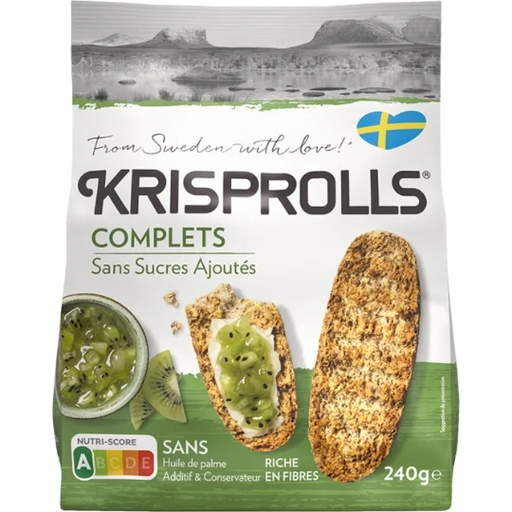 Image unavailable
This crunchy format is a good choice for jam on toast if you don’t want a soft crumb. The pack contains 240 g. Check the slice size and the allergens listed on the packaging if these are important to your choice.
Check the fibre per 100 g on each pack, then compare the ingredients list and the proportion of wholemeal flour, if stated. E.Leclerc lists 6.8 g of fibre per 100 g for the Epi d’Or wholemeal sandwich loaf reviewed, while Monoprix lists 10.2 g for the Bjorg wholemeal rye bread reviewed. These figures apply to those specific products only.
Choose the texture you prefer: a soft slice of sandwich bread, the crumb of fresh bread, the crunch of crispbread or a denser slice of rye. To compare two products in the same format, check their ingredients and nutritional values next.
Follow the storage instructions on the packaging. For the Bjorg wholemeal rye bread reviewed, Monoprix recommends storing it in an airtight container for 5 to 6 days after opening, in the fridge if possible. This guidance doesn’t automatically apply to other breads.
No. The Bjorg and Carrefour wholemeal wheat or rye breads reviewed contain gluten; the Bjorg three-cereal bread also contains sesame. If you need to avoid an allergen, check the labelling of the specific product rather than relying on the word ‘wholemeal’.