Anyone serving a dish with sauce
You’re looking for a wholegrain pasta shape that suits your sauce and is easy to toss through before serving a large dish.


For a Sunday dish with a chunky sauce, consider ridged wholegrain penne, which you can toss with the sauce before serving. With a smoother sauce served at the table, wholegrain spaghetti may be a better fit for the recipe. If you’re unsure about the taste of wholegrain pasta, check the ingredients of ranges described as similar to classic pasta, but don’t take this as a guarantee. In every case, check the allergens and cooking instructions on the pack you choose.
You’re looking for a wholegrain pasta shape that suits your sauce and is easy to toss through before serving a large dish.
You’d like to serve wholegrain pasta to guests who are used to the taste and texture of the pasta they already know.
You compare the ingredients, allergens, nutritional information and cooking instructions for the product you plan to serve.
Start with what matters most for your meal: the pasta’s ingredients, how it works with the sauce, the taste you’re looking for or how easy it is to prepare.
| What to consider | What to check | Who this matters to |
|---|---|---|
| Wholegrain ingredients | Read the product description and ingredients list. If it matters to you, compare the fibre listed per 100 g. | If my main priority is serving pasta made from wholegrains, I check the ingredients rather than relying on the range name alone. Around 31% of consumers put this need first. |
| Shape and sauce | Check whether the shape suits a chunky sauce that you can toss through the pasta, or a smoother sauce served at the table. | For a large dish with sauce, I want to mix the pasta and toppings before serving. This is the top priority for around 25% of consumers. |
| Taste and texture | Check the ingredients of a range described as similar to classic pasta, and follow the cooking instructions on the pack you choose. | When several guests are unsure about wholegrain pasta, I choose a familiar shape and cook it to suit their preferences. This is a priority for around 25% of consumers. |
| Preparation and labelling | Check the pack size, cooking time, ingredients and allergens for the product you buy. | If I need to organise the cooking while avoiding certain ingredients for guests, I need a pack with clear instructions. Around 19% of consumers prioritise these practical checks. |
Wholegrain pasta made from durum wheat semolina contains wheat. The word ‘wholegrain’ alone doesn’t tell you whether a product is suitable for your guests’ dietary requirements.
Read the ingredients and allergen information on the exact pack. If you’re looking for gluten-free pasta, choose a product that’s explicitly labelled as such.
A chunky sauce and a smooth sauce don’t necessarily call for the same pasta shape, whether you’re mixing everything together or serving it at the table. Barilla describes the ridges on its Penne Rigate Integrale as suitable for holding sauces. This is the brand’s description, not the result of a comparative test.
For a chunky sauce, consider wholegrain penne rigate. For a smoother sauce served at the table, consider wholegrain spaghetti.
Panzani describes its Complètement Bon range as similar to its classic pasta. This description can’t predict every guest’s preferences, and it doesn’t replace checking the ingredients.
If you’re unsure about the taste, start with a familiar shape and follow the cooking instructions. If you’re looking for pasta made only with wholegrain semolina, check the ingredients.
The Whole Wheat range includes spaghetti and penne rigate, among other shapes. Choose the shape to suit the sauce you’re planning to serve.
The Complètement Bon range includes penne, torti and coquillettes, among other familiar shapes, for anyone who’d like to give wholegrain pasta a try.
Carrefour Extra Spaghetti blé complet is worth considering if you’re planning to serve pasta at the table.
Auchan offers penne and spaghetti intégrales, among other options. These two shapes suit different ways of serving pasta.
If you shop at E.Leclerc, you can browse the Marque Repère pasta range, using the ingredients as a key factor in your choice.
This brand may be more relevant if your Sunday menu features tagliatelle, filled pasta or gnocchi.
These farfalle and pennette rigate offer two short pasta shapes to consider for Sunday dinner. Choose one to suit your sauce, then check the cooking instructions and ingredients on the pack.
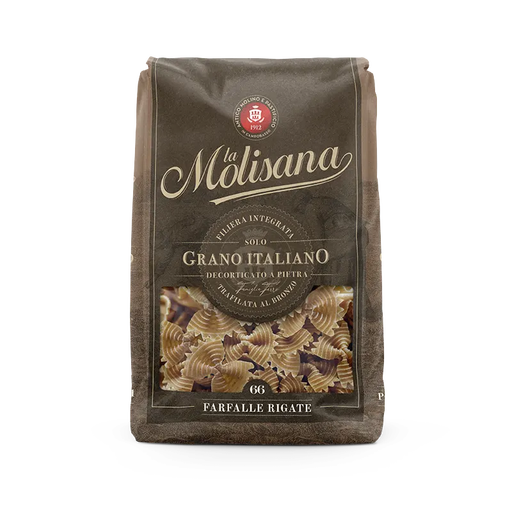 Image unavailable
These farfalle are worth considering for a dish with a vegetable sauce or a light tomato sauce. Check the ingredients, allergens and cooking instructions on the pack you choose.
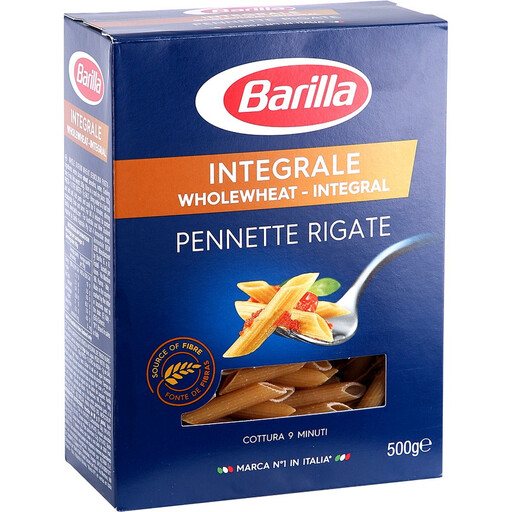 Image unavailable
For a dish of short pasta tossed with a chunky sauce, this ridged shape is worth considering, without assuming how well it will hold the sauce. Check the pack for the cooking instructions and allergen information for this product.
Consider wholegrain penne rigate for a chunky sauce that you can toss through the pasta before serving, and wholegrain spaghetti for a smoother sauce served at the table. Barilla describes the ridges on its penne as suitable for holding sauces, but this doesn’t prove that one shape is generally better than the other.
Follow the cooking time for the product you buy and taste the pasta before draining it. As product-specific guidance, Barilla gives a cooking time of 10 minutes for its Spaghetti blé complet, while Auchan gives 8 minutes for its penne intégrales.
No. ‘Wholegrain’ doesn’t mean ‘gluten-free’ when the pasta is made from wheat. Read the ingredients and allergen information for the exact product. If you’re looking for gluten-free pasta, check that this is explicitly stated on the label.
First compare the ingredients and allergen information, then the nutritional information per 100 g and the cooking time for each product. Even pasta in the same shape can have different ingredients or cooking instructions, depending on the product you choose.