Families looking to identify wholegrains
If the ingredients matter more to you than the flavour or the look of the pack, check which grains are named among the first ingredients and their proportions, if these are shown on the label.


For family breakfasts, start by checking the ingredients and the proportion of wholegrains, if it’s listed: the word ‘muesli’ alone doesn’t tell you everything about the recipe. Then choose between plain, fruit or crunchy muesli to suit your household’s tastes, comparing the nutritional information per 100 g, pack size and allergens on each pack.
If the ingredients matter more to you than the flavour or the look of the pack, check which grains are named among the first ingredients and their proportions, if these are shown on the label.
Whether you’re choosing a 375 g bag, a 500 g pack or a 1 kg size, pick an amount that suits your household’s consumption and the storage instructions once opened.
Fruit, nuts and crunchy textures can all influence your choice. If someone needs to avoid an allergen, check the ingredients and any ‘may contain’ statements for the exact product before choosing a recipe to share.
For a regular family purchase, first rule out recipes that don’t meet your household’s dietary needs. Then compare the ingredients, pack size and flavour preferences.
| Criteria | What to check | Who is it for? |
|---|---|---|
| Wholegrains | Look for wholegrains among the first ingredients, and check their proportion if it’s listed. | When planning regular breakfasts, I want to know which grains actually make up the mix. Around 33% of consumers put this verifiable information first. |
| Pack size and storage | Compare the net weight with how quickly you’ll use it, and read the storage instructions for after opening. | When several people are dipping into the same pack, I look for a size the household can finish while storing it properly. This is the main consideration for around 27% of consumers. |
| Flavour and nutritional information | Compare the sugars, fibre and fat per 100 g in the recipes you’re considering. | If the family prefers fruit, nuts or a crunchy texture, I want to choose a recipe they’ll enjoy while checking its nutritional values. Around 20% of consumers prioritise this balance. |
| Allergens | Check which allergenic ingredients are highlighted and look for ‘may contain’ statements on the pack you’re considering. | If someone in the household needs to avoid an ingredient, I have to check the recipe before considering a pack to share. This is the first priority for around 20% of consumers. |
A recipe can contain wholegrains alongside other ingredients. According to their respective product information, Jordans Spécial Muesli contains 19 g of sugars per 100 g, while Kellogg's Extra Nuts and Seeds contains 18 g per 100 g. These figures apply to these specific products.
Compare the nutritional information per 100 g for the recipes your household is considering, rather than inferring their ingredients from the product name alone.
A 1 kg size is best suited to households that eat the recipe regularly and can store it according to the manufacturer’s instructions. A smaller pack is also a good way to try a mix before buying more.
Think about how long the bag will stay open and check the storage instructions.
Depending on the product, the mixes mentioned in this article contain gluten-containing grains or tree nuts; some also carry ‘may contain’ statements. Descriptions such as ‘plain’, ‘organic’ or ‘wholegrain’ don’t, on their own, mean a product is suitable for someone avoiding a particular ingredient.
Read the label on the pack you buy, including highlighted allergens and any ‘may contain’ statements.
This rating doesn’t tell you which grains are used or which ingredients someone in your household needs to avoid. Even when two recipes appeal for different reasons, you’ll also need to read their ingredient lists.
Use the Nutri-Score alongside the nutritional information and ingredients, not instead of them.
These examples refer to specific products; their ingredients don’t represent every product from each brand.
Carrefour’s Muesli 5 Céréales Nature Bio is worth considering if you’re looking for a multigrain base without fruit or nuts in the recipe described by Carrefour.
Spécial Muesli combines grains, fruit, nuts and seeds for households that prefer a ready-made mix.
Extra Nuts and Seeds is a crunchy granola, not a plain muesli.
Auchan’s Muesli aux fruits Bio is available in a 1 kg bag, a size worth considering if you eat this recipe regularly.
Muesli Protéines Bio combines wholegrains, pulses and fruit, making it different from plain oat flakes.
These two Joybuy products suit different family breakfast preferences: ready-to-serve crunchy cereal with nuts, or oat flakes to use as the base for a mix you make yourself. The flakes are not a ready-made muesli.
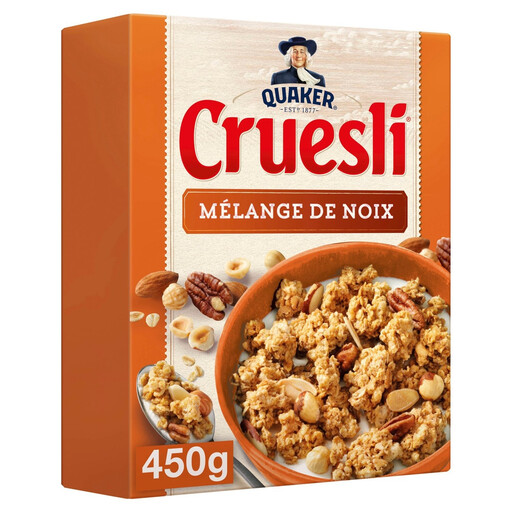 Image unavailable
For households that prefer ready-made crunchy cereal with nuts rather than a plain base to customise. The pack size shown is 450 g; check the allergens on the packaging before sharing it with your household.
 Image unavailable
For making your own breakfast base and choosing the other ingredients separately. This is a 500 g pack of oat flakes, not a ready-to-serve muesli mix. Check the label if anyone in your household needs to avoid an allergen.
Read the ingredients list and look for specific descriptions such as ‘whole oats’, ‘wholewheat’ or ‘whole rye’. Check the proportion if it’s listed: according to Jordans, Spécial Muesli contains 67% wholegrains, while Auchan’s product information for Terres & Céréales Muesli aux fruits Bio specifies several types of wholegrain flakes.
No. Use it alongside the ingredients list and nutritional information per 100 g. Also check the allergens, net weight and, if it’s shown on the pack, the proportion of wholegrains.
Read the highlighted allergenic ingredients and any ‘may contain’ statements on the packaging of the product you’re buying. The DGCCRF reminds consumers that allergenic ingredients must be highlighted. Depending on the product, the recipes mentioned here may contain gluten-containing grains or tree nuts.
Follow the instructions on the pack and reseal it carefully after use. For its 1 kg Muesli aux fruits Bio, Terres & Céréales Bio advises storing it away from heat and moisture. Check the instructions for any other product you buy.